Clear Sky Science · en
Membrane-embedded polar residues target membrane proteins for degradation by the quality control protease FtsH
How Cells Patrol Their Membranes
Our cells, and those of bacteria, are crowded with proteins that sit inside oily membranes and act as gates, pumps, and sensors. When these membrane proteins are made incorrectly or fall apart, they can become dangerous clutter that damages the cell. This study uncovers how a bacterial watchdog enzyme called FtsH can detect and destroy faulty membrane proteins by sensing small chemical “blemishes” that appear when those proteins misfold. Understanding this patrol system sheds light on how cells maintain healthy membranes and may reveal general rules that also apply in our own cells.
Why Faulty Membrane Proteins Are a Problem
Membrane proteins must thread through the greasy interior of the cell membrane in a very specific way. When everything is in order, the outer surface of these proteins that touches the surrounding fats is largely water-fearing, while water-loving and charged parts are tucked safely inside. But if a protein misfolds or fails to assemble with its partners, segments can peel apart and expose water-loving groups directly to the membrane. Such misfits can disrupt the delicate environment of the membrane and even poison the cell. Cells therefore rely on quality-control systems that can distinguish damaged proteins from healthy ones and selectively break them down, but how this works inside the membrane itself has been unclear.
A Hidden Flag Inside the Membrane
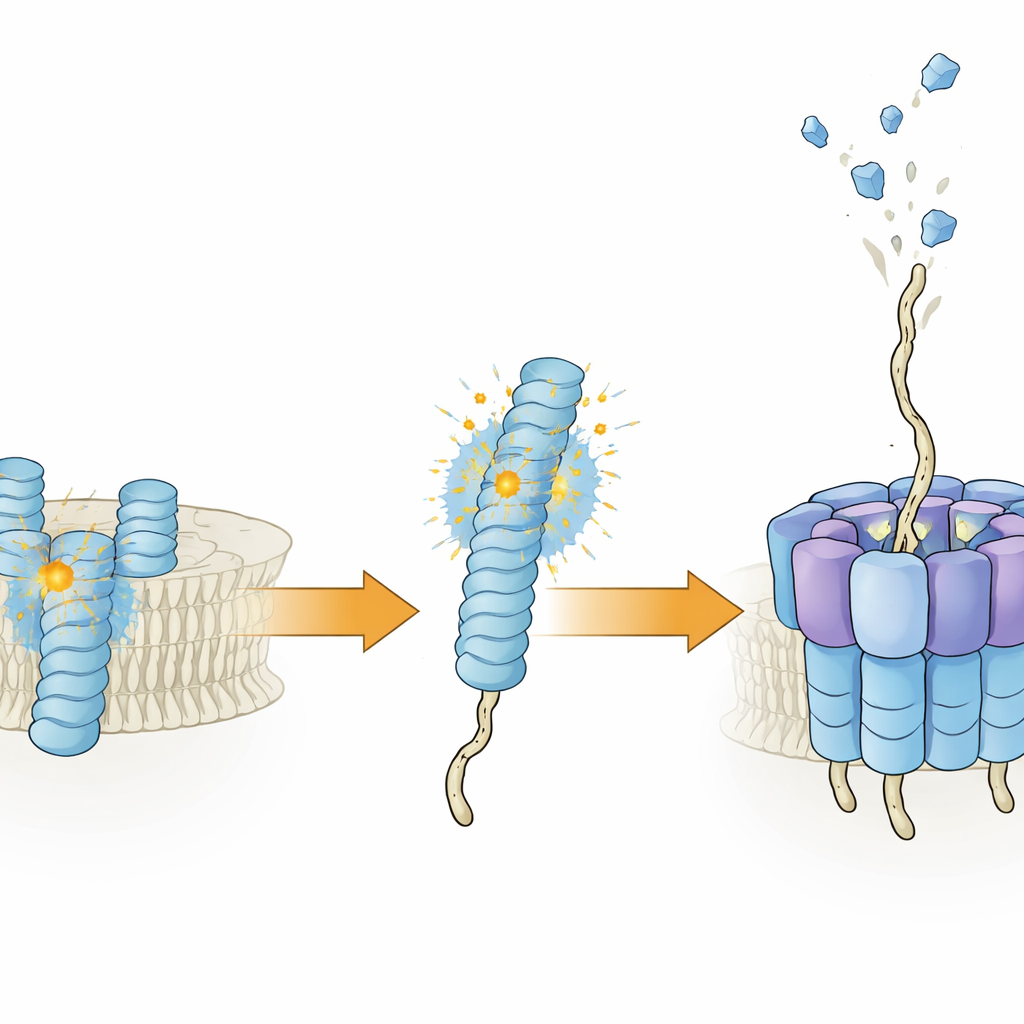
The researchers focused on FtsH, a ring-shaped machine embedded in the inner membrane of the bacterium Escherichia coli. FtsH uses chemical energy to grab membrane proteins and feed them into a built-in shredder. By engineering and tracking specific proteins in living bacteria, the authors discovered that a single water-loving amino acid pointing outwards into the membrane’s oily core can be enough to mark a protein for attack. They first altered a well-behaved transporter protein so that one of its buried building blocks became exposed to the surrounding lipids, without disturbing the protein’s overall shape. Even though this altered protein remained stably folded, the exposed polar group caused FtsH to recognize and degrade it rapidly, and more strongly when the exposed group carried an electric charge.
Watching a Natural Misfit Get Cleared
To explore a more natural case, the team turned to a small membrane transporter that normally works as a pair. On its own, a single subunit stays partly unfolded and exposes several polar positions to the membrane. The researchers showed that this “orphan” protein is specifically degraded by FtsH, but becomes stable once its partner is present and those exposed sites are buried within the proper dimer. By systematically swapping polar building blocks inside the orphan’s membrane-spanning segments for greasy ones, they pinpointed two positions that were crucial for rapid destruction. Removing these polar groups greatly slowed degradation and even reduced the protein’s toxicity to cells, while adding extra polar groups sped degradation up. These tests demonstrated that polar residues facing the lipids are not only sufficient but often essential for FtsH to recognize a misfolded membrane protein.
A Sensor Built into the Watchdog Itself
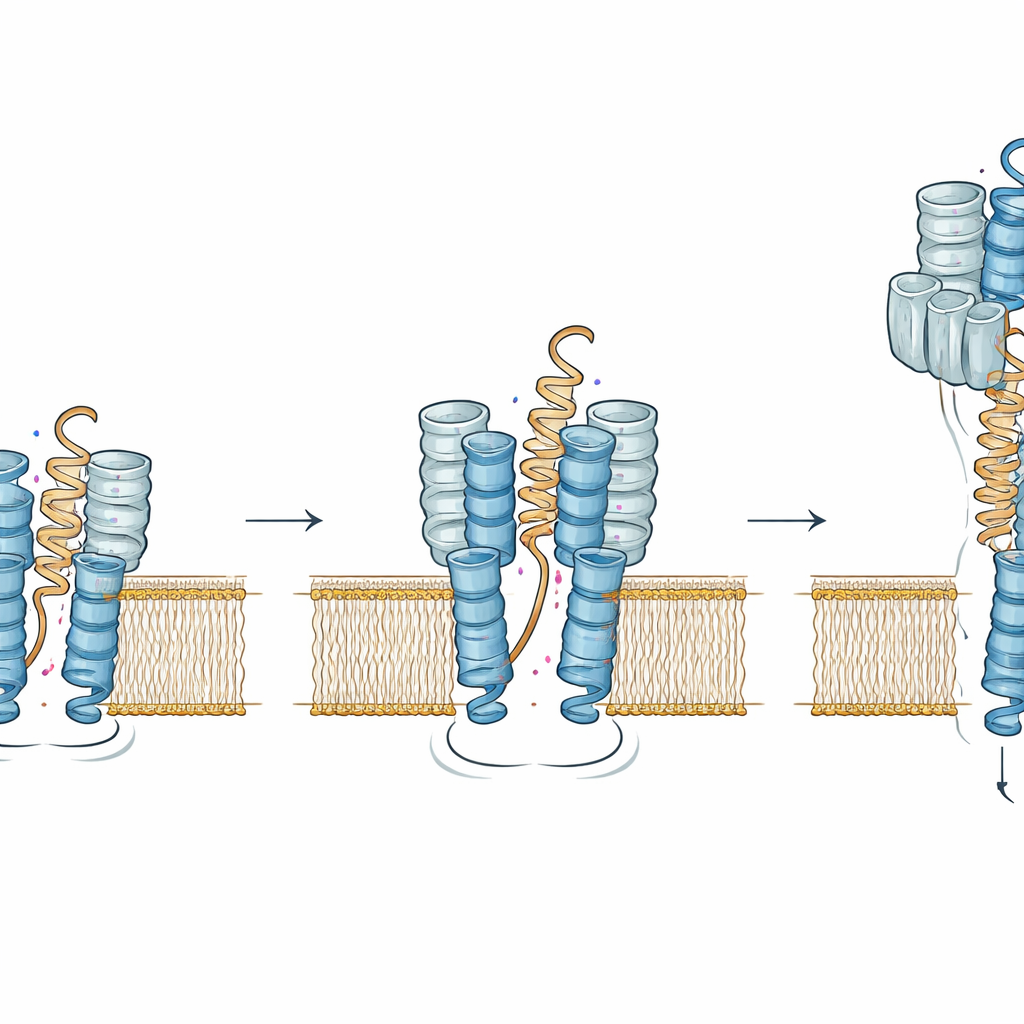
The story does not end with the substrate proteins. The authors also asked how FtsH senses these polar “flags” within the membrane. Earlier work suggested that FtsH usually starts degradation from floppy protein tails that dangle into the watery cytoplasm. Surprisingly, the engineered proteins in this study were still efficiently removed even when such tails were shortened or absent, meaning that FtsH can engage some targets using only information within the membrane. By creating chimeras in which FtsH’s own membrane-spanning segments were swapped or reshaped, the team found that its first transmembrane helix is specially tuned for this task: it is shorter and more polar than a typical membrane anchor, a design that creates a tiny region of mismatch with the surrounding membrane. When the researchers lengthened and greased up this helix, FtsH could still chew up soluble proteins but lost much of its ability to bind and degrade misfolded membrane proteins with exposed polar groups.
What This Means for Cellular Health
Taken together, the work reveals a simple but powerful rule: water-loving residues that become exposed to the greasy interior of the membrane act as a universal distress signal for the FtsH quality-control system. Healthy membrane proteins keep such residues buried, while misfolded or unpaired ones display them to the lipids, where they are both harmful and easily recognized. FtsH’s own membrane-embedded helix appears engineered to home in on these polar patches and, once in contact, to help pry the damaged protein out of the membrane for destruction. This membrane-centered surveillance mechanism likely broadens the range of proteins that cells can monitor and may echo similar strategies used in human cells to protect their membranes from harmful mistakes.
Citation: Chai-Danino, M., Ravensary-Modin, N., Vladimirov, V.I. et al. Membrane-embedded polar residues target membrane proteins for degradation by the quality control protease FtsH. Nat Commun 17, 3067 (2026). https://doi.org/10.1038/s41467-026-69829-8
Keywords: membrane protein quality control, FtsH protease, protein misfolding, bacterial membranes, protein degradation