Clear Sky Science · en
NR2F6 deletion revives CAR-T cell function and induces antigen-agnostic immune memory in solid tumors
Reawakening the Body’s Cancer Fighters
Many people have heard of CAR-T cell therapy, a personalized treatment that engineers a patient’s own immune cells to hunt down cancer. It has produced striking cures in certain blood cancers, yet solid tumors like pancreatic or lung cancer have remained frustratingly resistant. This study explores a new genetic tweak that could help engineered T cells not only attack solid tumors more effectively, but also teach the rest of the immune system to recognize and remember the cancer, even when it changes its appearance.
Why Solid Tumors Are So Hard to Tackle
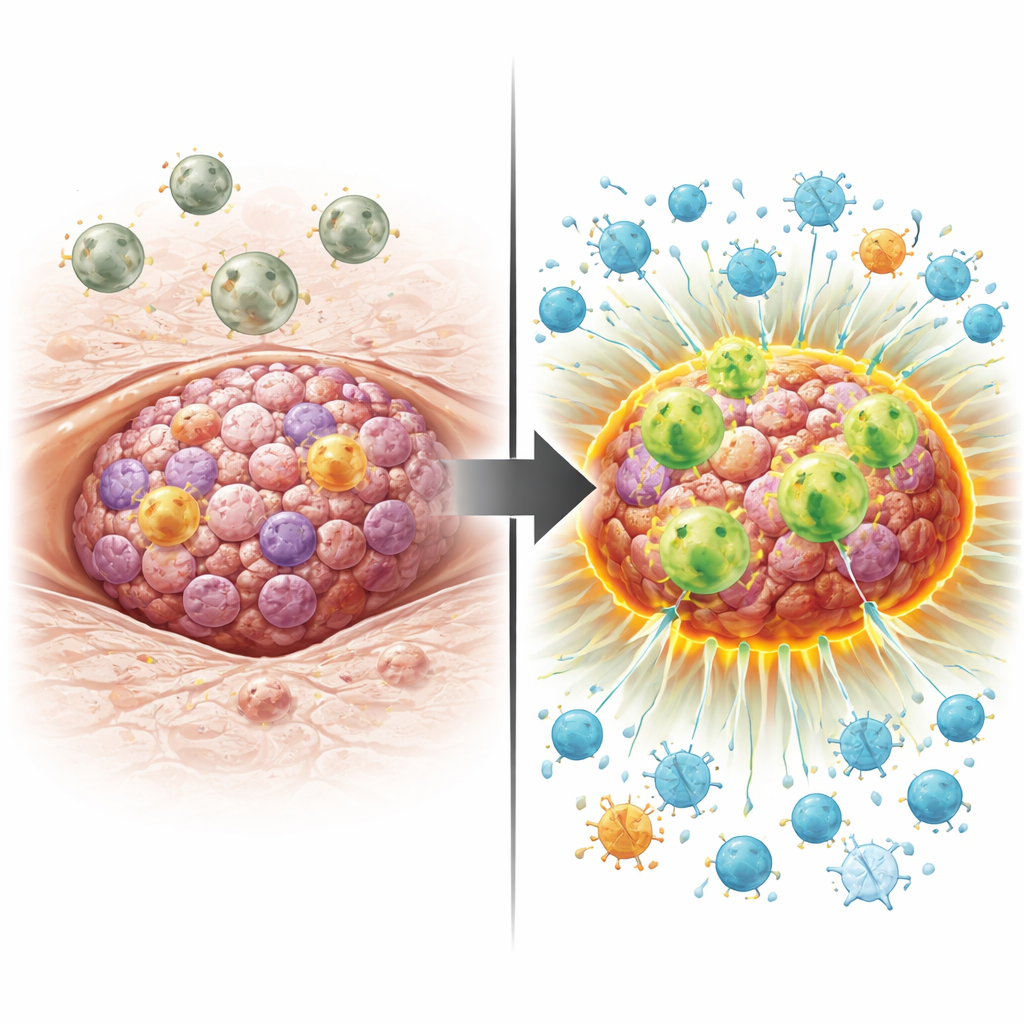
Unlike blood cancers, solid tumors are patchworks of different cell types. Some display the surface marker that a given CAR-T cell is designed to recognize, while others do not, or they can lose that marker over time. In addition, the environment inside a solid tumor is starved of oxygen and nutrients and flooded with suppressive signals, pushing T cells into a worn-out, “exhausted” state. As a result, standard CAR-T cells often falter: they kill some cancer cells at first, then slow down or disappear, allowing resistant tumor cells to regrow. Overcoming both this exhaustion and the tumor’s shifting target profile is a central challenge for next-generation immunotherapies.
A Hidden Brake Inside T Cells
The researchers focused on a little-known protein called NR2F6 that acts as an internal brake within immune cells. NR2F6 sits in the cell nucleus and dampens the activity of genes needed for strong immune responses, including those that drive production of key signaling molecules and support cellular energy use. Earlier work had shown that removing NR2F6 in mice makes their T cells and natural killer cells more aggressive against infections and some cancers. Here, the team asked whether deleting NR2F6 specifically in CAR-T cells would help them resist exhaustion, stay metabolically fit, and perform better in the punishing environment of solid tumors.
Engineering Tougher CAR-T Cells
Using CRISPR gene editing, the scientists disabled the Nr2f6 gene in mouse T cells before equipping them with a chimeric antigen receptor targeting a tumor marker. These modified cells were then infused into fully immunocompetent mice bearing several types of solid tumors, including a pancreatic cancer model engineered to mimic real-world variation in target expression. Compared with standard CAR-T cells, the NR2F6-deficient versions infiltrated tumors more effectively, secreted higher levels of toxic molecules that kill cancer cells, and maintained a “progenitor-like” state associated with long-term function rather than terminal exhaustion. Even under repeated, chronic exposure to tumor cells in laboratory tests, the edited CAR-T cells continued to kill efficiently and showed superior energy production through both mitochondrial respiration and glycolysis.
Recruiting the Rest of the Immune Army
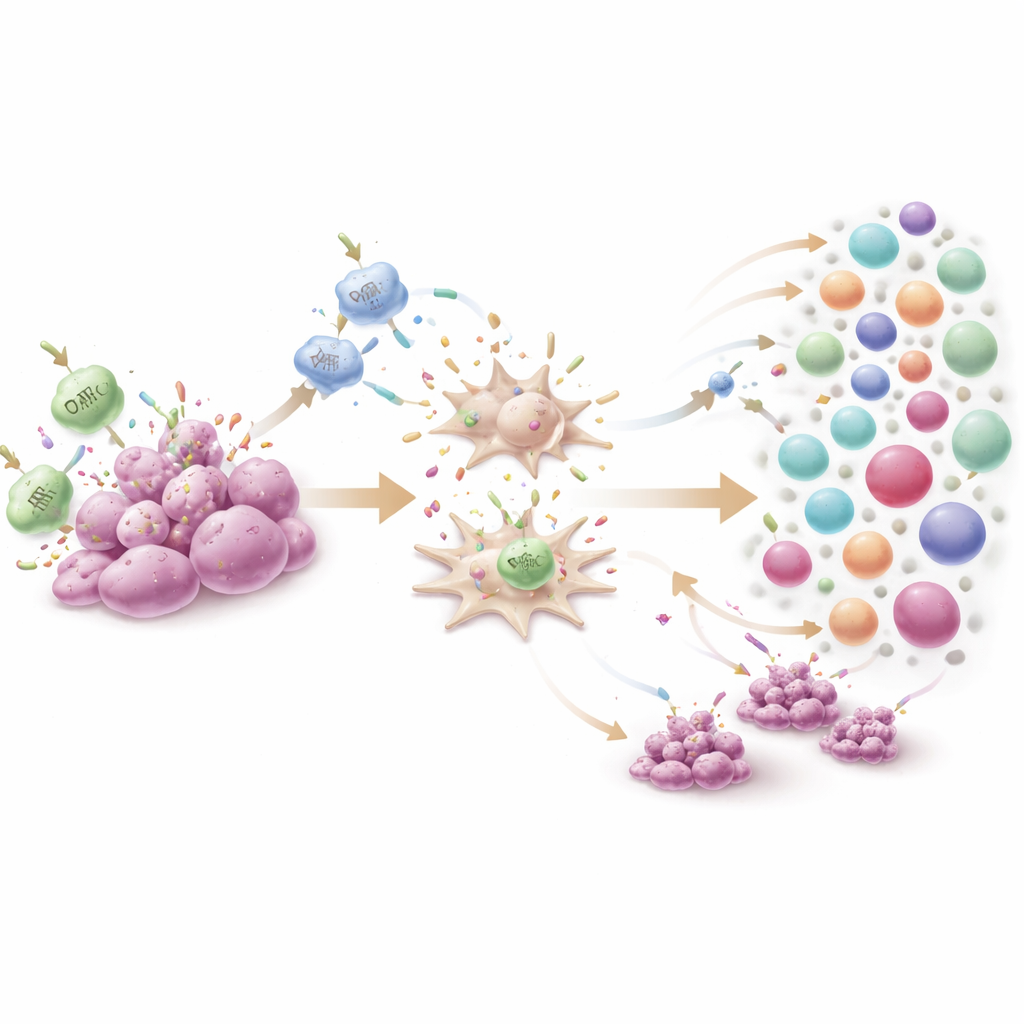
Perhaps the most striking finding was what happened after the engineered CAR-T cells themselves faded away. In treated mice, the modified cells became undetectable within about two weeks, yet many animals remained tumor-free for months. The team discovered that the intense killing by NR2F6-deficient CAR-T cells triggered a particularly inflammatory form of tumor cell death that released a wide array of cancer fragments. Specialized dendritic cells then picked up this material and presented it to the host’s own T cells, sparking “epitope spreading” – a broad response against many different tumor targets, not just the original CAR-recognized marker. Mice cured in this way rejected new tumors that lacked the CAR target altogether, and their protective immunity could be transferred to other mice simply by transplanting their immune cells.
Lasting Protection Without Extra Toxicity
Importantly, the enhanced activity of NR2F6-deficient CAR-T cells did not appear to come at the cost of severe side effects in the animal models. The therapy worked without the usual pre-treatment that wipes out a patient’s existing immune cells, and the mice showed no major weight loss or dangerous spikes in inflammatory molecules. Detailed single-cell analyses of immune cells within tumors months after treatment revealed fewer exhausted T cells, more proliferating killer T cells, and more activated dendritic cells, together forming a rejuvenated, diversified antitumor response. This suggests that a one-time genetic change in the CAR-T cells can reprogram the broader immune landscape in a lasting, favorable way.
What This Could Mean for Patients
In everyday terms, this work shows that by removing a single internal brake, engineered T cells can act as both front-line soldiers and skilled trainers. First they mount a powerful direct attack on the tumor; then, by causing highly visible cancer cell death, they help the body’s own immune system learn to recognize many different tumor features, including those that were never targeted by the CAR in the first place. While these findings are still preclinical and in mice, they outline a promising strategy: targeting NR2F6 in human CAR-T cells might one day turn a focused, fragile therapy into a durable, broadly responsive treatment for diverse solid tumors.
Citation: Humer, D., Klepsch, V., Rieder, D. et al. NR2F6 deletion revives CAR-T cell function and induces antigen-agnostic immune memory in solid tumors. Nat Commun 17, 3264 (2026). https://doi.org/10.1038/s41467-026-69796-0
Keywords: CAR-T cells, solid tumors, epitope spreading, immune memory, NR2F6