Clear Sky Science · en
Sub-pangenome analysis reveals structural variants associated with fruit color and bacterial wilt resistance in eggplant
Why Eggplant Diversity Matters
Eggplants on our plates may look simple—purple, glossy, and familiar—but under the skin they hide a surprising wealth of genetic variety. This study explores that hidden diversity to answer two questions of direct importance to farmers, breeders, and consumers: what controls the vivid color of eggplant fruits, and what helps plants survive a devastating soil disease called bacterial wilt? By mapping and comparing eggplant DNA at an unprecedented scale, the authors uncover large structural changes in the genome that shape both fruit appearance and disease resistance, offering new tools for developing tastier and more resilient crops.
A Global Collection of Eggplants
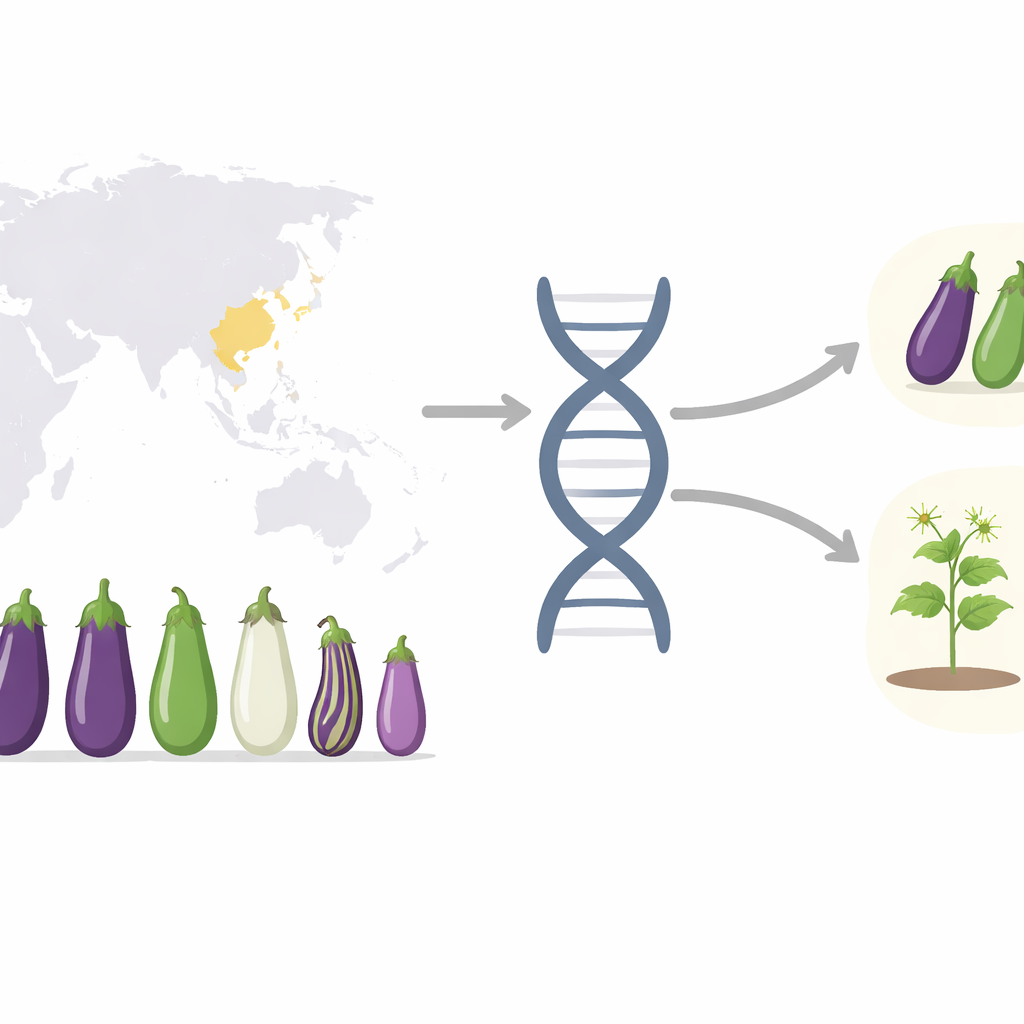
The researchers assembled a panel of 226 eggplant varieties and close relatives collected mainly from Southeast Asia and China, regions thought to be central to eggplant domestication, along with samples from Europe and South America. They sequenced the DNA of these plants and found that genetic relationships closely mirrored geography: Southeast Asian, European–South American, and different Chinese groups each formed their own clusters. Varieties from Southeast Asia and outside China generally carried more genetic diversity than Chinese varieties, suggesting that breeding and local selection in China have narrowed the genetic base.
Building an Eggplant “Sub‑Pangenome”
To go beyond a single reference genome, the team built a “sub‑pangenome”—a combined DNA resource that captures genes shared across many eggplants as well as those present only in some. They produced high‑quality, chromosome‑scale assemblies for 11 representative varieties and combined them with six previously published genomes. Comparing all 17 genomes revealed more than 37,000 gene families. About 40% of these genes were found in all varieties (the “core” set), while nearly half were “dispensable,” present in only some lines. Many of these dispensable genes were linked to plant defense, highlighting them as a rich source of variation for improving disease resistance.
Hidden Genome Rearrangements and Fruit Color
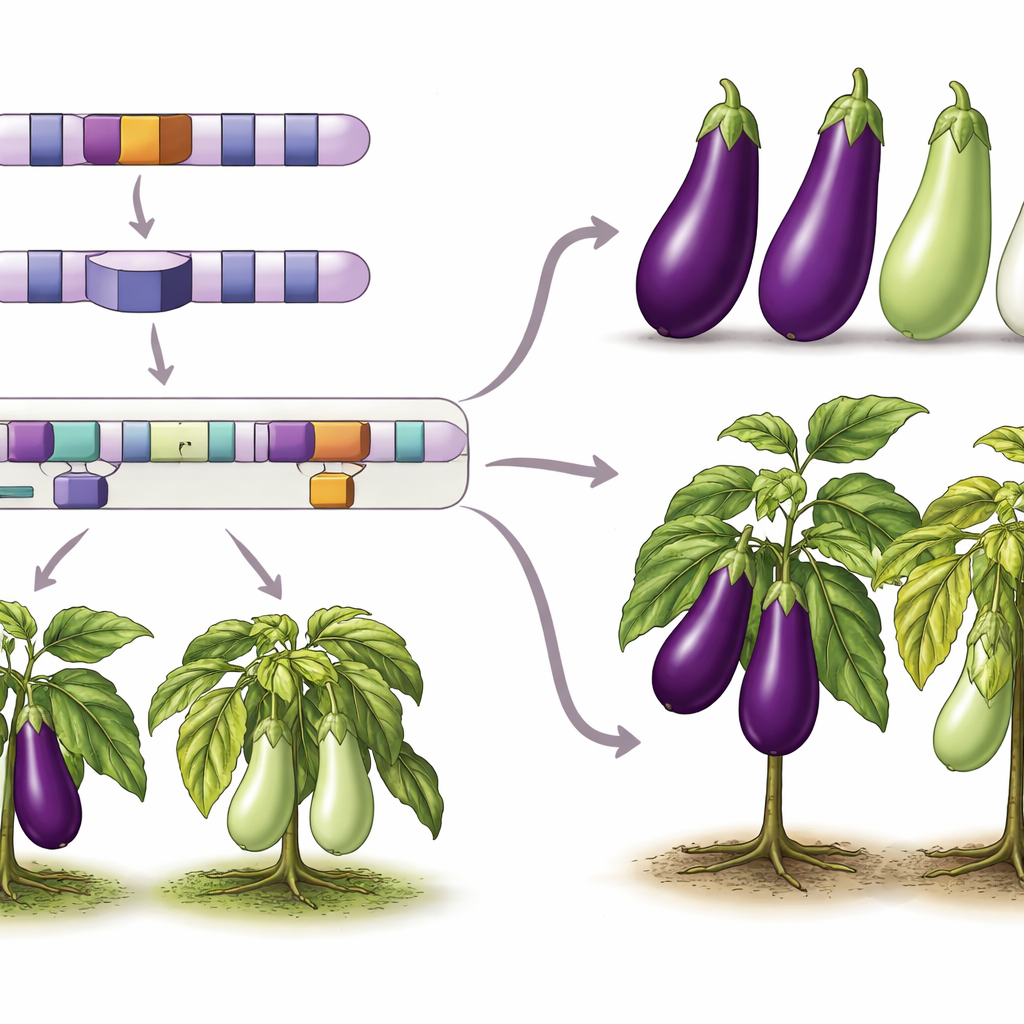
Beyond small DNA changes, the authors searched for larger structural variants such as insertions, deletions, and inversions—segments of DNA that are flipped in orientation. They discovered more than 150,000 such changes, most rare and often kept away from important genes, implying that many are harmful. One giant inversion on chromosome 10, about 12.4 million DNA letters long, stood out. It occurs in roughly half of all sampled eggplants and is especially common in Chinese lines. Genome‑wide tests linked this inversion very strongly to purple fruit color. The inversion lies close to a gene called SmMYB1, previously shown to control the production of anthocyanins, the pigments that make eggplants purple. Varieties with a small deletion in SmMYB1 tended to have green or white fruits, while those with the intact version were mostly purple. The inversion itself does not directly change SmMYB1’s activity, but it travels together with favorable color alleles as part of a large, tightly inherited DNA block, likely maintained by human selection for purple fruits.
Unraveling Resistance to Bacterial Wilt
Bacterial wilt, caused by the soil‑dwelling microbe Ralstonia solanacearum, can quickly kill eggplant plants and wipe out fields. By infecting nearly 200 varieties across multiple seasons and linking disease outcomes to their genomes, the researchers pinpointed several key regions tied to resistance. On chromosome 4, they found a mutation that introduces a premature stop in a gene related to known disease‑resistance enzymes in other crops; plants with the intact version were more resistant. On chromosome 5, they identified a complex region where the number of copies of two types of genes—one involved in the salicylic acid defense pathway (SmEPS1) and one resembling a broad‑spectrum immune receptor (SmRoq1)—varies widely between varieties. Plants carrying more copies of either gene, together with the functional chromosome‑4 gene, tended to be much more resistant. Silencing each of these genes experimentally made plants more susceptible to infection, confirming their importance.
What This Means for Future Eggplants
By stitching together genome sequences and trait data, this work shows that large‑scale genome rearrangements and gene copy differences play a major role in shaping both the color and health of eggplants. The newly built eggplant sub‑pangenome and the specific DNA markers identified here give breeders practical tools to track desirable versions of genes for purple color and bacterial wilt resistance. In the long term, using this information to combine favorable variants from around the world could lead to eggplant varieties that are more visually appealing, more productive, and better able to withstand disease while relying less on chemical control.
Citation: You, Q., Peng, Z., Li, Z. et al. Sub-pangenome analysis reveals structural variants associated with fruit color and bacterial wilt resistance in eggplant. Nat Commun 17, 3075 (2026). https://doi.org/10.1038/s41467-026-69764-8
Keywords: eggplant genomics, fruit color, bacterial wilt resistance, structural variants, pangenome