Clear Sky Science · en
Clinically distinct metabotypes of pediatric MASLD identified through unsupervised clustering of NASH CRN data
Why children’s liver health matters
Many people think of liver disease as a problem of adults who drink too much alcohol. Yet a growing number of children and teenagers are developing a form of fatty liver disease tied to weight and metabolism, now called metabolic dysfunction–associated steatotic liver disease (MASLD). This study looked closely at more than 500 young patients with biopsy-proven MASLD to see whether they really share one single illness, or whether there are hidden subtypes that might need different care.
Three patterns, not one single disease
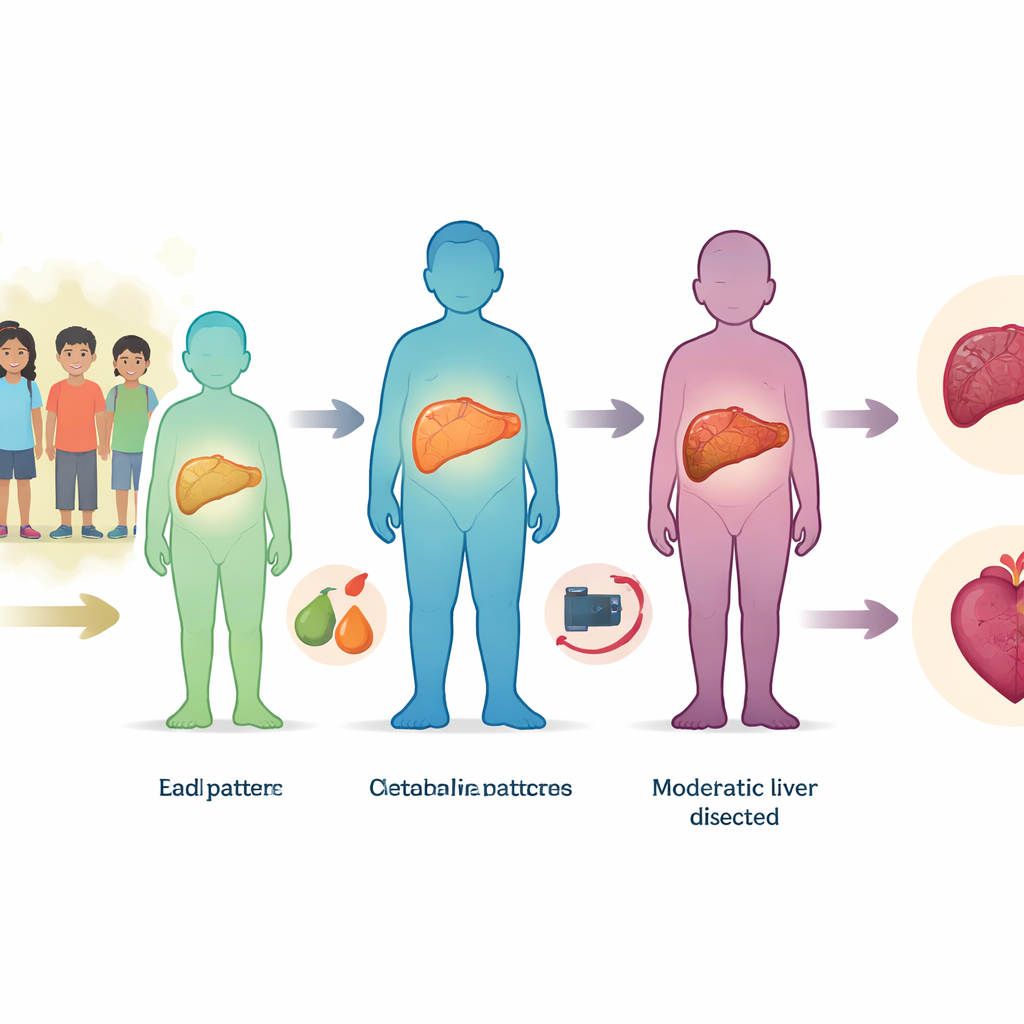
Using routine clinic measurements such as age, waist size, blood fats, blood pressure, and liver enzyme levels, the researchers applied an unbiased computer clustering method to the children’s data. Instead of forcing the data into predefined boxes, the algorithm grouped youngsters who looked similar across these traits. Three clear patterns emerged. The largest group, called “early-mild,” included younger children with lower cholesterol, triglycerides, liver enzymes, and insulin resistance. A second, “cardiometabolic” group had the biggest waists, highest blood fats and uric acid, and higher blood pressure, but somewhat less severe liver scarring. The smallest “inflammatory-fibrotic” group had the most inflamed and scarred livers and very high liver enzyme levels, even though their blood fats were not the highest.
How body chemistry differs between groups
To move beyond standard lab tests, the team analyzed thousands of small molecules circulating in the children’s blood using high-resolution metabolomics, a technology that detects chemical fingerprints of metabolism. They found that each clinical pattern came with its own metabolic signature. In the cardiometabolic group, breakdown products of branched-chain amino acids, certain short-chain fat–related pathways, and purine metabolism (closely linked with uric acid) were more active. These patterns fit with a body under strain from excess fat, insulin resistance, and possible high-fructose diets, and they may help explain why this group appears especially vulnerable to future heart and blood vessel problems.
A chemical trail linked to liver scarring
The inflammatory-fibrotic group showed a different chemical fingerprint centered on the processing of the amino acid tryptophan. Molecules in the so-called kynurenine branch of this pathway, as well as related compounds like serotonin and indole derivatives, were higher in this group and strongly tied to the amount of scarring seen in liver biopsies. Some of these pathways are turned on by inflammation and may promote further tissue damage, suggesting a self-reinforcing loop between immune activity, altered metabolism, and progressive liver injury. Other pathways related to energy handling in liver cell powerhouses and to collagen building blocks, such as hydroxyproline, also stood out, supporting their role in the development of fibrosis.
A possible early crossroads
The early-mild group appeared to sit at a crossroads. These children were younger and metabolically less disturbed overall, yet a surprising fraction already showed advanced liver scarring. Their metabolic profile showed fewer dramatic changes, but hints of pathways linked to gut microbes and early shifts in fuel use. The authors propose that some children in this group may eventually drift toward the heart-focused cardiometabolic pattern, while others progress toward the liver-centered inflammatory-fibrotic pattern, depending on genes, lifestyle, and environment. This idea echoes similar subtypes recently described in adults, suggesting that these patterns begin early in life.
Toward more tailored care for young patients
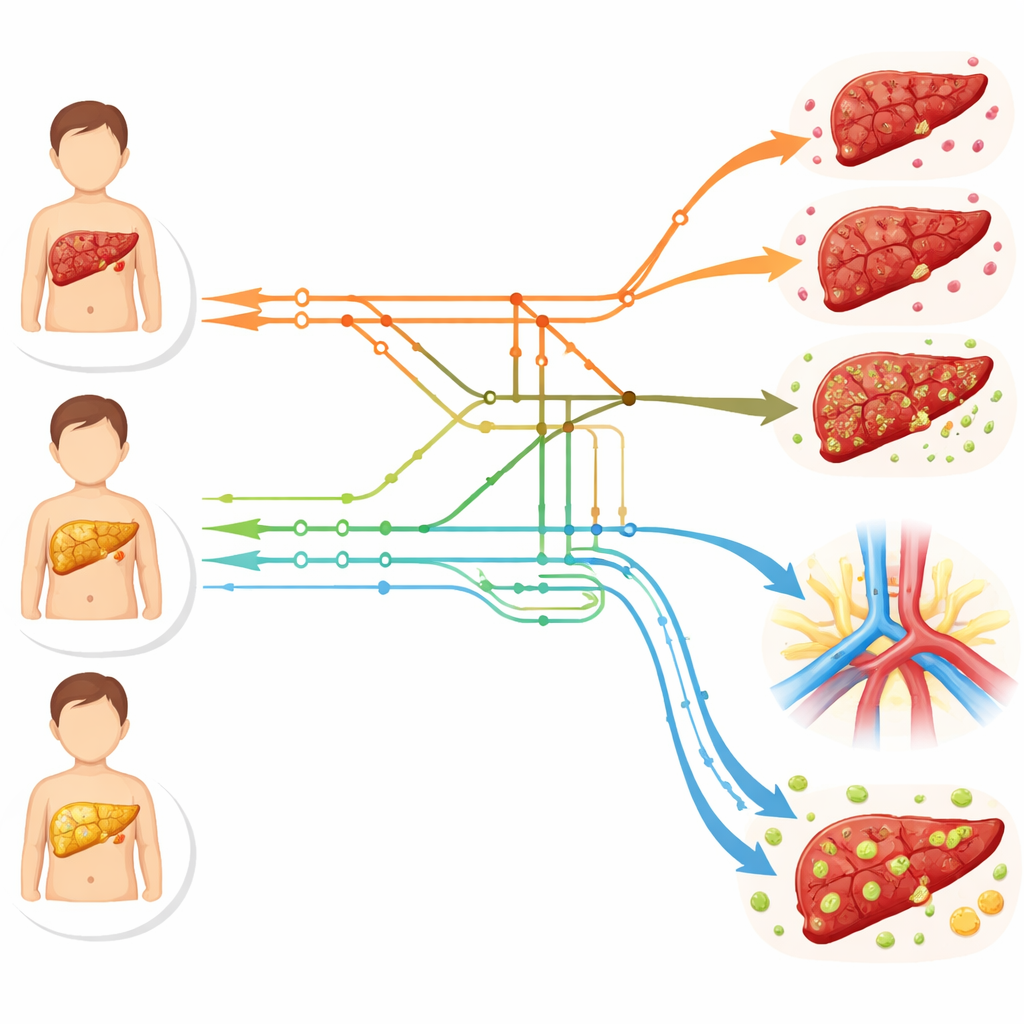
In plain terms, this work shows that pediatric MASLD is not a single uniform condition. One subtype looks more like a “heart-risk” profile dominated by high blood fats and blood pressure, another looks more like a “liver-risk” profile driven by inflammation and scarring, and a third represents an earlier, mixed stage that can already hide significant damage. By mapping the distinct chemical fingerprints of each pattern, the study lays groundwork for more personalized care—directing some children toward strategies that protect the heart and blood vessels, and others toward therapies that calm liver inflammation and slow scarring. Larger, long-term studies will be needed to confirm these subtypes and test tailored treatments, but this research marks an important step toward precision medicine for children with fatty liver disease.
Citation: Huneault, H.E., Tiwari, P., Jarrell, Z.R. et al. Clinically distinct metabotypes of pediatric MASLD identified through unsupervised clustering of NASH CRN data. Nat Commun 17, 3107 (2026). https://doi.org/10.1038/s41467-026-69735-z
Keywords: pediatric fatty liver disease, metabotypes, precision medicine, metabolomics, cardiometabolic risk