Clear Sky Science · en
Modulating TPP riboswitch activity simultaneously enhances crop yield, nutritional quality and stress tolerance
A New Way to Grow Better Food
Feeding a growing world without exhausting the planet means raising crops that are not only high yielding, but also nutritious and tough enough to withstand disease and bad weather. Yet breeders usually face trade-offs: a rice plant bred for more grain might become more vulnerable to cold, or a tomato rich in vitamins might be harder to grow. This study reveals a rare exception—a subtle genetic tweak that lets rice and tomato plants produce more food, pack in extra vitamins, and better survive stress, all at the same time.
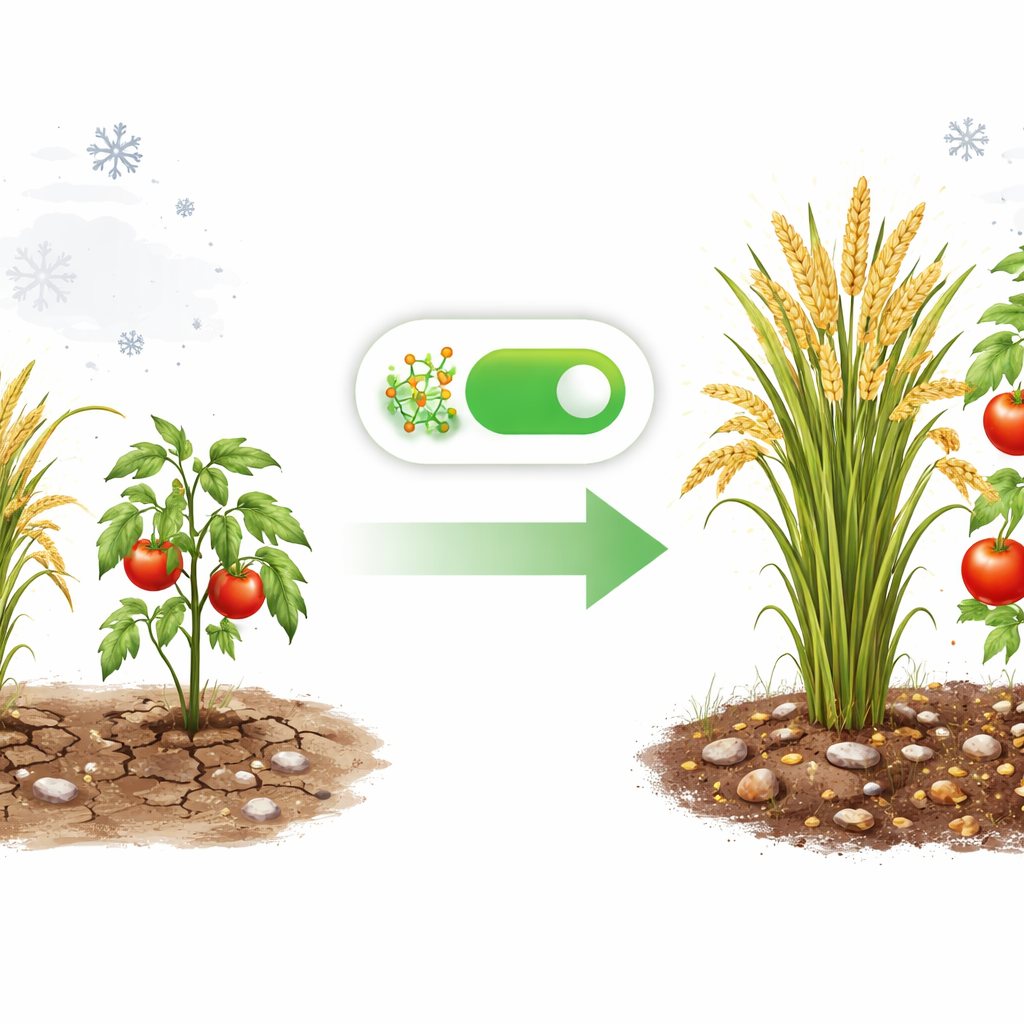
The Hidden Switch Inside Plant Cells
At the heart of this work is vitamin B1, also known as thiamine. In people, a lack of this vitamin can cause serious nerve and heart problems. In plants, its active form, thiamine pyrophosphate (TPP), powers key steps in how cells turn sugars into energy and building blocks. Plants naturally keep TPP levels in check using a tiny RNA structure called a riboswitch, which acts like a sensor. When TPP is plentiful, this sensor dials down production; when it is scarce, production ramps up. The researchers asked a simple question with big implications: what if this internal switch were relaxed so the plant could maintain higher levels of vitamin B1?
Editing the Switch to Supercharge Rice
Using precise gene-editing tools, the team altered the TPP riboswitch in a key vitamin B1 gene in rice. This did not add foreign DNA; it simply changed the plant’s own regulatory sequence. Several independent edited lines were created, two of which showed especially strong effects. In these lines, the amount of vitamin B1 in polished rice increased about fivefold compared with standard rice. But the surprise was broader: other important micronutrients—including several B vitamins, vitamin E, certain healthy lipids, and essential amino acids—also rose, while basic components like starch and protein stayed stable. This means the grains became richer in health-promoting nutrients without changing their core energy value.
More Grain from the Same Field
High nutrition would be far less useful if it came with a yield penalty. Instead, field trials in two very different rice-growing regions showed that the edited plants produced about 20% more grain than the original variety. The extra yield came mainly from longer flowering branches with more grains per cluster, rather than from smaller plants crammed more tightly in the field. Detailed measurements revealed that the edited plants captured sunlight more efficiently, moved electrons faster through their photosynthetic machinery, and used nitrogen fertilizer more effectively, especially under low-nitrogen conditions. In essence, the plants converted light and nutrients into biomass with greater efficiency.
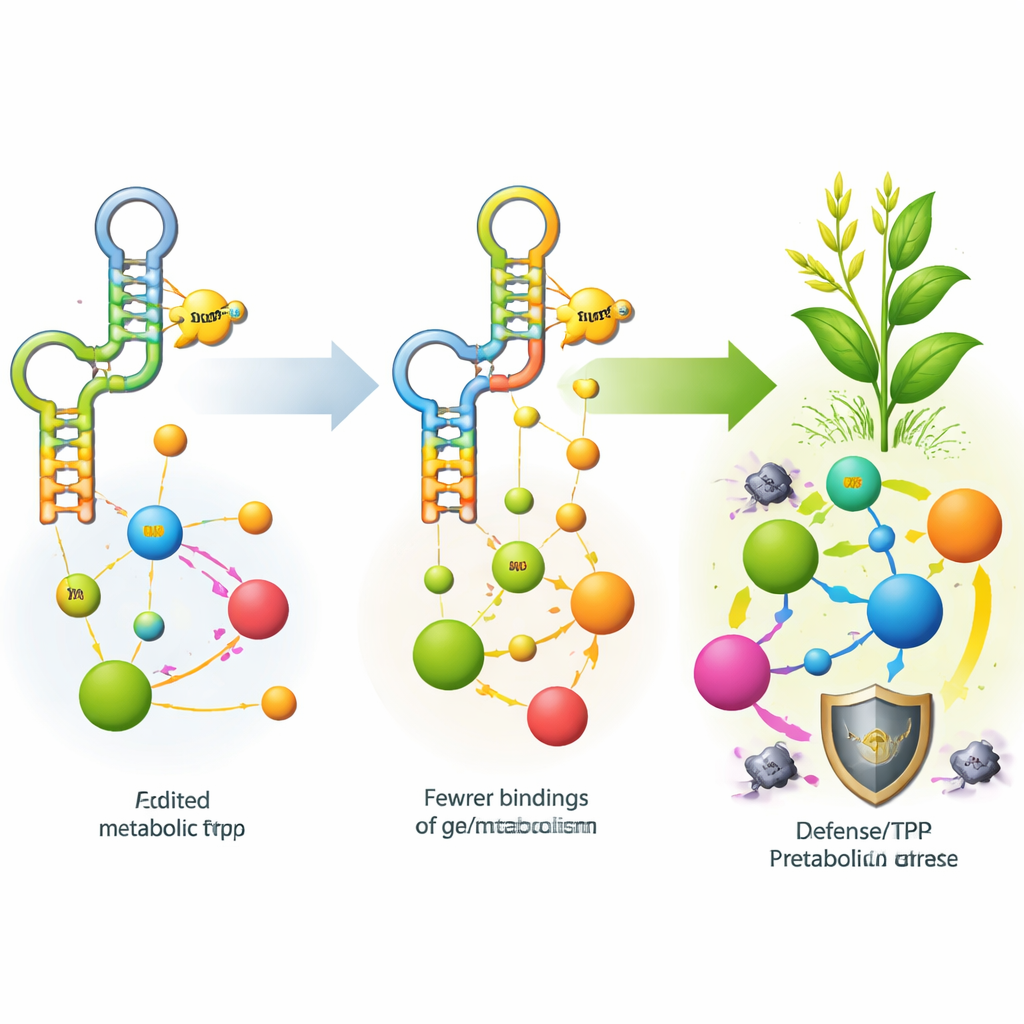
Built-In Protection Against Disease and Cold
The same genetic change also made rice substantially more resilient. In blast-disease hot spots, where a fungal pathogen routinely devastates crops, edited plants had fewer and smaller lesions and lower levels of fungal growth inside their tissues. When exposed to chilling temperatures that normally injure rice, the edited lines had much higher survival rates, leaked fewer electrolytes from damaged cells, and accumulated fewer harmful oxygen byproducts. Additional tests showed similar benefits when plants were simply treated with extra vitamin B1, supporting the idea that boosted TPP levels help redirect metabolism and defense responses in a coordinated way.
The Same Strategy Works in Tomato
To see whether this approach could extend beyond rice, the researchers edited the corresponding riboswitch in tomato. The results closely mirrored those in rice. Tomatoes carried more vitamin B1 and other micronutrients, showed stronger photosynthesis, and resisted a common gray mold fungus more effectively. They also tolerated cold stress better, with less tissue damage and oxidative stress. Because the same type of RNA switch and vitamin pathway are conserved across many plants, this suggests that fine-tuning TPP levels could be a general recipe for making a wide range of crops more nutritious, productive, and resilient.
Why This Matters for Future Harvests
By gently releasing a natural brake on vitamin B1 production, the researchers were able to rewire plant metabolism in a way that benefits yield, nutrition, and stress tolerance all at once—a combination that conventional breeding rarely achieves. Since the method edits an existing genetic element rather than inserting a new gene, it may face fewer regulatory and public-acceptance hurdles than traditional genetically modified crops. If scaled into major food plants, this strategy could help reduce hidden hunger from multiple micronutrient deficiencies while stabilizing harvests in a changing climate, moving global agriculture a step closer to truly sustainable food security.
Citation: Li, Y., Li, K., Lu, J. et al. Modulating TPP riboswitch activity simultaneously enhances crop yield, nutritional quality and stress tolerance. Nat Commun 17, 3328 (2026). https://doi.org/10.1038/s41467-026-69730-4
Keywords: vitamin B1, crop biofortification, gene editing, rice and tomato, stress-tolerant crops