Clear Sky Science · en
Arc magma formation through the fluid-fluxed mélange melting in subduction zones
Why this hidden plumbing of volcanoes matters
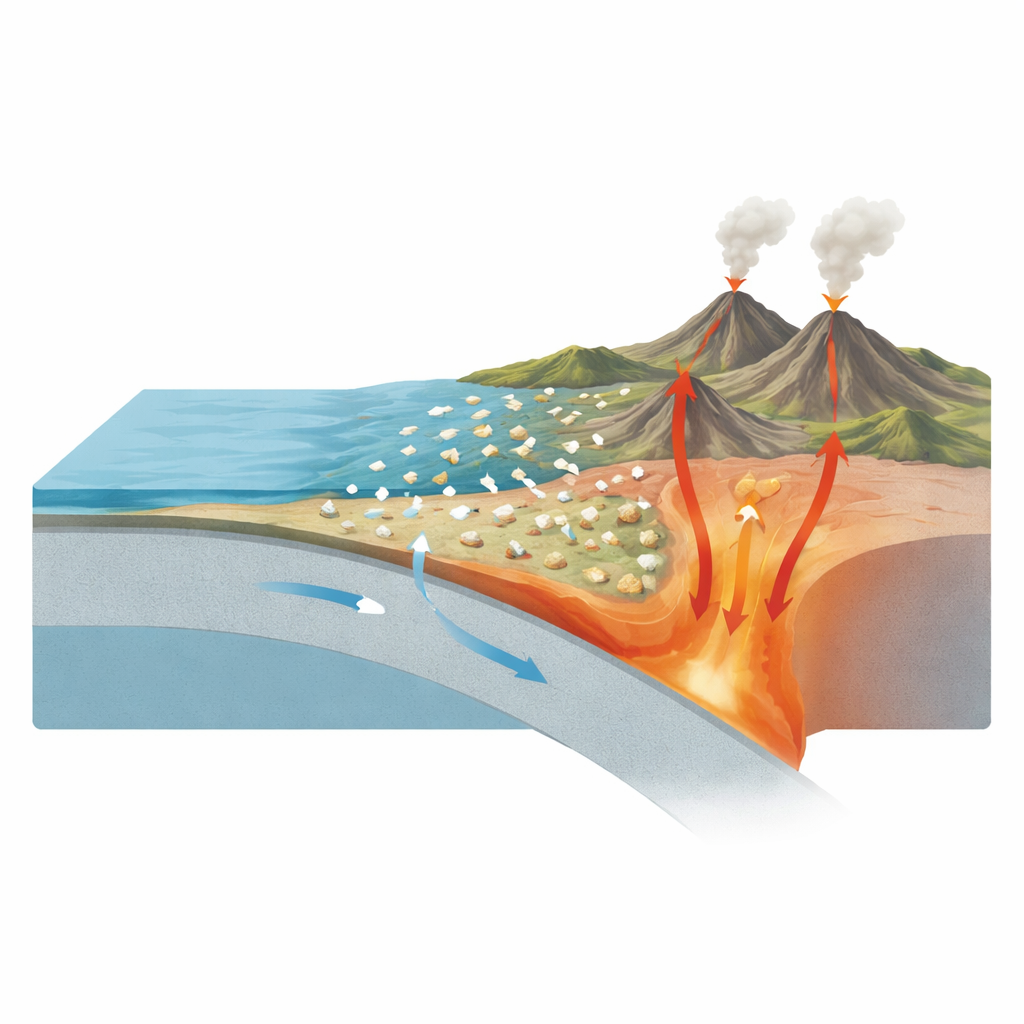
Arc volcanoes, like those lining the Pacific “Ring of Fire,” sit above places where one tectonic plate dives beneath another. These fiery chains do far more than produce eruptions: they move water, gases, and rock between Earth’s surface and deep interior, influencing everything from the growth of continents to long‑term climate. Yet scientists still argue about what, exactly, melts to feed these volcanoes and how material from the sinking plate finds its way back up. This study tackles that puzzle using a subtle chemical tracer—barium isotopes—in lavas from the Izu arc south of Japan, revealing a new, multi‑stage picture of how subduction powers volcanoes in “cold” parts of the planet’s deep conveyor belt.
A closer look at a key volcanic chain
The Izu‑Bonin‑Mariana system is a classic example of an oceanic plate sliding beneath another oceanic plate. The Izu arc, at its northern end, is especially useful because it lies above a relatively cool, thick slab and receives only a thin sprinkling of sediments on the downgoing plate. That simplicity helps isolate what the volcanic rocks are actually telling us about material rising from depth. The researchers sampled lava from islands along a line that cuts across the arc—from the “frontal” volcanoes directly above the slab to “rear‑arc” volcanoes farther inland—and combined those data with measurements of nearby seafloor sediments drilled at Ocean Drilling Program Site 1149.
Reading the story written in barium
Barium is a trace metal that easily hitches a ride in water‑rich fluids but also records its origins in the relative abundances of its isotopes. By measuring tiny differences in the ratio of heavy to light barium in the lavas, the team could distinguish contributions from altered oceanic crust, sediments, and the underlying mantle. They found that both the barium isotope values and the ratio of barium to thorium are highest in lavas near the volcanic front and steadily decrease toward the rear of the arc. Importantly, these high‑barium lavas also carry strontium and neodymium isotope signatures that match altered oceanic crust rather than sediment. This combination rules out earlier ideas that extreme barium enrichment mainly reflects partial melting of sediments or simple variations in sediment composition.
The rise of mixed rock blobs
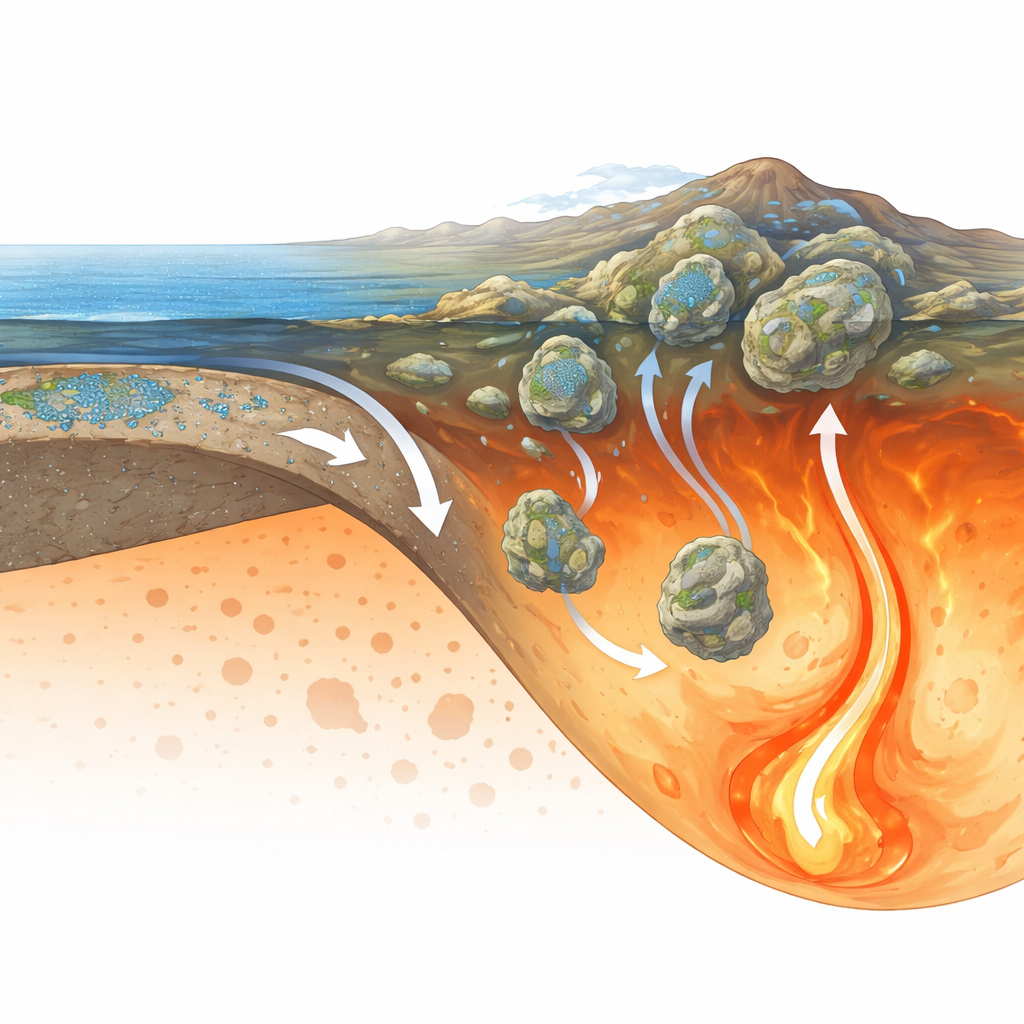
To explain the full set of isotope patterns, the authors propose that the mantle source beneath Izu is not just “spiked” once with slab‑derived material. Instead, there are at least two linked stages. First, at relatively shallow depths along the slab–mantle boundary, pieces of sediment and mantle rock are physically mixed into a patchwork rock called mélange. These hybrid blobs are slightly enriched in sediment signals and have distinct barium isotope values. Because mélange is less dense than the surrounding mantle at these depths, it can rise upward as buoyant diapirs, carrying recycled surface material into the hotter mantle wedge beneath the arc.
Fluids that switch on the melt
The second stage unfolds deeper down, where the subducting oceanic crust becomes hot enough to squeeze out water‑rich fluids. These fluids are strongly enriched in barium with heavy isotopic signatures and migrate into the mantle wedge. There, they encounter the previously emplaced mélange diapirs. When the fluid infiltrates these blobs, it both alters their chemistry and lowers their melting point, turning parts of them into magma that can rise to feed volcanoes. Mixing models that combine a small fraction of sediment‑rich mélange with an added dose of altered‑crust fluid reproduce the observed barium, strontium, and neodymium isotope trends not only in the Izu arc but also in other cold arcs such as Tonga‑Kermadec and parts of the Mariana system.
What this means for Earth’s deep cycles
In plain terms, this work suggests that volcanoes above cold subduction zones are fueled by a partnership between solid mixed rock blobs and later pulses of hot, watery fluid. Sediments and bits of the slab first get stirred into the mantle as mélange and rise partway toward the surface; only when fluids from the deeper slab arrive do these blobs begin to melt efficiently and release magma. This multi‑stage “mélange plus fluid” process offers a unified explanation for otherwise puzzling chemical fingerprints in arc lavas and implies that mélange bodies act as temporary holding zones for water, carbon, and other volatile elements. Understanding this hidden plumbing system helps clarify how subduction zones recycle material through the planet, shaping both its rocky crust and its long‑term atmospheric makeup.
Citation: Zhang, W., Chen, YX., Taylor, R.N. et al. Arc magma formation through the fluid-fluxed mélange melting in subduction zones. Nat Commun 17, 3129 (2026). https://doi.org/10.1038/s41467-026-69726-0
Keywords: subduction zone volcanism, arc magmas, mélange diapirs, barium isotopes, Izu arc