Clear Sky Science · en
The landscape of tissue-resident microbiota across normal, polyp, and colorectal cancer tissues
Hidden Neighbors Inside Our Tissues
Our guts are home to trillions of microbes, but scientists are only beginning to understand the tiny communities that live not just in the gut’s contents, but inside the gut wall itself. This study explores these “tissue-resident” microbes in samples from people with healthy colons, precancerous polyps, and colorectal cancer. By mapping how these microscopic neighbors change across disease stages, the work sheds light on how they might contribute to cancer risk and how they could eventually help doctors assess danger hidden in a seemingly small growth.
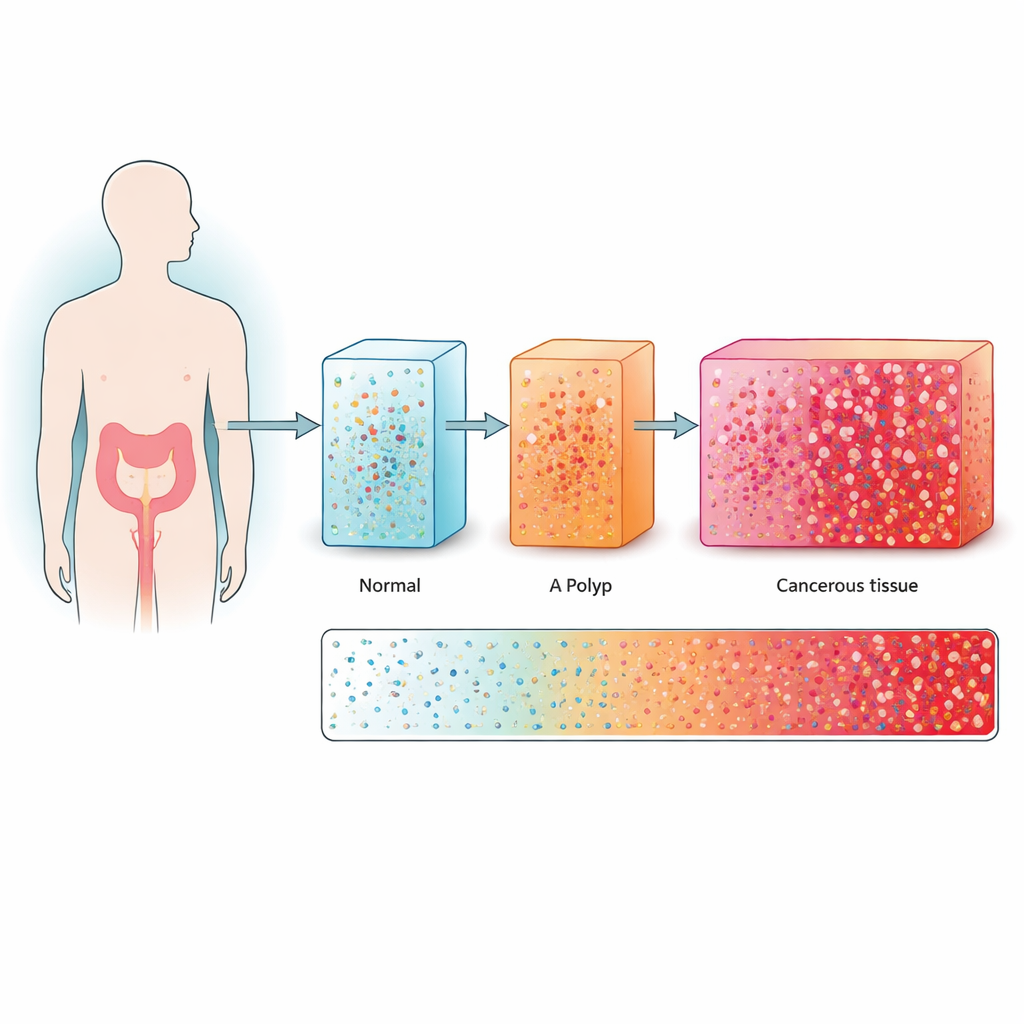
Why Microbes Inside Tissues Matter
Most stories about gut bacteria focus on the microbes floating in stool. Yet some bacteria burrow into or settle within the colon lining, where they sit in direct contact with human cells. Because of this intimate contact, these tissue-resident microbes could influence how cells grow, repair damage, or even turn cancerous. Earlier research had linked certain bacteria with colorectal tumors, but no one had carefully charted how these tissue communities differ between normal colon, polyps, and full-blown cancer across a large group of patients.
Mapping Microbial Life Across the Colon
The researchers analyzed over a thousand tissue samples from normal colon lining, adenomatous polyps, and colorectal cancers. Using a sensitive genetic readout of bacterial fingerprints, along with strict controls to remove background contamination, they counted and identified bacteria embedded in each tissue type. They found that cancer tissues generally carried a heavier bacterial load than normal or polyp tissue, and that the overall mix of species clearly separated normal samples from cancer when visualized with standard community-analysis methods. Importantly, the bacteria living in tissue looked quite different from those in stool collected from other colorectal cancer studies, showing that tissue-resident communities are a distinct world, not simply a mirror of the gut contents.
Distinct Microbial Signatures of Health, Polyps, and Cancer
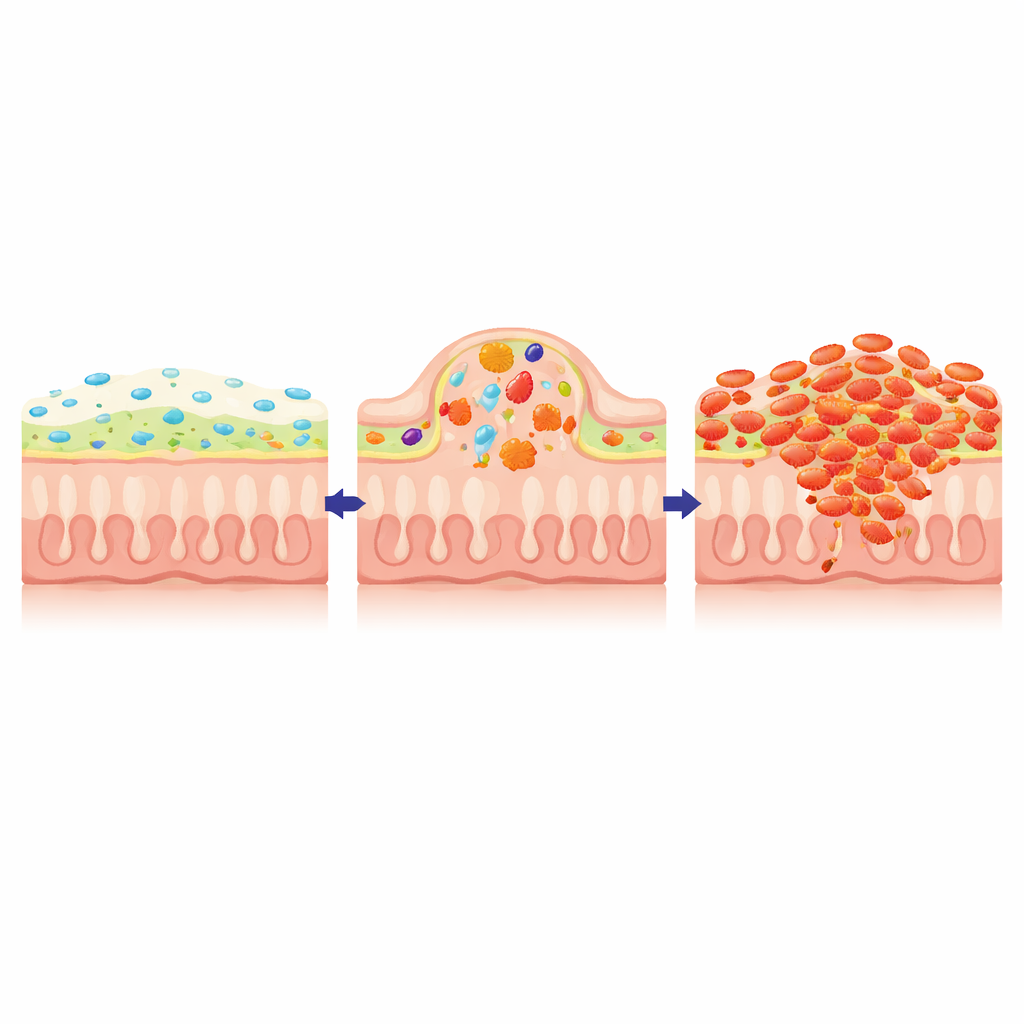
When the team compared normal tissue, polyps, and cancers together, they detected three recognizable microbial “landscapes,” one for each state of the colon. Potentially harmful groups such as Fusobacterium, Streptococcus, and related bacteria became more abundant as tissue progressed from normal through polyp to cancer, while bacteria thought to be more protective, including Pseudomonas, Bifidobacterium, Collinsella, Akkermansia, and others, were most common in healthy tissue and declined along the same path. Some bacteria, like certain Bacteroides and Campylobacter species, were especially enriched in cancers. These gradual shifts suggest that the tissue microbiota changes early, when polyps form, and then stabilizes rather than continuing to transform as the tumor advances through later clinical stages.
Using Microbes to Tell Tissue States Apart
The scientists then asked whether these microbial patterns could be used to tell tissue types apart using computer models. By training machine-learning algorithms on the bacterial profiles, they built classifiers that distinguished normal tissue, polyps, and cancers with high accuracy in their main patient cohort and an independent group from another hospital. Surprisingly, once cancer was established, the detailed makeup of these microbial communities did not track with patient age, tumor stage, tumor location, or survival. In other words, tissue-resident microbes were very good at separating normal, polyp, and cancerous tissue, but poor at predicting how advanced or aggressive a cancer was. To validate that the key microbes were truly present in the tissues, the team used microscopic imaging with fluorescent probes, visually confirming expected patterns such as rising Fusobacterium and falling Pseudomonas from normal tissue to cancer.
What This Means for Patients and Prevention
For a layperson, the main message is that specific bacteria living inside the colon wall change in a consistent way as tissue moves from healthy to polyp to cancer, even though they do not seem to explain why some cancers behave worse than others. These patterns are not yet practical screening tools, since they require tissue samples, but they provide a roadmap for future work. Researchers can now search for noninvasive markers in stool or blood that reflect these tissue changes, or test whether altering tissue-resident microbes can reduce cancer risk. By revealing that our microscopic tenants inside the colon lining shift long before cancer fully develops, this study lays the groundwork for new approaches to prevention, risk stratification, and, eventually, microbiome-informed strategies to keep colorectal cancer at bay.
Citation: Xiang, H., Shen, B., Lao, W. et al. The landscape of tissue-resident microbiota across normal, polyp, and colorectal cancer tissues. Nat Commun 17, 3099 (2026). https://doi.org/10.1038/s41467-026-69705-5
Keywords: colorectal cancer, gut microbiome, tissue-resident bacteria, colon polyps, cancer risk