Clear Sky Science · en
Methanoperedenaceae archaea: a 20-year research journey
Microbes That Eat Methane in the Dark
The air we breathe contains a powerful greenhouse gas: methane. Much of it bubbles up from wetlands, farms, landfills, and wastewater plants. For decades, scientists knew that some microbes could quietly consume this methane before it escaped, even in places without oxygen. This review article tells the 20‑year story of one such remarkable group of microbes, the Methanoperedenaceae, and explores how they help protect the climate, clean polluted water, and might one day turn waste gas into useful products.
How These Hidden Methane Eaters Were Found
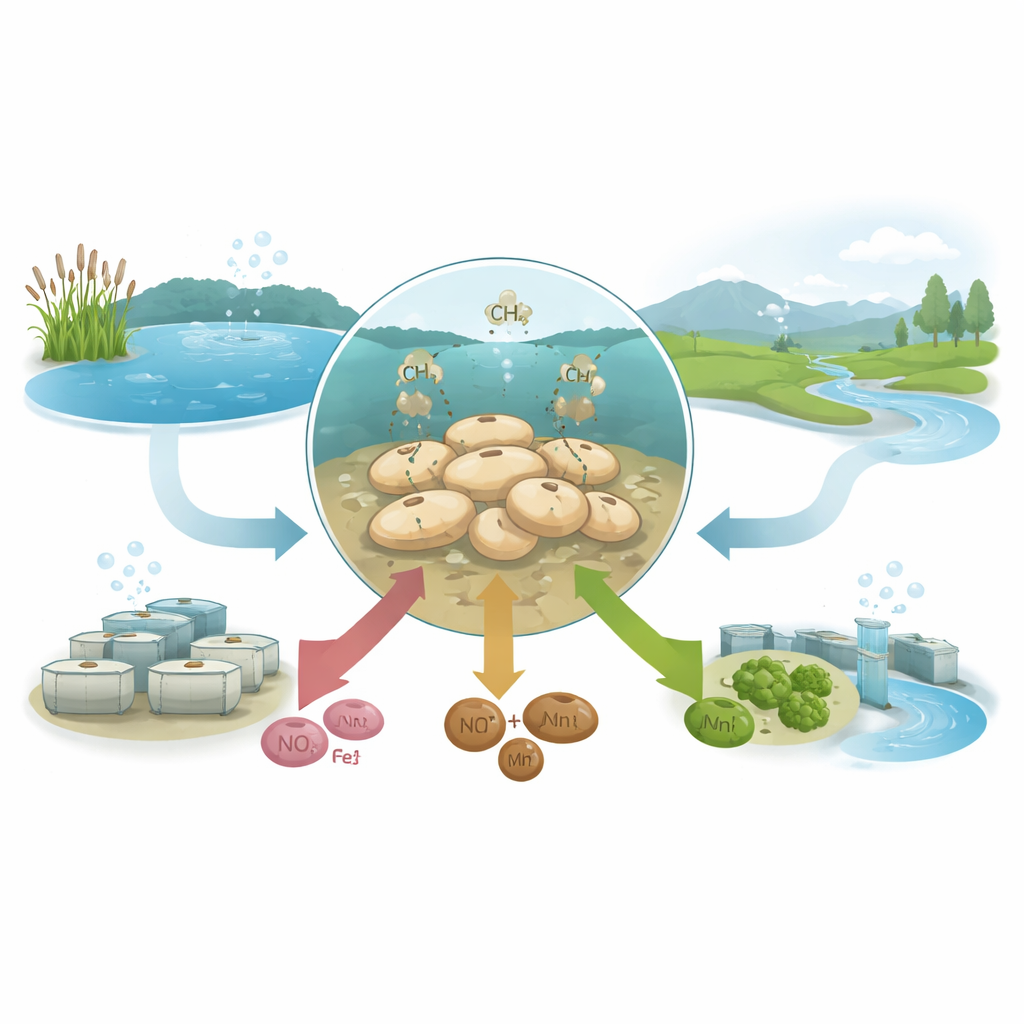
Methane is produced in oxygen‑poor environments by specialized microbes, and a large fraction is destroyed before it ever reaches the atmosphere. Early in the 2000s, researchers discovered archaea that can oxidize methane without oxygen in marine sediments, usually working together with partner bacteria and using sulfate from seawater. In 2006, a turning point came when scientists studying freshwater sediments showed that a different archaeal lineage could couple methane consumption to the reduction of nitrate instead of sulfate. This group, later named Methanoperedenaceae, proved able to carry out anaerobic methane oxidation on their own, without bacterial partners and in non‑marine environments, reshaping our understanding of the methane cycle.
Unexpected Flexibility in Food and Breath
Over the next two decades, lab enrichments and genetic studies revealed surprising versatility in Methanoperedenaceae. They can use methane as an energy source while “breathing” a wide range of oxidized compounds, including nitrate, iron and manganese minerals, and likely some toxic metals and metalloids. Genes hint that they may also tap into arsenic- and selenium‑containing compounds, and even form or consume small molecules like formate and acetate. These capabilities appear to have been expanded through gene sharing with other microbes over evolutionary time. Together, they allow Methanoperedenaceae to survive in changing environments where the available chemicals for respiration come and go.
Wiring Themselves to the Outside World
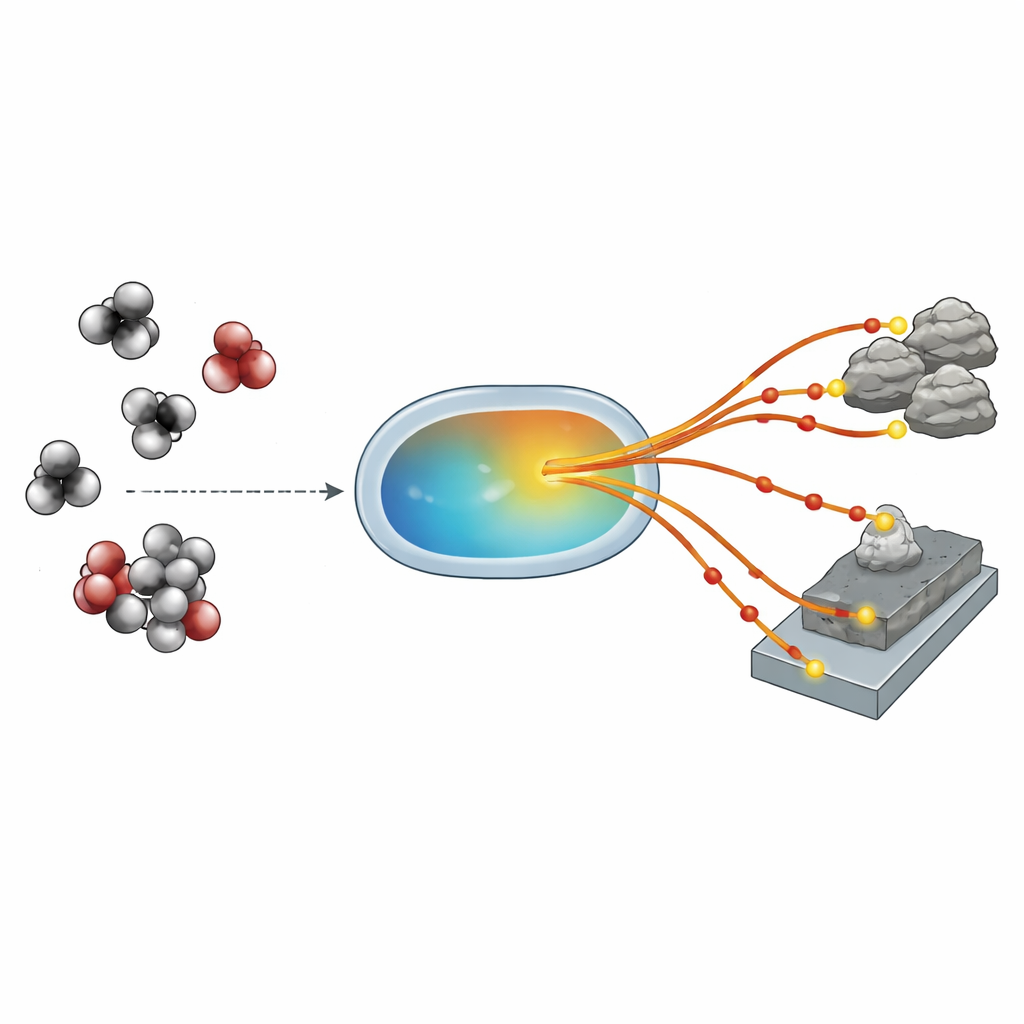
One of the most intriguing findings is that Methanoperedenaceae seem to move electrons directly to the outside world, a process called extracellular electron transfer. Rather than always relying on dissolved molecules, they use chains of special proteins rich in iron‑containing “hemes” to shuttle electrons across their cell envelope and out to solid surfaces such as metal oxides or electrodes. Microscopy and electrochemical measurements show that these microbes can use this electrical wiring to reduce minerals or charge an electrode in a fuel‑cell‑like system. Scientists are still unraveling whether they do this mainly through cytochrome-based nanowires, conductive hair‑like structures, or a mix of both, and how this electrical lifestyle shapes their partnerships with neighboring microbes.
From Wastewater Cleanup to Climate Protection
Because Methanoperedenaceae consume both methane and nitrate, they are attractive tools for environmental engineering. In wastewater systems, they can work together with other microbes to remove nitrogen pollution while simultaneously stripping dissolved methane from effluents that would otherwise escape as a greenhouse gas. Engineers have built biofilm, granular, and membrane‑based reactors that retain these slow‑growing archaea long enough to reach practical treatment rates. These systems can treat high‑strength industrial streams as well as dilute effluents and can also be tuned to remove certain toxic contaminants. Researchers are now testing ways to push the process further, for example by using bioelectrochemical setups that pair methane‑oxidizing anodes with cathodes that make valuable chemicals.
Turning Methane into Products and Open Questions
Beyond cleanup, there is growing interest in using Methanoperedenaceae or their enzymes to convert methane into liquid products such as short‑chain fatty acids or bioplastics under gentle, low‑energy conditions. Early experiments have proven that mixed communities seeded with these archaea can drive such conversions, especially in advanced reactors that boost methane transfer. So far, however, the production rates are far below industrial needs, and the microbial communities tend to shift away from Methanoperedenaceae over time. Key challenges include speeding up their growth, improving methane delivery, stabilizing communities, and clarifying exactly which microbes perform each step in the conversion chain.
Why This Research Journey Matters
The 20‑year exploration of Methanoperedenaceae shows that a once‑overlooked branch of life can play a central role in planetary chemistry and offer new tools for climate and pollution solutions. These archaea help close the gap in our methane budget by consuming the gas in freshwater, wetland, and engineered environments, and they reveal just how adaptable microbial metabolisms can be. The work also highlights broader lessons: Earth’s archaeal world is far more diverse and influential than previously assumed, and understanding it will require close collaboration among ecologists, microbiologists, chemists, and engineers. As researchers continue to probe how these microbes breathe, grow, and evolve, Methanoperedenaceae may become key allies in both understanding Earth’s past and designing cleaner technologies for its future.
Citation: Liu, T., Zhang, X., Hu, S. et al. Methanoperedenaceae archaea: a 20-year research journey. Nat Commun 17, 3172 (2026). https://doi.org/10.1038/s41467-026-69699-0
Keywords: anaerobic methane oxidation, Methanoperedenaceae, wastewater treatment, greenhouse gas mitigation, bioelectrochemical systems