Clear Sky Science · en
Engineered Un1Cas12f1 for multiplex genome editing with enhanced activity and targeting scope
Smaller Tools for Fixing DNA
Gene-editing tools like CRISPR are already reshaping medicine and biology, but many of the most powerful versions are simply too large to fit into the tiny delivery vehicles used in patients. This study introduces an engineered, ultra-compact CRISPR enzyme called evoCas12f that is small enough for common gene therapy vectors yet powerful and precise enough to correct many disease-causing mutations and rewrite DNA at multiple spots at once.
Why Size Matters in Gene Editing
Most current CRISPR tools rely on bulky proteins that struggle to fit inside adeno-associated viruses, the most widely used carriers for delivering genetic therapies into the body. Smaller enzymes from the Cas12f family seemed promising because they can be packaged more easily, but in their natural form they work poorly in human cells and can only cut DNA next to very particular short sequences. These constraints mean that many disease-linked spots in our genome are effectively out of reach, limiting the medical impact of miniature CRISPR systems.
Designing a More Flexible DNA Cutter
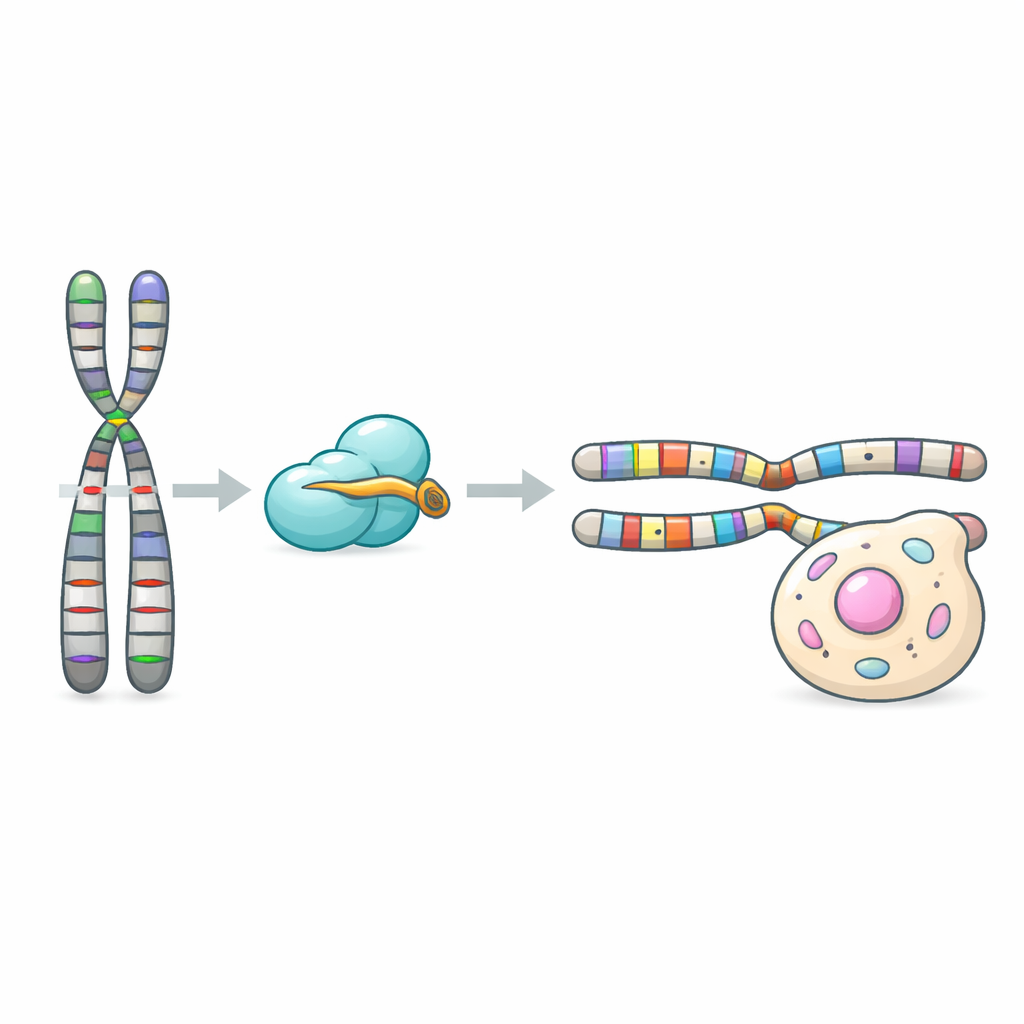
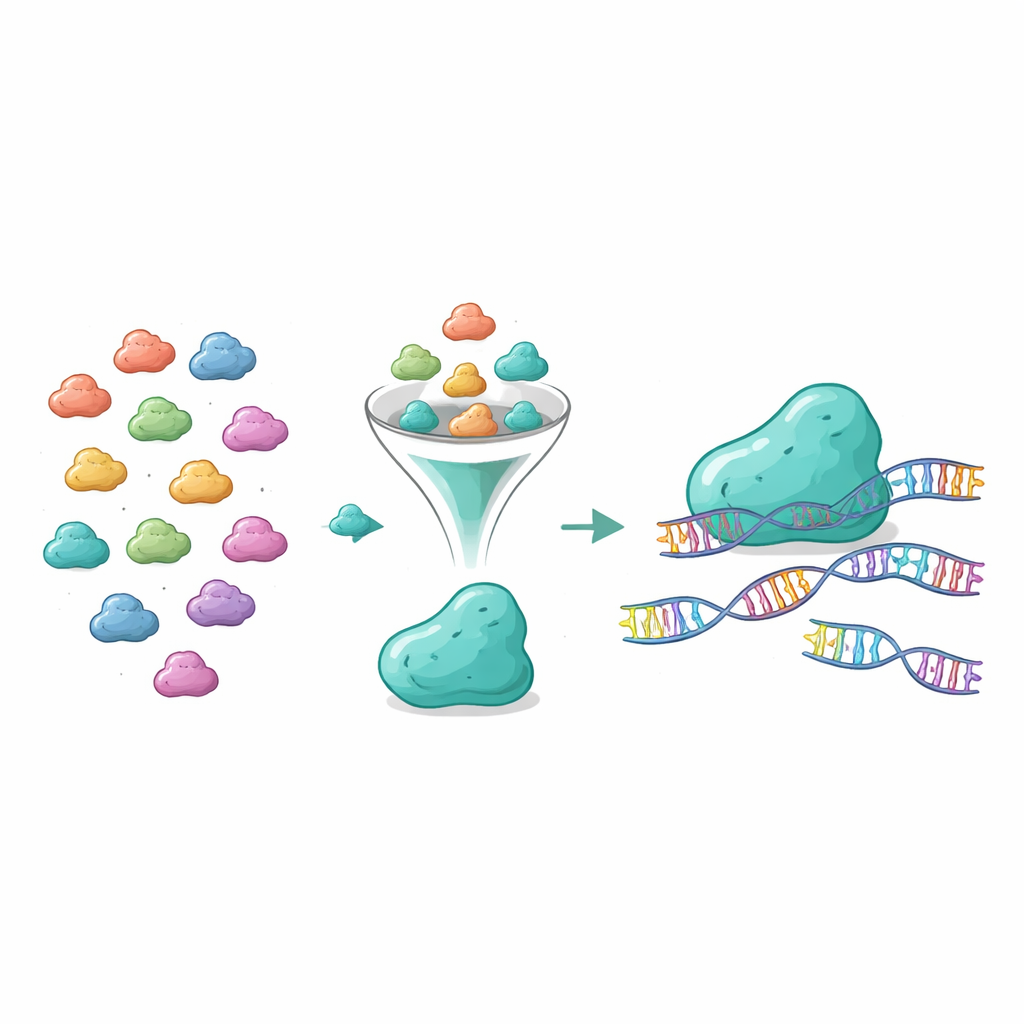
The researchers tackled this problem by systematically mutating the DNA-binding surface of a compact enzyme called Un1Cas12f1 and screening thousands of variants in bacteria. Only variants that could recognize broader sets of short DNA signposts, known as PAMs, allowed cells to survive. The most promising candidates were then tested in human cells. By combining five beneficial mutations, the team created evoCas12f, which can recognize much more relaxed PAM patterns than the original enzyme. As a result, potential cut sites in the human genome become about 13 times more frequent, shrinking the average distance between usable sites to just two DNA letters.
Stronger Performance with a Wider Reach
Beyond broadening its targeting range, evoCas12f also cuts DNA far more efficiently. Across dozens of test sites, it showed an average twelvefold boost in activity compared with the original enzyme and achieved editing levels as high as 91 percent. Its performance rivals or exceeds that of larger engineered CRISPR proteins, while remaining compact enough for easy delivery. In mice, injecting evoCas12f and a single guide RNA into early embryos efficiently disrupted the pigment gene tyrosinase, rapidly producing F0 animals with near-uniform albinism, illustrating its power for building disease models in a single generation.
Turning the Cutter into a Precision Pencil
Cutting DNA is only one way to edit genes. The team also transformed evoCas12f into base editors that can swap individual DNA letters without breaking the strand. Instead of directly fusing the enzyme to a deaminase protein, they used an RNA-based docking system to bring the two together only when bound to a target site. This strategy preserved the enzyme’s structure while narrowing the region where changes occur. The resulting adenine and cytosine base editors kept a tight editing window but worked robustly even at the newly accessible PAM sequences. In cell models of four human genetic diseases, these tools corrected the harmful mutations with efficiencies around 25–35 percent.
Fine-Tuning Control and Safety
To further showcase versatility, the researchers built an evoCas12f-based switch that turns genes on instead of cutting them. By recruiting transcription-activating domains through the same RNA docking trick, they boosted expression of target genes by up to several thousand-fold in human cells. At the same time, detailed mismatch and genome-wide off-target analyses revealed that while evoCas12f is highly active, some versions can cut unintended sites. Guided by structural insights, the team introduced additional tweaks that preserved strong on-target activity while noticeably reducing off-target events, pointing the way toward safer therapeutic variants.
What This Means for Future Gene Therapies
For non-specialists, the key outcome is that evoCas12f behaves like a compact, programmable DNA multitool: it can cut, rewrite single letters, or boost gene activity, and it can do so at many more places in the genome than its predecessor. Its small size makes it an attractive fit for established viral delivery systems, and its focused editing windows help limit unwanted changes. While more work is needed before clinical use, this engineered enzyme substantially broadens the practical reach of miniature CRISPR technology, bringing precise, multiplex gene therapies closer to reality.
Citation: Huo, Y., Mei, J., Zhang, D. et al. Engineered Un1Cas12f1 for multiplex genome editing with enhanced activity and targeting scope. Nat Commun 17, 2918 (2026). https://doi.org/10.1038/s41467-026-69678-5
Keywords: CRISPR, genome editing, gene therapy, base editing, Cas12f