Clear Sky Science · en
Allosteric and energetic remodeling of a PDZ domain by protein domain extensions
How small add-ons reshape protein behavior
Proteins often behave like tiny machines inside our cells, and many of them are built from compact units called domains. This study asks a deceptively simple question with big implications: what happens if you subtly extend one of these domains, adding a short extra piece at one end or trimming it away? By examining how such add-ons alter a well-known protein domain from brain cells, the authors show that these small tweaks can reorganize the domain’s internal energy landscape, change how it binds partners, and open or close routes for future evolution and drug targeting.
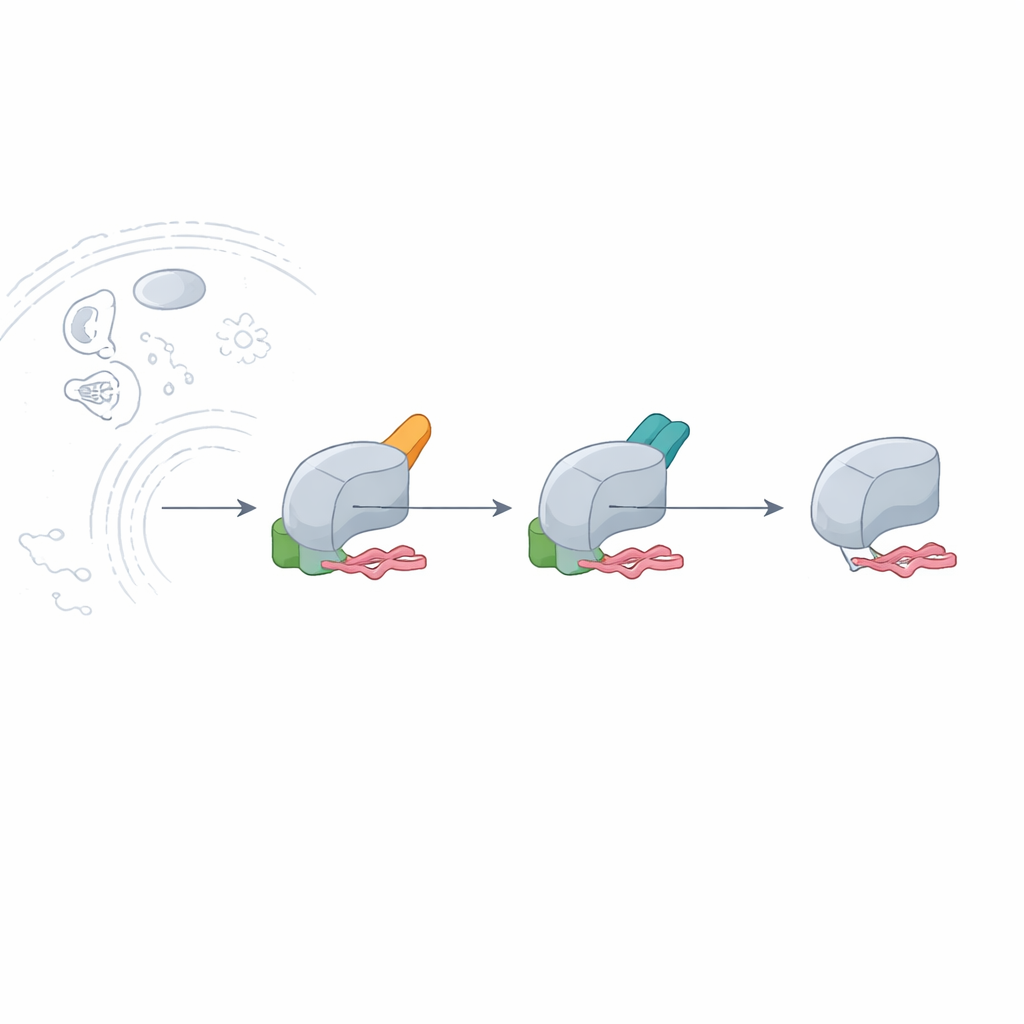
Building blocks with extra pieces
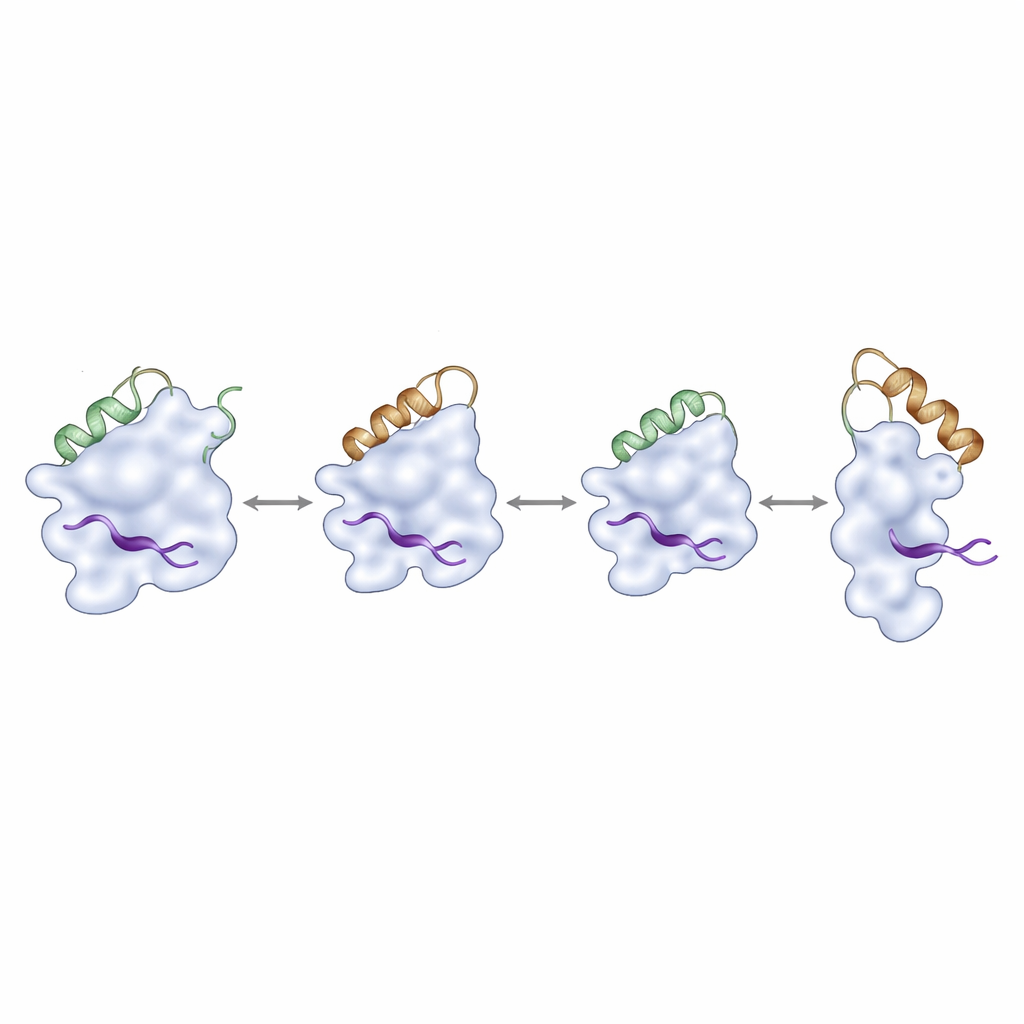
The work focuses on PDZ domains, a huge family of protein interaction modules that help organize signaling complexes in many tissues, including the brain. PDZ domains recognize short tail-like peptides on partner proteins and are important in processes such as synaptic signaling. Although PDZ domains share a common core structure, many have extra segments tacked on at their ends. The authors study PDZ3, the third PDZ domain of the scaffolding protein PSD-95, which carries two such extensions: a short, structured spiral at one end and a looser tail at the other. Previous work showed that the spiral boosts how tightly PDZ3 binds its partner but does not touch the binding site directly, hinting at long-range, or allosteric, effects.
Testing thousands of microscopic variations
To see how these extensions influence the domain as a whole, the researchers engineered libraries of PDZ3 variants that each carry one or two amino-acid changes in the core of the domain. They did this in four versions of the protein: with both extensions present, with only one of them, or with neither. In yeast cells, they used clever growth-based assays to read out two key properties for each of almost 200,000 variants at once: how much properly folded protein accumulates, and how well it binds a standard partner peptide. Using a thermodynamic model implemented as a neural network, they converted these growth measurements into quantitative changes in the free energy of folding and binding for each mutation and for each domain version.
Energy landscapes reshaped but not everywhere
The resulting energy maps reveal a nuanced picture. Most mutations have similar effects whether or not the extensions are present, meaning that many parts of the domain behave as if the add-ons were modular extras. However, a substantial minority of positions show strong energetic coupling to one or both extensions: in these spots, the impact of a mutation on stability or binding clearly depends on whether a particular extension is present. These sensitive positions form small three-dimensional clusters within the domain. Some touch the extensions directly, while many others are connected only through chains of neighboring residues, reflecting indirect, allosteric communication. In striking cases, removing an extension even flips a mutation from stabilizing to destabilizing, or vice versa, underscoring how deeply the extensions can rewrite the energy landscape.
Shifting control points and hidden communication paths
Beyond local stability, the extensions also remodel how distant sites influence the binding pocket. Mutations far from the peptide contact region can still change binding strength through allosteric pathways. The authors identify “allosteric hotspots” where such effects are unusually strong for their distance from the binding site. Deleting the C-terminal spiral strengthens some of these hotspots, creates new ones, and weakens others, particularly at a residue that directly touches the spiral. The extensions also change how exposed some of these key sites are on the protein surface. Because surface-exposed hotspots are promising locations for regulation by other molecules or for drug binding, this shows how extensions can add or remove potential control points simply by tuning exposure and connectivity.
Why these findings matter
In everyday terms, the study shows that adding or trimming short pieces at the ends of a protein domain is like swapping attachments on a power tool: the core motor may stay the same, but which controls are accessible and how power flows through the device can change dramatically. For the PDZ3 domain, the two extensions stabilize the fold, enhance binding, and—crucially—rewire where distant mutations or modifications can influence function. This means that domain extensions can shape how proteins evolve, how they are regulated inside cells, and where future drugs might latch on to modulate their activity.
Citation: Hidalgo-Carcedo, C., Faure, A.J., Martí-Aranda, A. et al. Allosteric and energetic remodeling of a PDZ domain by protein domain extensions. Nat Commun 17, 2934 (2026). https://doi.org/10.1038/s41467-026-69673-w
Keywords: protein domains, allostery, PDZ3, protein evolution, protein-ligand binding