Clear Sky Science · en
The genetic basis of dermatophytosis skin infection susceptibility
Why some people get stubborn “ringworm”
Red, itchy patches on the skin or thick, discolored nails are more than a nuisance for millions of people worldwide. These common fungal infections, often called ringworm, can keep coming back in some individuals while others rarely get them. This study asks a simple but important question: are some of us born more vulnerable to these skin fungi, and if so, what in our DNA makes the difference?
A common infection with an invisible twist
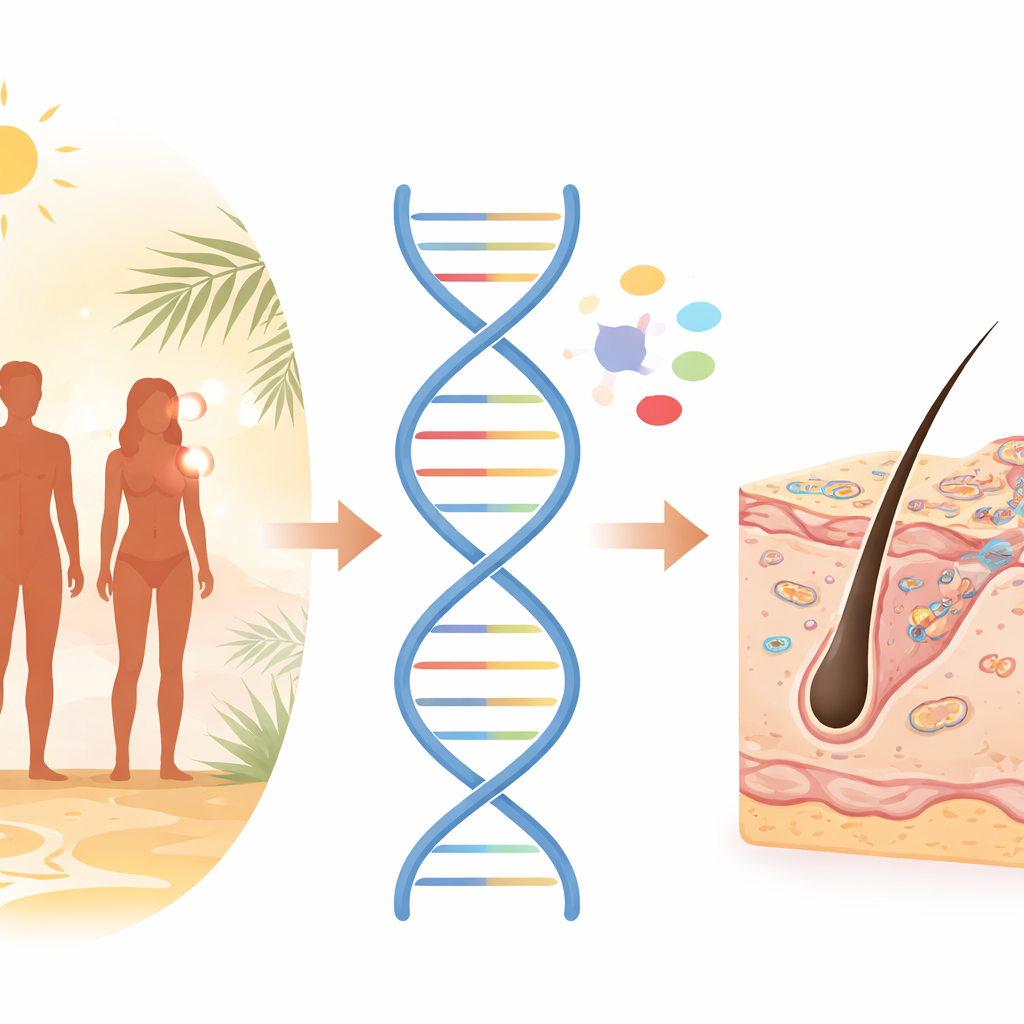
Dermatophytosis, better known as ringworm, is caused by fungi that feed on keratin, the sturdy protein that makes up the outer skin, hair, and nails. About one in five people globally will have this infection at some point, and rates are rising. Warm, humid climates, close contact with infected people or animals, and factors like age, hygiene, and other skin problems all play a role. Yet even when people share the same environment, some are repeatedly infected while others are barely affected, hinting that inherited differences in the body’s defenses might be important.
Reading the DNA of more than 1.6 million people
To uncover those inherited differences, the researchers performed a large genome-wide study, scanning the DNA of over 250,000 people diagnosed with dermatophytosis and more than 1.37 million without it. Participants came from four major biobanks in Finland, Estonia, the United Kingdom, and the United States. By comparing how often millions of genetic variants appeared in people with and without infection, the team pinpointed 30 regions in the genome that are strongly linked to risk. They also broke the disease down into subtypes—such as nail infection, athlete’s foot, and ringworm of the body—and found dozens of additional signals that largely pointed to the same underlying biological themes.
Skin shield: when the barrier is built differently
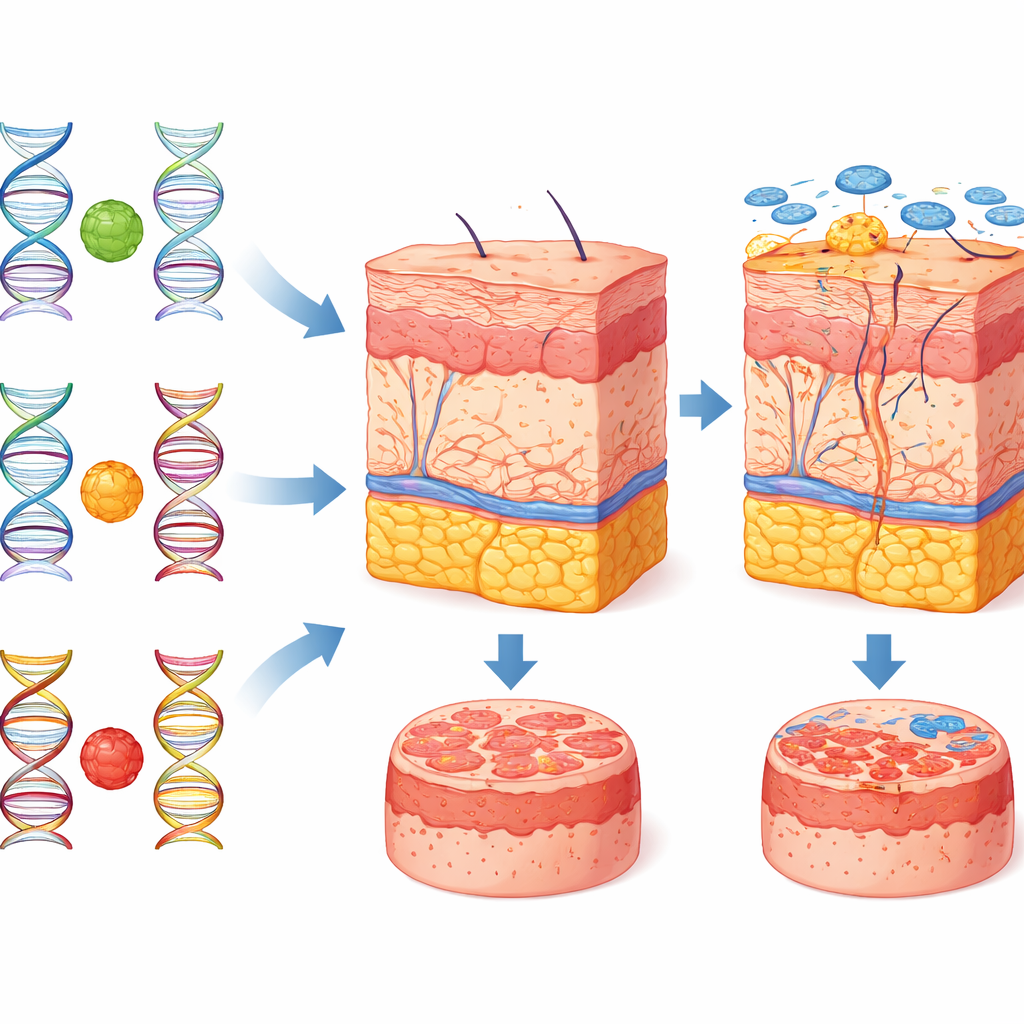
Many of the risk regions lie near genes that shape the structure and maintenance of the skin’s outer shield. Variants were found in or near genes involved in keratin production and processing, including filaggrin and several keratin proteins that help form the tough outer layer of dead cells. Changes in these genes can subtly alter how tightly this layer is packed, how well it holds moisture, and how easily fungi can latch on and digest keratin. The strongest signal involved a gene that helps control skin cell maturation and appears to influence filaggrin levels across the skin, suggesting a chain of events from DNA variation to barrier quality to infection risk.
Immune guards and body weight also matter
The study also highlighted genes that guide the immune system’s ability to spot and respond to invaders. Variants in the major immune recognition region (HLA) and in genes that regulate inflammatory signals were linked to dermatophytosis, and many of these same variants are already known to influence autoimmune and allergic diseases. This suggests that people whose immune systems are tuned in specific ways may be less efficient at clearing skin fungi. On top of that, several key signals overlapped with genes tied to obesity and body mass index. When the researchers compared genetic patterns, they found that people who are genetically predisposed to higher body weight also tend to carry variants that raise ringworm risk, hinting that metabolic health and skin infections are intertwined.
Shared roots with other itchy skin problems
By looking across many diseases in the same genetic datasets, the team discovered that the DNA patterns linked to dermatophytosis overlap with those for other skin conditions that cause redness and itching, such as certain bacterial infections, scabies, and common inflammatory rashes. They also saw connections with vitamin D levels, which are important for skin health and immune balance. Together, these findings support the idea that a core set of genes helps determine how robust our skin barrier is and how vigorously our immune system patrols the body’s surface, influencing vulnerability to a whole spectrum of skin troubles.
What this means for everyday health
For patients and doctors, these results do not yet translate into a simple genetic test or a new pill. However, they clearly show that stubborn or recurrent ringworm is not just about poor hygiene or bad luck: it also reflects how a person’s skin is built, how their immune system is wired, and how their body handles weight and metabolism. In the long run, understanding these genetic pathways could guide more personalized prevention and treatment—for example, by identifying people who might benefit most from aggressive early therapy, barrier-strengthening skin care, weight management, or targeted immune-based approaches to keep these common fungi at bay.
Citation: Haapaniemi, H., Eghtedarian, R., Tervi, A. et al. The genetic basis of dermatophytosis skin infection susceptibility. Nat Commun 17, 3554 (2026). https://doi.org/10.1038/s41467-026-69670-z
Keywords: dermatophytosis, skin barrier, genetic susceptibility, fungal infection, obesity