Clear Sky Science · en
First-line modified FOLFOX plus/minus nivolumab and Ipilimumab or FLOT plus nivolumab in advanced gastroesophageal adenocarcinoma: a phase II multi-cohort trial
Why this study matters
Cancers of the stomach and the junction where the food pipe meets the stomach are often diagnosed at an advanced stage, when surgery is no longer possible and treatment aims to slow the disease and extend life. In recent years, drugs that help the immune system attack tumors have changed care for some patients, but doctors are still searching for the best way to combine these medicines with chemotherapy. This study tested several different first-line treatment plans to learn which combinations strike the best balance between benefit and side effects.
Testing different treatment paths
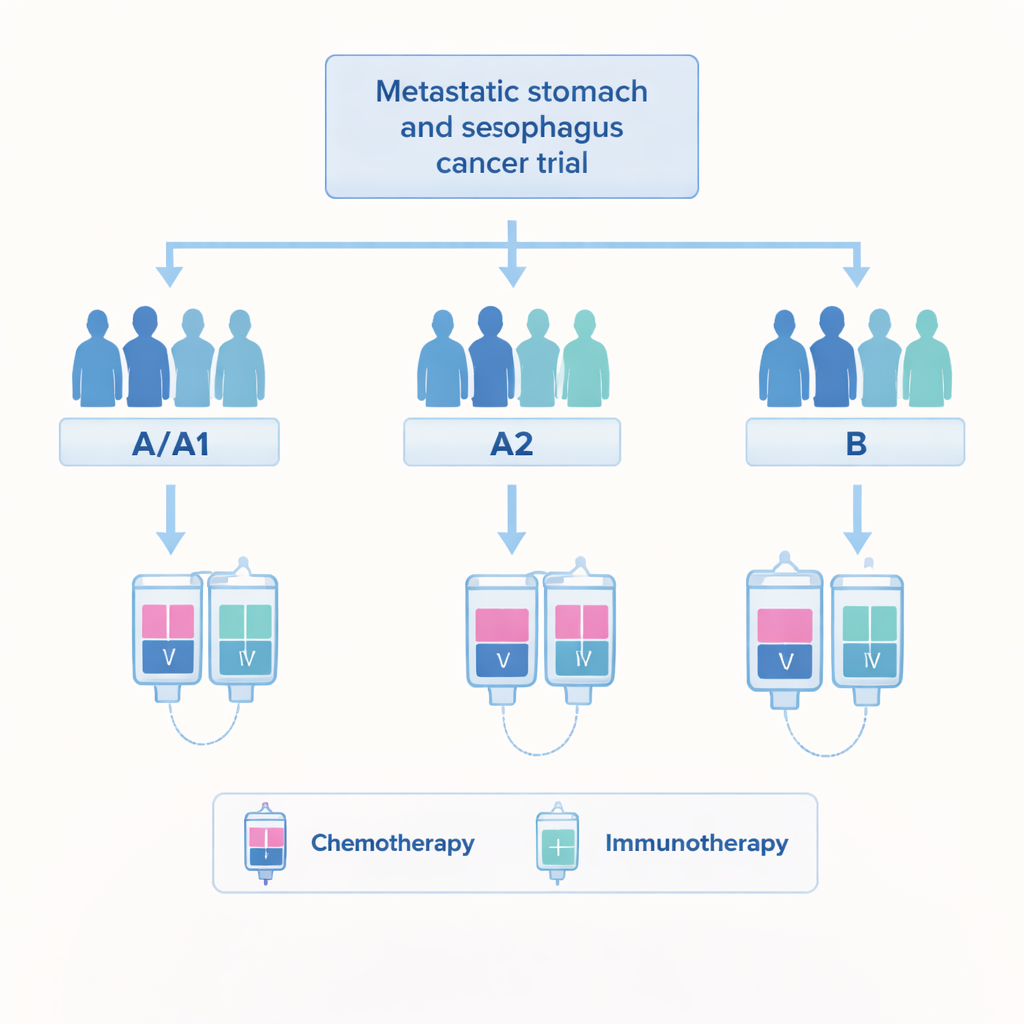
The MOONLIGHT trial enrolled 262 patients in Germany with advanced or metastatic gastroesophageal adenocarcinoma who had not received prior treatment for their disease. All tumors lacked the HER2 marker, a common exclusion in this setting. Patients were divided into four groups, each receiving a different first-line strategy. Three groups were built around a standard double-drug chemotherapy called FOLFOX, and the fourth used a more intensive three-drug regimen known as FLOT. Onto these backbones, the researchers added one or two immune checkpoint drugs designed to release the brakes on immune cells so they could better recognize and attack cancer.
When more immune drugs are not better
One key question was whether using two immune checkpoint drugs at once, alongside FOLFOX, would help patients live longer without their cancer growing. In one arm, patients received continuous FOLFOX together with both immune drugs in parallel. Another arm received FOLFOX alone. A third tried a time-saving idea: three short cycles of FOLFOX to get early tumor control, followed by the two immune drugs alone, with optional return to chemotherapy later. The results were clear. Adding two immune drugs to continuous FOLFOX did not improve how long patients lived or how long their disease was held in check compared with chemotherapy alone, and it caused many more severe side effects. The short “chemotherapy then immune-only” approach performed even worse, with earlier cancer progression and shorter survival.
Stronger chemotherapy plus one immune drug
The trial also tested a different concept: instead of pairing two immune drugs with standard chemotherapy, what if doctors used a stronger chemotherapy combination (FLOT) together with just one immune drug? In this group, patients had a somewhat longer period before their cancer worsened, and their overall survival was encouraging compared with historical expectations. More than half of these patients saw their tumors shrink, and nearly nine in ten at least had their disease temporarily brought under control. Notably, many patients in this arm had tumors that expressed the PD-L1 marker, which is often linked to better responses to immune therapy.
Side effects and safety
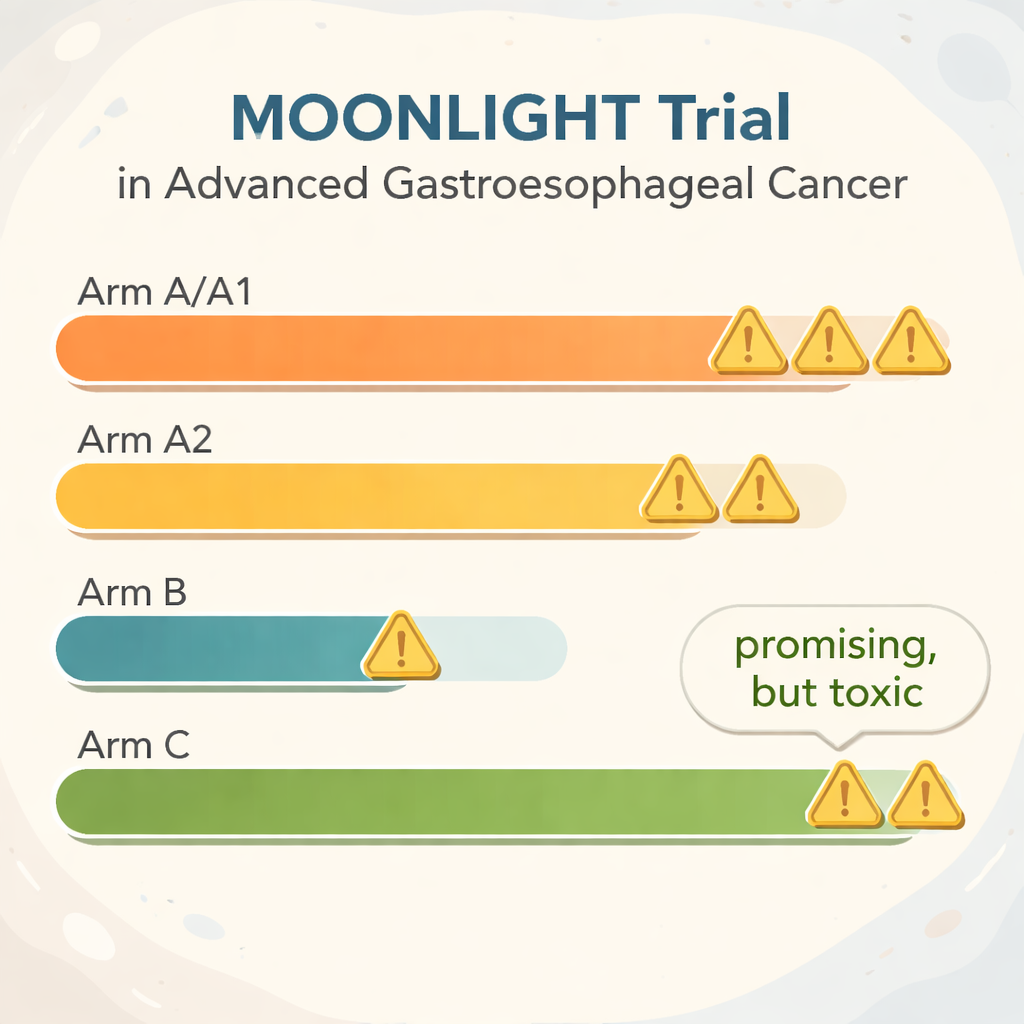
Safety was a central part of the story. Almost all patients in every group experienced some side effects, which is expected with powerful cancer drugs. However, severe treatment-related problems were much more common when two immune drugs were combined with chemotherapy. These included serious drops in white blood cells, infections such as sepsis, and immune-related organ damage. In contrast, the FLOT plus single immune drug arm, while still demanding, had a safety profile more in line with what is already known for chemotherapy plus one checkpoint inhibitor, and no entirely new types of side effects emerged.
What this means for patients
For people facing advanced stomach or gastroesophageal junction cancer, this study offers practical guidance rather than a new standard. It suggests that giving two immune drugs together with chemotherapy as first-line treatment adds risk without clear benefit and should not be pursued. A brief, six-week course of FOLFOX followed by immune therapy alone also appears too weak for such an aggressive disease. On the other hand, combining the intensive FLOT chemotherapy regimen with a single immune drug looks feasible and promising for carefully selected patients who are fit enough for triplet chemotherapy and whose tumors show signs of being susceptible to immune attack. Future research will need to refine who benefits most, how to limit toxicity, and how long chemotherapy and immune therapy should be continued.
Citation: Lorenzen, S., Goetze, T.O., Thuss-Patience, P.C. et al. First-line modified FOLFOX plus/minus nivolumab and Ipilimumab or FLOT plus nivolumab in advanced gastroesophageal adenocarcinoma: a phase II multi-cohort trial. Nat Commun 17, 2072 (2026). https://doi.org/10.1038/s41467-026-69622-7
Keywords: gastroesophageal cancer, immunotherapy, chemotherapy combinations, checkpoint inhibitors, FLOT regimen