Clear Sky Science · en
Tubulin transforms Tau and α-synuclein condensates from pathological to physiological
Why tiny protein droplets matter for brain health
Inside each brain cell, proteins can gather into tiny droplets that act a bit like temporary workbenches. These liquid-like clusters help organize busy chemistry without needing a membrane, but they can also harden into the stubborn clumps seen in Alzheimer’s and Parkinson’s disease. This study explores how three key players—Tau, alpha-synuclein, and tubulin—decide whether such droplets stay useful or turn dangerous, revealing a surprising protective role for the cell’s internal scaffolding.
Good proteins that can go bad
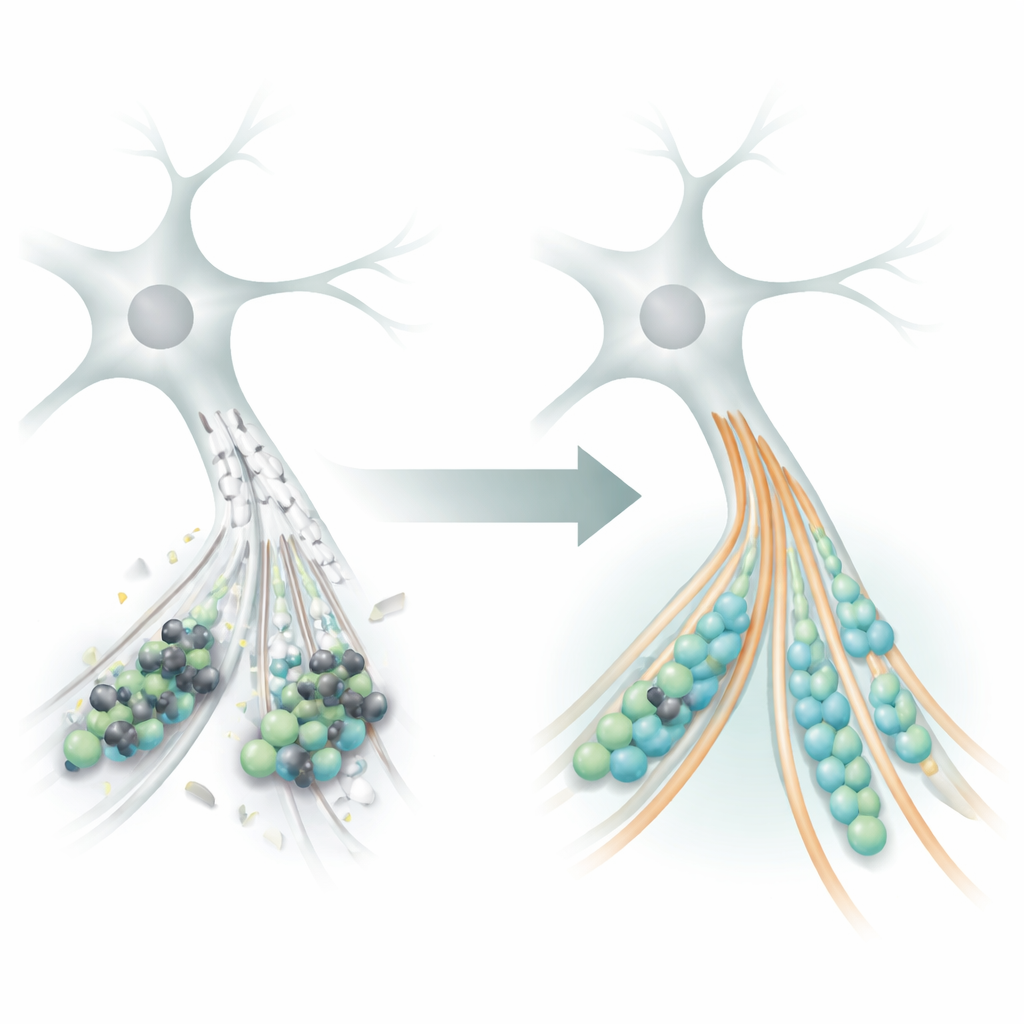
Tau and alpha-synuclein are normal proteins essential for healthy neurons. Tau helps stabilize microtubules, the hollow “tracks” that give nerve cells shape and allow cargo to move along their long arms. Alpha-synuclein helps manage traffic at nerve endings where signals are passed between cells. In many neurodegenerative diseases, however, both proteins misfold and accumulate in fibrillar deposits. The authors show that Tau is especially good at forming liquid-like droplets under realistic cellular conditions and that these droplets readily pull alpha-synuclein inside, creating mixed condensates that sharply concentrate both proteins.
When droplets drift toward danger
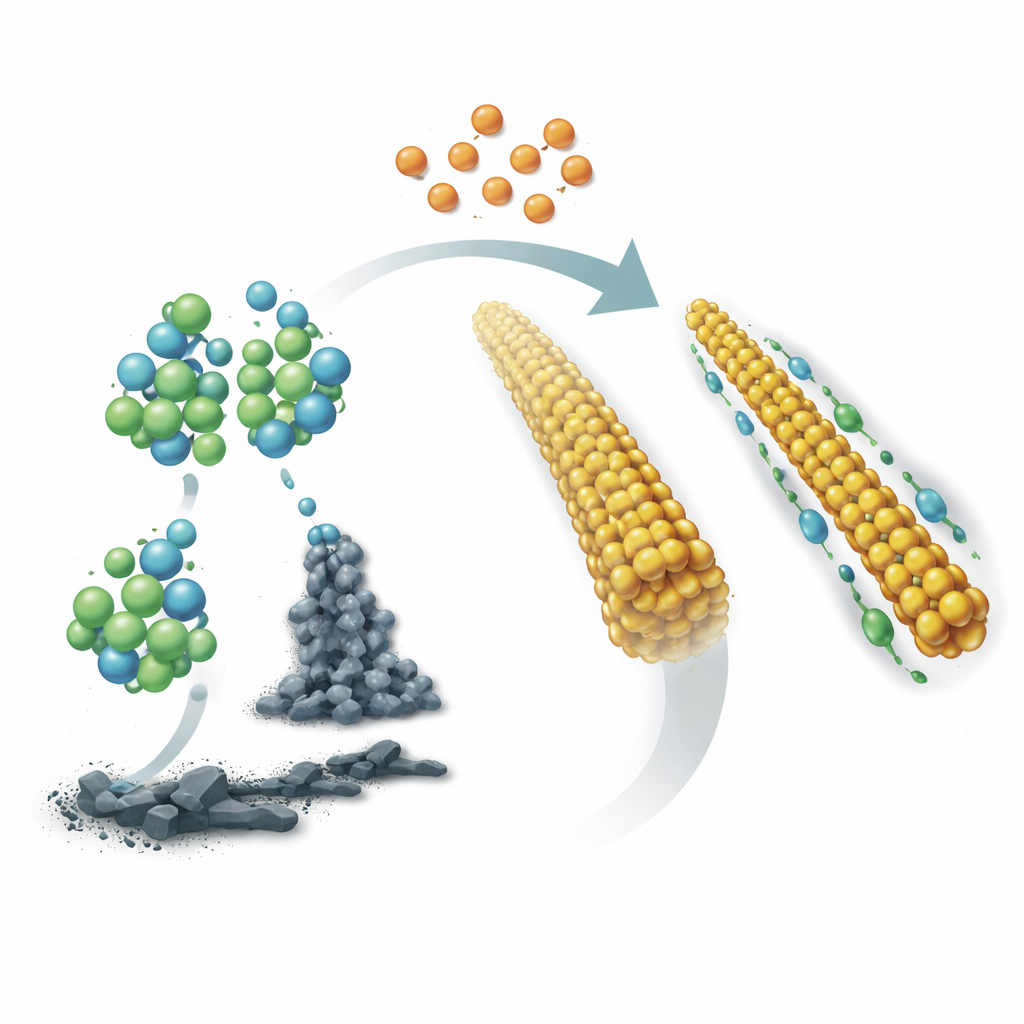
By following these condensates over time in test-tube experiments, the team found that Tau–alpha-synuclein droplets are not harmless holding pens. In the absence of tubulin, the protein building block of microtubules, the mixed droplets gradually transform into highly stable oligomers and amyloid-like fibrils. The researchers detected distinctive Tau–alpha-synuclein pairs and larger complexes that resisted heat and chemical disruption, and they stained strongly with amyloid-sensitive antibodies. In nerve-like cells, chemically stressing the cells increased the number of puncta where endogenous Tau and alpha-synuclein co-localized, mirroring the test-tube findings and suggesting that similar condensates can form inside living neurons.
How tubulin steers droplets back to safety
The turning point comes when tubulin is available. Tau droplets naturally recruit tubulin, and when tubulin is present with Tau and alpha-synuclein, the droplets change shape from simple spheres into elongated, spindle-like structures rich in microtubules. Advanced imaging showed that within these tubulin-rich condensates, Tau and alpha-synuclein move more slowly, consistent with proteins bound along stabilized microtubule bundles rather than locked in toxic clumps. At the same time, the amount of dangerous high–molecular weight complexes and amyloid signal drops sharply, indicating that tubulin disrupts the harmful interactions between Tau and alpha-synuclein and instead promotes their normal roles on microtubules.
Shifting protein shapes from harmful to helpful
To understand this switch more deeply, the authors used sensitive fluorescence techniques to probe how compact or expanded the proteins are inside different droplets. In tubulin-poor condensates, both Tau and alpha-synuclein adopt tightly packed conformations similar to those seen in disease-associated amyloid structures. When tubulin or fully formed microtubules are present, the same proteins relax into more extended shapes that match their functional, microtubule-bound forms. This structural shift explains why tubulin-rich condensates remain largely physiological: the proteins are held in shapes that favor dynamic binding to microtubules instead of stacking into rigid fibrils.
What happens when the scaffold fails
The team then turned to neuronal cell models to test what occurs when tubulin is depleted. Reducing tubulin levels by half in mouse neuroblastoma cells caused a marked rise in large Tau oligomers, especially hyperphosphorylated forms strongly linked to Alzheimer’s pathology. Cells also lost many of their thin neurite extensions, consistent with collapsing microtubule networks. Using an engineered, light-controlled version of Tau, the researchers showed that forcing Tau to condense along microtubules could, under some conditions, help remodel and stabilize these tracks even in stressed cells. Yet when both Tau and alpha-synuclein were abundant and the cells were under oxidative stress, light-triggered condensation instead promoted co-aggregated puncta, emphasizing how the same droplet mechanism can be protective or harmful depending on context.
How this work reframes brain disease
Overall, the study recasts tubulin and the microtubule network not as passive casualties of neurodegeneration but as active guardians that keep Tau and alpha-synuclein in their functional, extended forms. When tubulin levels are sufficient, mixed condensates are funneled toward microtubule assembly and healthy cell architecture. When tubulin is lost or the scaffold breaks down, the same condensates become breeding grounds for amyloid-like oligomers and fibrils. For non-specialists, the take-home message is that preserving or restoring the brain’s internal scaffolding could be a smarter way to combat Alzheimer’s and Parkinson’s—curbing toxic clumps while preserving the normal, beneficial roles of these much-maligned proteins.
Citation: Lucas, L., Tsoi, P.S., Quan, M.D. et al. Tubulin transforms Tau and α-synuclein condensates from pathological to physiological. Nat Commun 17, 3362 (2026). https://doi.org/10.1038/s41467-026-69618-3
Keywords: neurodegeneration, tau protein, alpha-synuclein, microtubules, protein condensates