Clear Sky Science · en
Bayesian machine learning enables discovery of risk factors for hepatosplenic multimorbidity related to schistosomiasis
Why this matters for everyday health
Liver and spleen diseases kill millions of people worldwide, yet in many rural communities doctors still struggle to spot who is at greatest risk before life‑threatening complications strike. This study follows thousands of people in Ugandan villages where a parasite called schistosomiasis is common, and uses an advanced form of machine learning to untangle how infections, poverty, geography, and other traits combine to damage the liver and spleen over time. The work shows that simple, widely available measures—such as age and a basic blood test—can help flag people who may silently harbor dangerous internal changes.
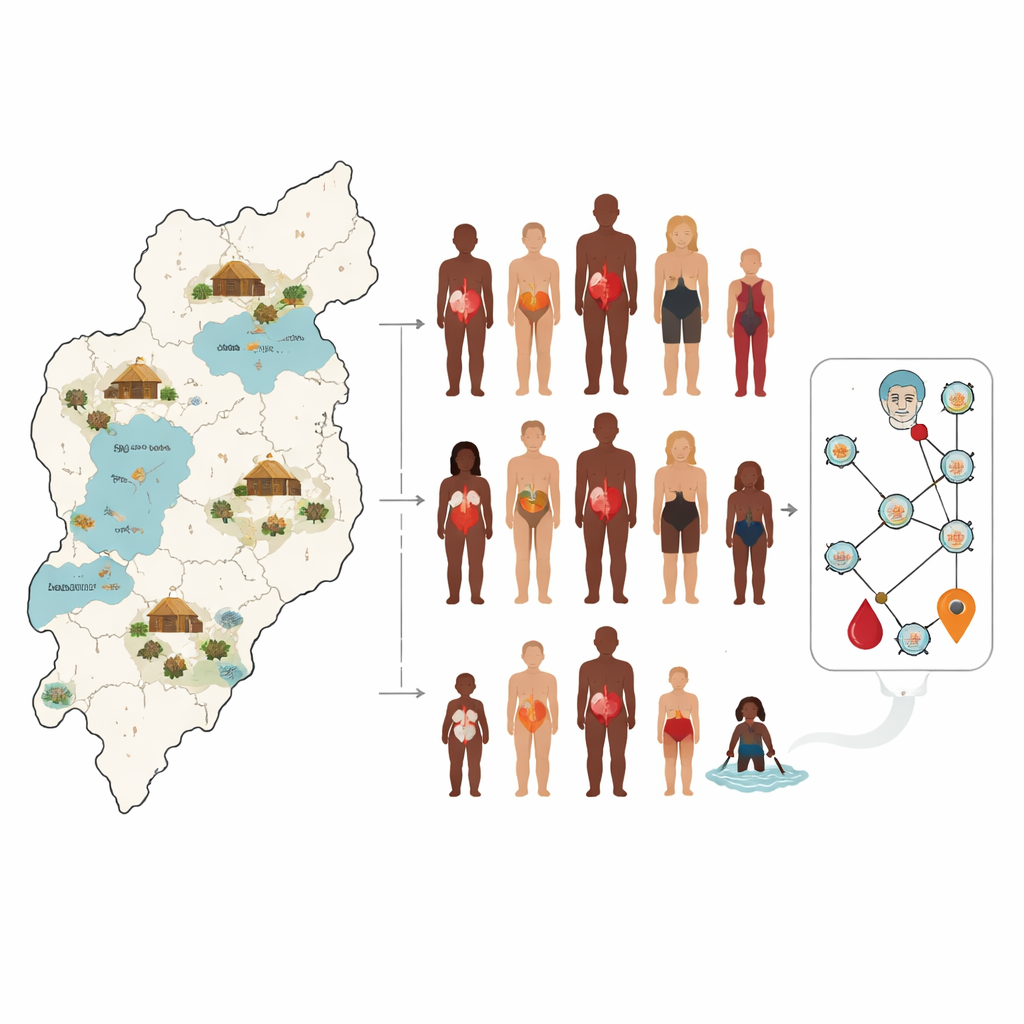
Many problems in the same person
Instead of looking at just one disease at a time, the researchers focused on multimorbidity, the build‑up of several long‑term conditions in a single person. In three districts of rural Uganda, they examined 3,155 people aged 5 to 91 using portable ultrasound scanners. For each participant, they recorded 45 different liver and spleen findings, from mild changes in organ size to severe complications like fluid in the abdomen or swollen veins in the gullet that can burst and bleed. More than half of all participants had at least two of these conditions, and some had as many as 13, revealing a heavy hidden burden of overlapping problems in communities where schistosomiasis is common.
Following clues in blood, livelihood, and location
The team then searched for patterns linking these many conditions to a wide range of possible risk factors. They included infections such as malaria, hepatitis B, and HIV; basic blood measures like haemoglobin, which reflects both anaemia and blood loss; demographic features such as age and sex; household circumstances; occupations like fishing; and how close people lived to freshwater or health centres. Age emerged as a powerful driver: as people grew older, the odds of having most liver and spleen problems rose steadily, even though this population was generally much younger than typical patients in rich countries. In contrast, current schistosomiasis infection itself explained little, suggesting that years of past exposure and co‑existing diseases matter more than a single stool test.
A new way to let diseases “learn” from each other
To make sense of such tangled relationships, the researchers built a Bayesian multitask learning model. Rather than predicting each of the 45 conditions in isolation, the model allowed them to “talk” to each other through a network. Conditions that often appeared together—such as different patterns of liver scarring, enlarged spleens, and widened portal veins—were connected so that information from one could improve prediction of another. At the same time, the model learned which risk factors were important across many conditions, and how strongly they pushed a person toward more severe multimorbidity. This approach outperformed standard tools like logistic regression, random forests, and conventional neural networks at identifying who had which conditions, especially for rare but serious outcomes.
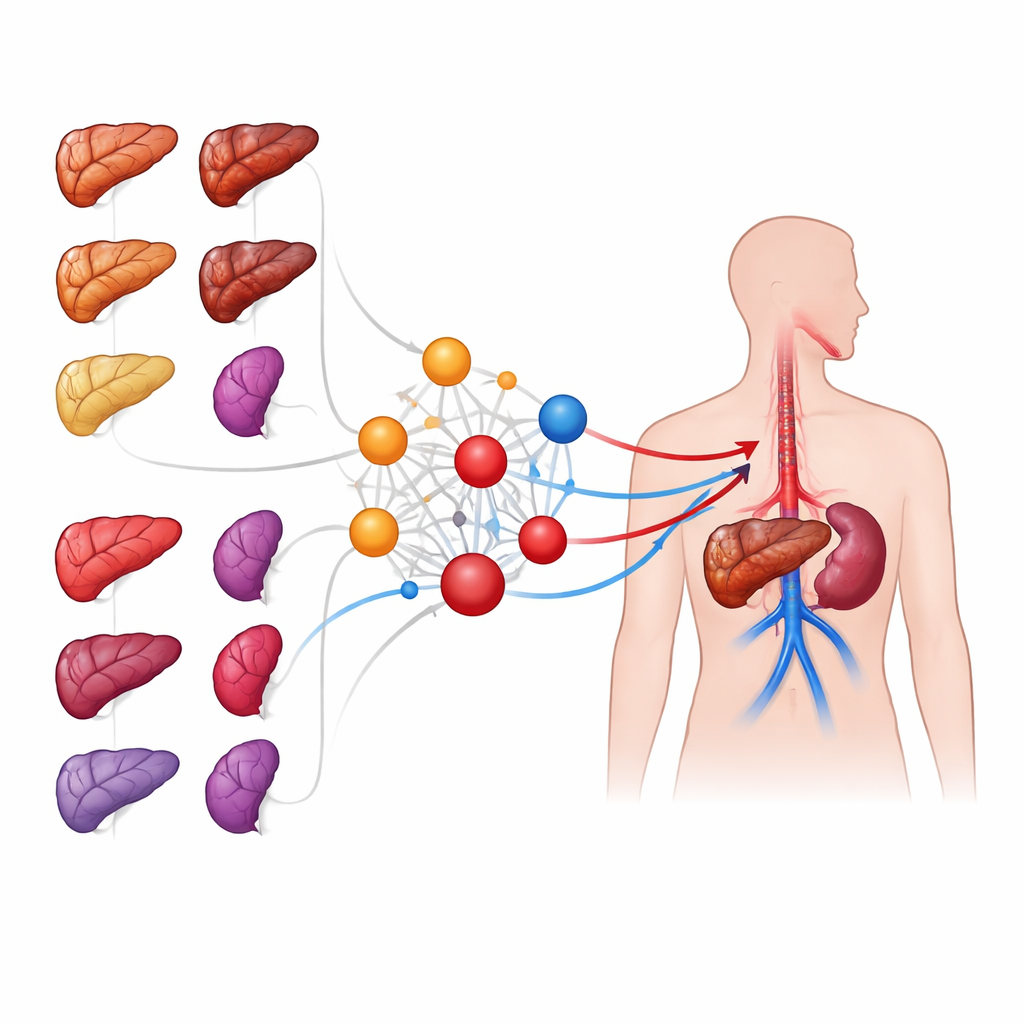
Spotting silent warning signs of deadly bleeding
A key focus was gastro‑oesophageal varices—swollen veins in the gullet and stomach that can suddenly rupture, causing massive internal bleeding. Endoscopy to see these veins is rarely available in the study districts, so doctors badly need cheaper ways to identify patients at risk. The model showed that two simple features stood out: being older and having lower haemoglobin levels. People with signs of advanced schistosomiasis‑related liver scarring, very enlarged spleens, and widened portal veins were also much more likely to have these dangerous veins, even if they had never bled before. Notably, some co‑infections such as HIV and hepatitis B seemed to increase risk as well, though their effects were less certain in this dataset.
What this means for patients and clinics
To a non‑specialist, the study’s message is that severe liver and spleen disease in schistosomiasis‑endemic areas is rarely caused by a single agent acting alone. Instead, years of repeated infection, chronic inflammation, poverty‑linked exposures, and limited access to care gradually stack multiple problems in the same person. By capturing these layers with a network‑based machine learning model, the researchers produced a practical shortlist of red flags: older age, low haemoglobin, being male, working as a fisherman, living in specific high‑risk districts, and ultrasound signs of strong liver scarring and enlarged blood vessels. Used carefully and validated elsewhere, such tools could help front‑line clinics decide who needs urgent referral, closer monitoring, or preventive treatment—potentially saving lives long before a catastrophic bleed ever occurs.
Citation: Zhi, YC., Anguajibi, V., Oryema, J.B. et al. Bayesian machine learning enables discovery of risk factors for hepatosplenic multimorbidity related to schistosomiasis. Nat Commun 17, 3377 (2026). https://doi.org/10.1038/s41467-026-69528-4
Keywords: schistosomiasis, liver disease, multimorbidity, Bayesian machine learning, Uganda