Clear Sky Science · en
Developmental plasticity enables an intestinal tapeworm to adapt to dietary stress
Why a Gut Worm and Our Diet Belong in the Same Story
Intestinal worms may sound like relics of the past, but they once lived in most human guts and are now being explored as potential allies against allergies and inflammatory diseases. This study asks a surprisingly modern question: how does a "Western" low-fiber diet versus a fiber-rich diet change the way a common tapeworm lives inside the intestine—and how does that, in turn, reshape gut microbes, chemistry, and immunity? The answers reveal that the worm is far from a simple freeloader; it is a flexible partner whose fate is tightly bound to what the host eats.
Two Very Different Menus for the Same Worm
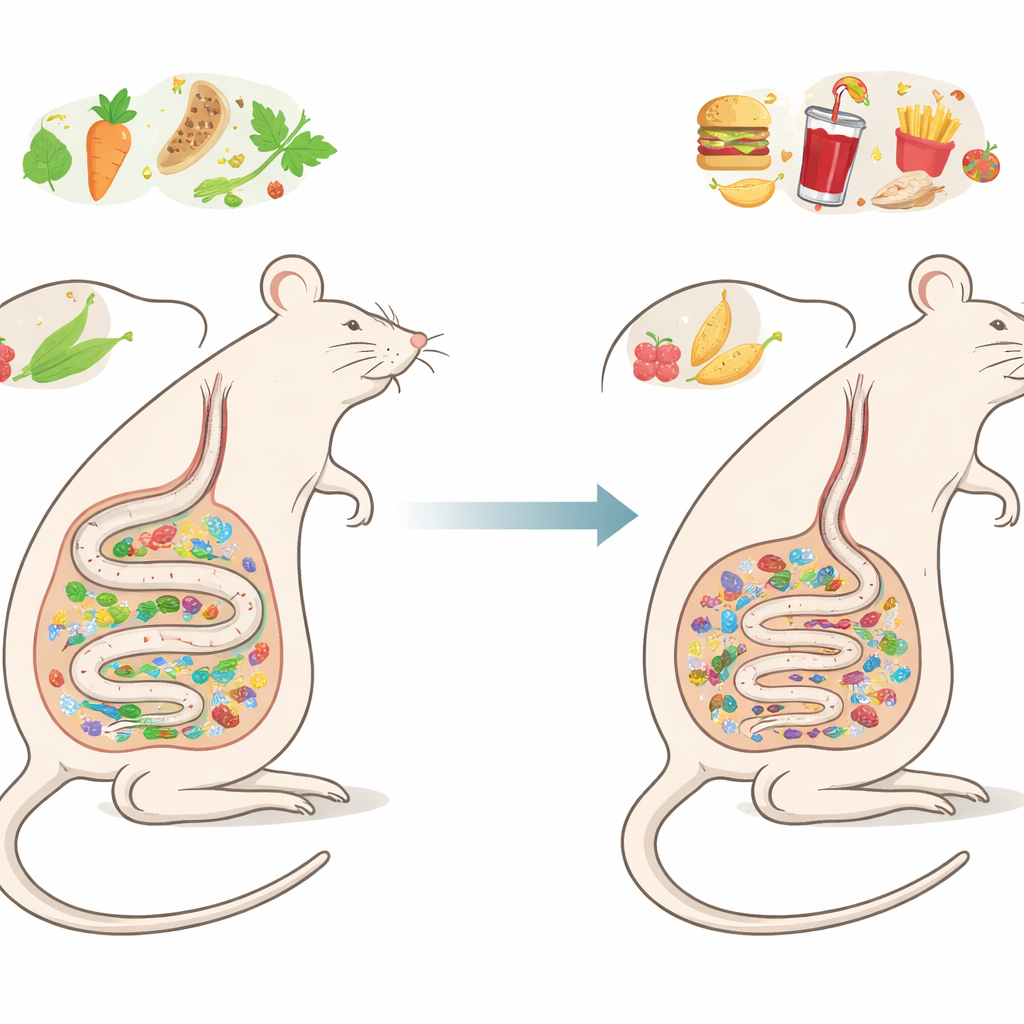
The researchers worked with rats and the tapeworm Hymenolepis diminuta, a species widely used in laboratories and considered for therapeutic use in humans. One group of rats ate a fiber-rich chow made from grains and plant ingredients, while another group received a Western-style diet high in fat and refined sugar but almost devoid of fermentable fiber. The team introduced the worm into rats on each diet and then followed how well it colonized, how big it grew, and whether it produced eggs. They also measured changes in gut bacteria, small-molecule chemicals in the intestine, and immune signals in the host.
Fiber-Rich Guts Grow Big, Productive Worms
In rats eating the fiber-rich diet, the tapeworms thrived. Nearly all animals became colonized, and the worms reached their usual impressive lengths—tens of centimeters long—with fully developed reproductive segments brimming with eggs. The rats steadily shed worm eggs in their feces, showing that the parasites completed their life cycle. In these animals, the small intestine teemed with a diverse community of bacteria known for fermenting fiber and supporting gut health, and the chemical environment in the gut was rich and varied, reflecting active fermentation of plant material.
Western Diet Forces Worms into a Stunted, Suspended State
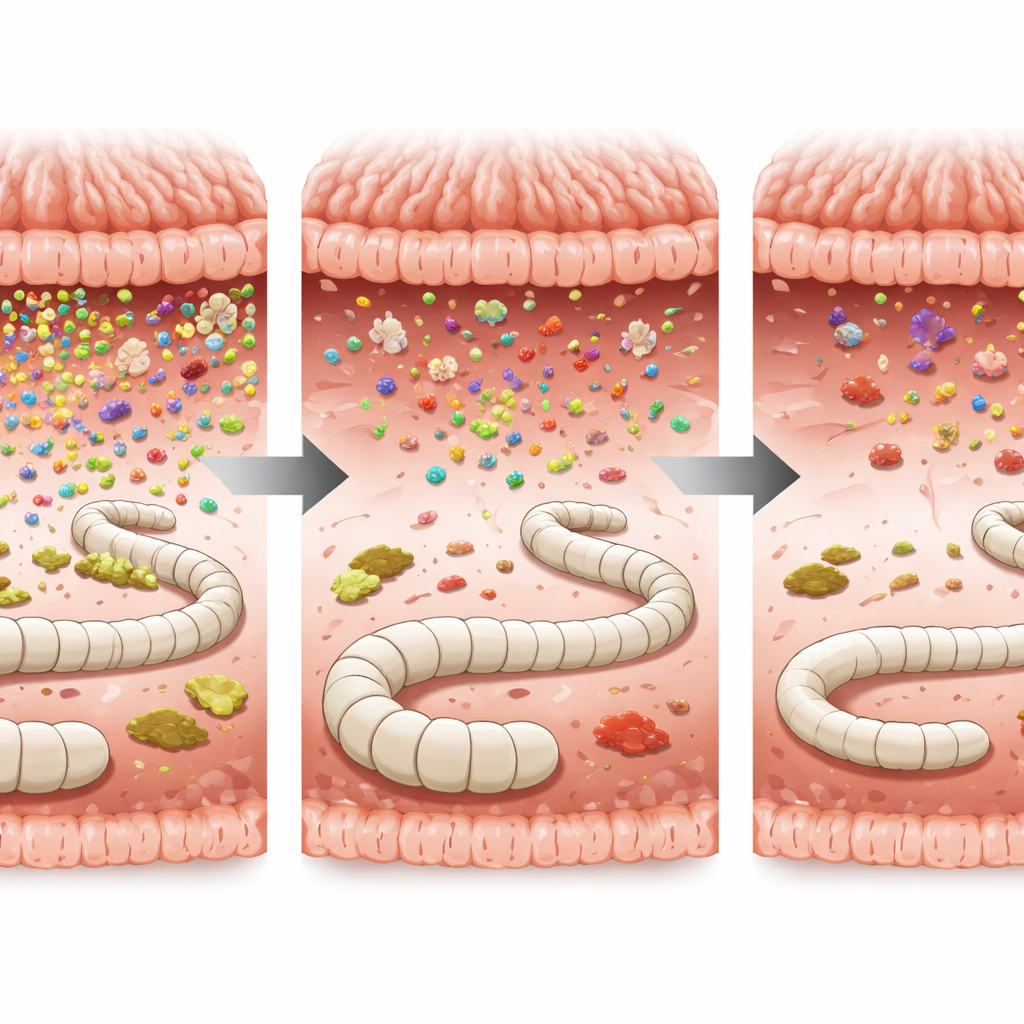
When colonization began in rats on the Western, low-fiber diet, the story changed dramatically. Only about half of the animals carried worms at all, and those worms were tiny—just a couple of centimeters long—and never matured sexually. They produced no eggs, and their reproductive organs remained frozen in an immature state even a month after colonization. Gene-activity profiling showed that hundreds of worm genes involved in growth, cell division, energy use, and reproduction were dialed down, while genes linked to stress defenses and handling of oxidative damage were turned up. In other words, the worm appeared to switch into an energy-saving survival mode, akin to a developmental pause. At the same time, the host’s small-intestinal microbiota lost diversity and shifted toward bacteria associated with inflammation and stress, and the chemical makeup of the gut lumen was dominated by fructose and other markers of poor fermentation rather than the broad mix of acids and plant-derived compounds seen on the high-fiber diet.
Adult Worms Can “Sleep” Through Short-Term Starvation
The team then asked whether established adult worms, raised on a fiber-rich diet, could cope with a sudden switch to Western fare. In this second experiment, all rats were first colonized on the fiber-rich diet until the worms were fully mature and producing eggs. When the animals were then moved to the Western diet, egg output plummeted and soon stopped altogether—but the worms did not disappear. Remarkably, when the rats were switched back to the fiber-rich diet, egg production restarted after a delay and climbed back toward previous levels. This behavior resembles estivation or quiescence seen in other invertebrates: a reversible slowdown of activity and reproduction during tough times. It shows that the tapeworm’s developmental program is not fixed; it can temporarily shut down reproduction and then restart when the nutritional climate improves.
Diet Tunes Microbes, Gut Chemistry, and Immune Mood
Across all experiments, diet proved to be the main architect of the intestinal ecosystem. The fiber-rich diet supported bacterial groups that ferment plant fibers into short-chain fatty acids and are generally linked to gut stability. The Western diet, in contrast, favored opportunistic and potentially pro-inflammatory microbes, eroded diversity, and produced a simpler, less fermentative chemical profile in the gut contents. These diet-driven landscapes strongly influenced how the host’s immune system responded to the worm. Under the fiber-rich diet, colonized rats showed increased levels of immune messengers (Il4 and Il13) tied to a soothing, tissue-repairing response and reduced levels of a key inflammatory signal (Il1b). Under the Western diet, however, worm-colonized rats displayed higher levels of a pro-inflammatory cytokine (Ifng), suggesting that in a low-fiber, dysbiotic setting, the same worm may no longer push the immune system toward a calm, tolerant state.
What It All Means for Modern Diets and Worm-Based Therapies
To a lay reader, the core message is straightforward: the success and behavior of an intestinal worm—and its ability to interact gently with our gut—depend strongly on the food environment we create. Fiber-rich diets allow the tapeworm to grow, reproduce, and trigger a balanced, anti-inflammatory immune profile, while Western low-fiber diets push it into stunted or dormant states and may flip its immune effects toward inflammation. These findings suggest that modern dietary patterns do not just reduce helminth infections; they also alter how any remaining worms behave and how they shape our microbiome and immunity. For efforts that purposely use such worms to treat chronic inflammatory diseases, the work highlights that the right diet—especially adequate fermentable fiber—may be a critical, and previously underappreciated, part of making helminth therapy safe, effective, and sustainable.
Citation: Jirků, M., Parker, W., Kadlecová, O. et al. Developmental plasticity enables an intestinal tapeworm to adapt to dietary stress. Nat Commun 17, 2985 (2026). https://doi.org/10.1038/s41467-026-69475-0
Keywords: gut microbiome, dietary fiber, tapeworm, Western diet, immune regulation