Clear Sky Science · en
Formaldehyde hydrazone as a methyl reagent for nickel-catalyzed cross-coupling methylation of aryl and heteroaryl electrophiles
Why tiny chemical tweaks matter for medicine
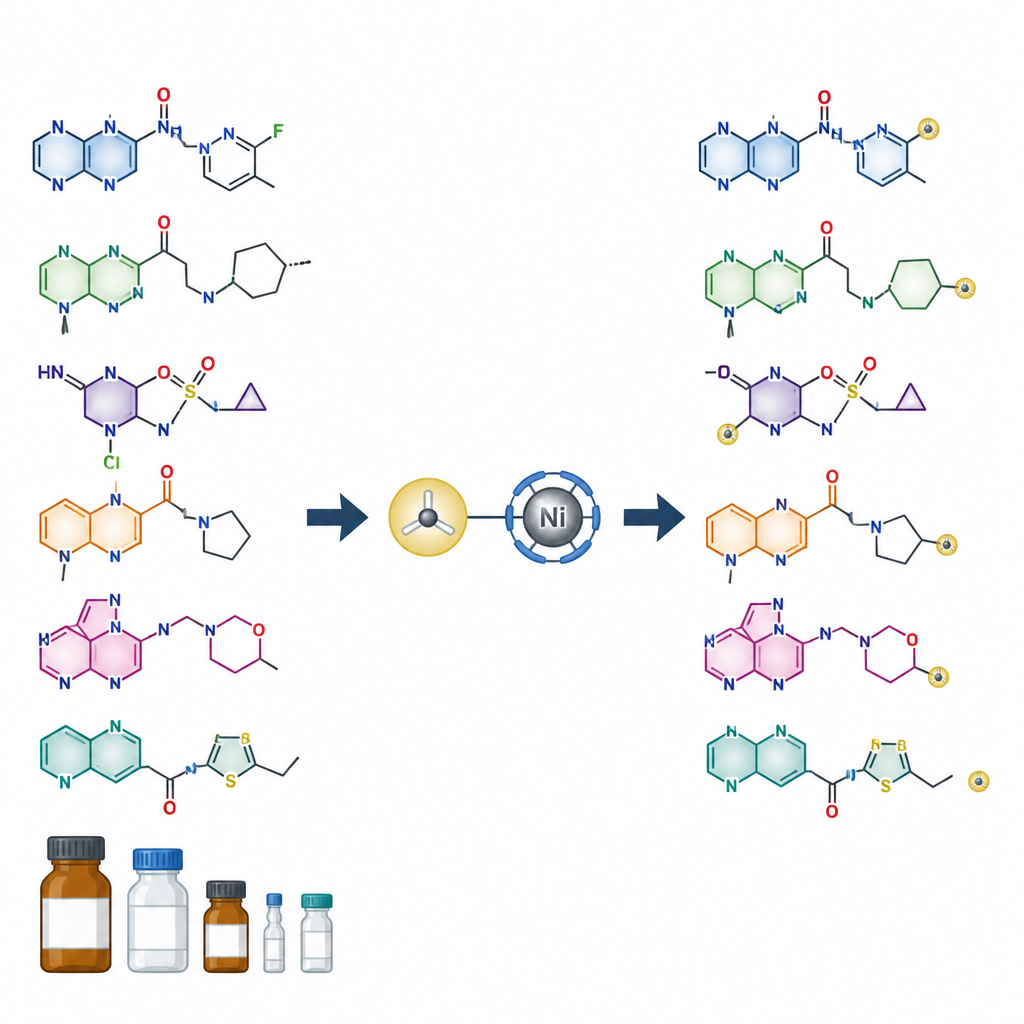
Many modern medicines work better when chemists attach a simple one carbon “methyl” unit at just the right spot on a molecule. This tiny change can make a drug more potent, longer lasting, or easier for the body to absorb. The new study describes a cleaner and more flexible way to snap these methyl units onto a wide range of drug like structures, which could help chemists fine tune future medicines with fewer steps and less waste.
A small group with a big impact
Drug hunters have long known about the so called “magic methyl effect,” where adding a single methyl group to a candidate molecule can boost its activity dozens to thousands of times. Surveys of top selling medicines show that about two thirds contain at least one methyl group joined to carbon. That tiny add on can subtly change how a drug dissolves in the body, how it fits into the pocket of a target protein, and how quickly it is broken down all without greatly changing its size. Because of this, chemists are eager for reliable tools that let them place methyl groups exactly where they want them on complex aromatic and heteroaromatic rings found in many pharmaceuticals.
Limits of older methyl tools
Existing methods to attach methyl groups often rely on highly reactive particles called radicals or on metallic reagents that behave like negatively charged methyl fragments. Radical based reactions can be efficient but tend to need strong reducing metals, pricey light driven catalysts, and long reaction times that may damage sensitive parts of a molecule. Anion based approaches usually require harsh conditions or stoichiometric amounts of metals such as zinc or aluminum, which generate significant waste and may not tolerate fragile groups like acids, aldehydes, or certain heterocycles. These drawbacks create a need for a milder, more sustainable methyl source that still works with standard metal catalyzed coupling chemistry.
Turning a simple building block into a gentle methyl source
The authors build on their earlier work using “hydrazones” molecules formed from simple carbonyl compounds and hydrazine as stand ins for more reactive carbon based partners. In this study they prepare a solution of formaldehyde hydrazone, derived from the basic industrial chemical formaldehyde, and discover conditions that make it stable enough to store and handle. Under nickel catalysis and in the presence of a mild organic base, this hydrazone behaves like a metal free methyl donor. The reaction couples it with aryl halides and phenol based leaving groups to form new carbon carbon bonds while releasing only nitrogen gas and water as byproducts.
Reaching many targets and testing the pathway
Using their optimized conditions, the team shows that the method can methylate a broad collection of aromatic and heteroaromatic partners. These include simple benzene rings with both electron rich and electron poor substituents, larger fused systems like phenanthrene, and nitrogen containing rings such as quinolines, pyridines, and carbazoles that often challenge metal catalysts. They also demonstrate “late stage” modification of complex molecules related to hormones, anti inflammatory agents, cholesterol lowering drugs, and sugars, all with moderate to high yields and good tolerance of multiple functional groups. To understand how the reaction works, they run experiments with radical traps, which suggest that free methyl radicals are not involved, and they track hydrogen atoms using a deuterium label, indicating that one hydrogen in the final methyl group comes from the hydrazone nitrogen.
Peeking under the hood with computation
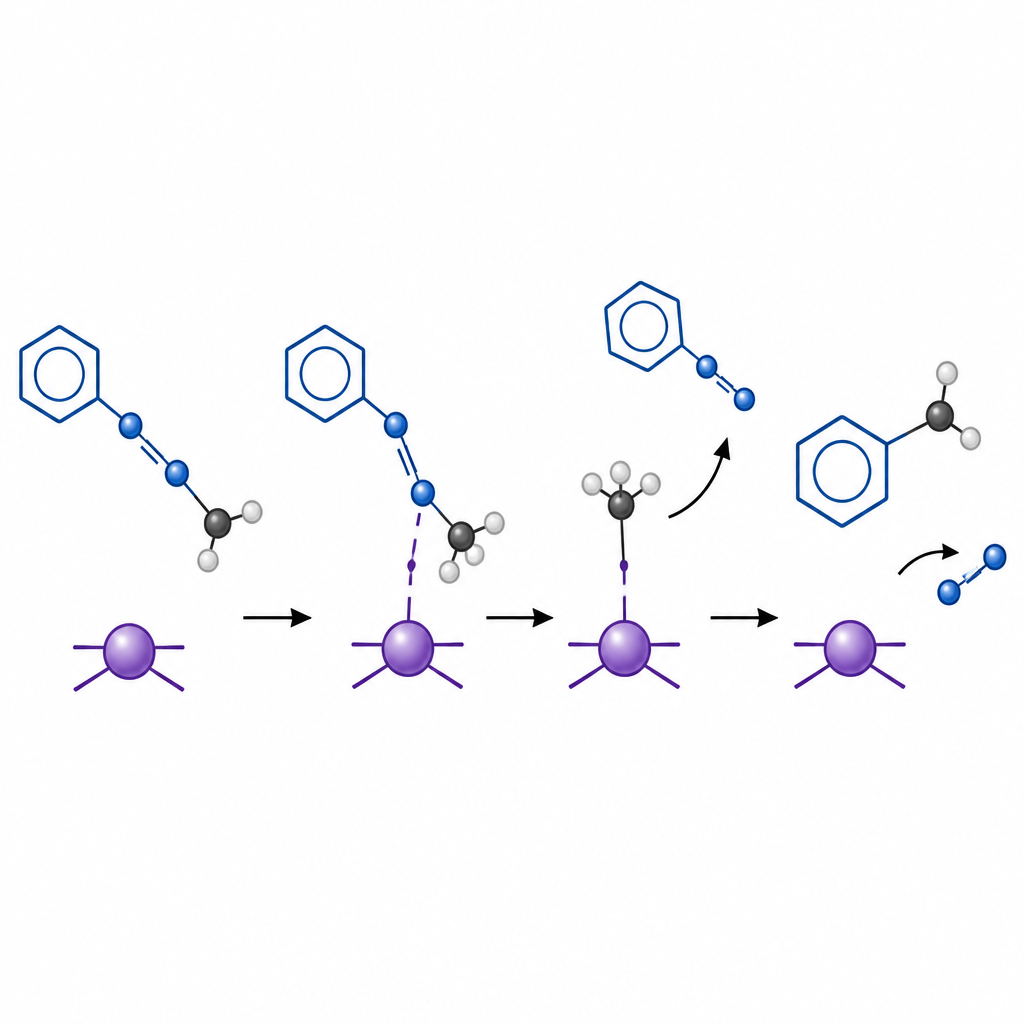
Computational chemistry calculations provide a detailed picture of the reaction steps at the nickel center. The model suggests that the aromatic partner first binds to nickel, then the hydrazone coordinates and undergoes base assisted shifts of hydrogen that gradually convert it into a methyl fragment attached to the metal while releasing nitrogen. Finally, the methyl group and the aromatic ring join to form the new bond, and the nickel catalyst is regenerated. The energy profile lacks large barriers, supporting the idea that this pathway is feasible under the mild experimental conditions and explaining why alternative routes, including ones that could give unwanted products, are disfavored.
What this means for future drug design
By turning formaldehyde hydrazone into a practical methyl donor for nickel catalyzed coupling, the researchers offer chemists a versatile and comparatively green way to install methyl groups on complex molecules. The approach uses an earth abundant metal catalyst, avoids extra metallic methyl reagents, works under moderate temperatures, and produces only innocuous gases and water as waste. For medicinal chemistry, this means an additional, flexible tool for exploring the magic methyl effect late in a project, potentially speeding up the search for better drug candidates while reducing unnecessary synthetic steps and byproducts.
Citation: Farajat, D., Philippe, L., Alaghemand, F. et al. Formaldehyde hydrazone as a methyl reagent for nickel-catalyzed cross-coupling methylation of aryl and heteroaryl electrophiles. Nat Commun 17, 4279 (2026). https://doi.org/10.1038/s41467-026-69467-0
Keywords: methylation, nickel catalysis, hydrazone chemistry, aryl coupling, medicinal chemistry