Clear Sky Science · en
Emergent giant topological Hall effect in twisted Fe3GeTe2 metallic system
Why twisting atom-thin magnets matters
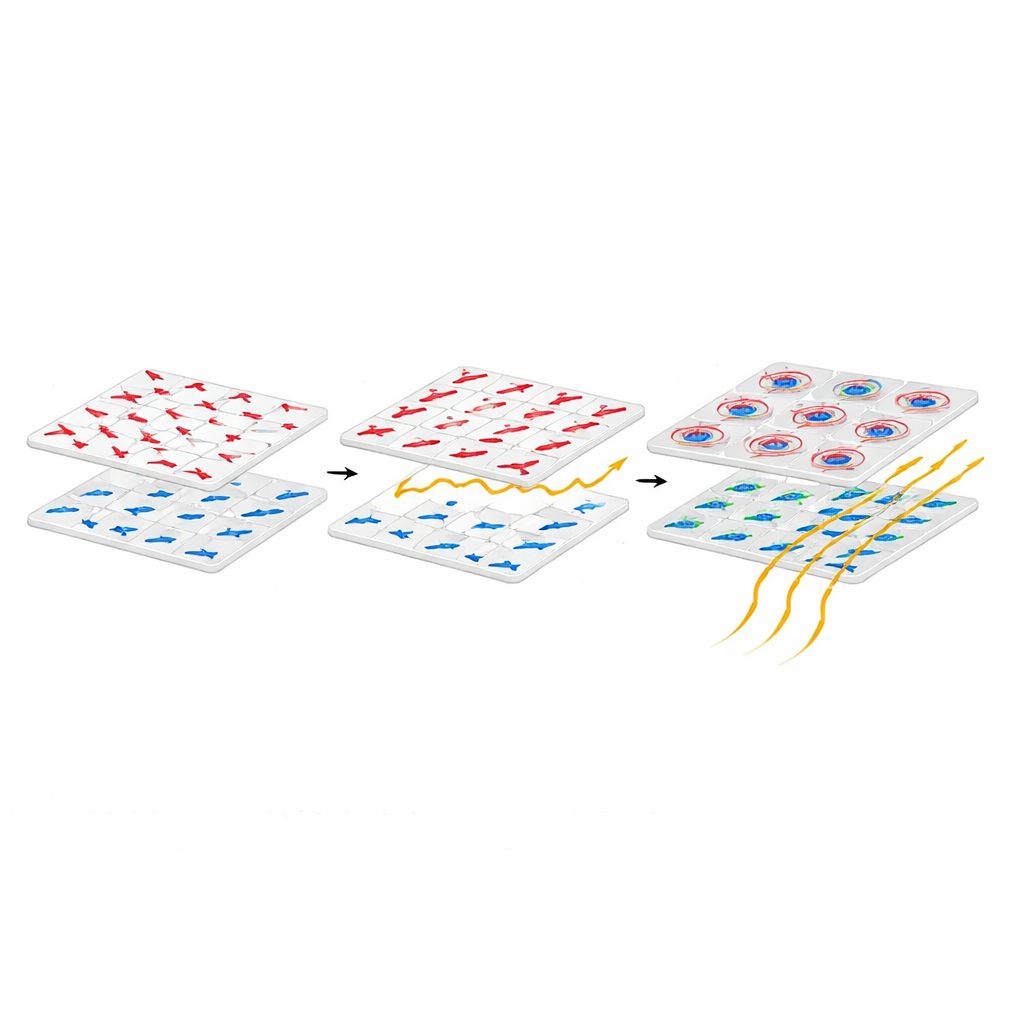
Imagine building a tiny magnetic device by stacking two ultra-thin metallic sheets and then rotating one sheet by less than a single degree. This seemingly tiny twist can completely transform how electrons move, generating new kinds of electrical signals that are useful for future low‑power technologies. In this work, researchers show that when two layers of the metallic magnet Fe3GeTe2 are twisted just right, they produce an unusually large sideways electrical response linked to swirling spin patterns called skyrmions—revealing a new way to design information‑rich magnetic states in two‑dimensional materials.
Twisting a metallic magnet into a new state
Fe3GeTe2 is a metallic magnet built from layers that naturally stack like sheets of paper and retain an overall mirror‑like symmetry. Normally, this material behaves like a conventional ferromagnet: its atomic magnets tend to align, and electrons show a well‑known sideways response called the anomalous Hall effect. The surprise in this study is that when two Fe3GeTe2 flakes are placed on top of each other and gently twisted relative to one another by about half a degree, the system develops an extra Hall signal that cannot be explained by ordinary magnetism. This additional contribution, known as the topological Hall effect, is widely regarded as a fingerprint of non‑trivial spin textures such as skyrmions.

Finding the “magic” twist window
To isolate the role of twisting, the team developed a refined “tear‑and‑stack” method using a highly sticky polymer (PCL) together with a thin insulating layer of hexagonal boron nitride. This allowed them to tear a single Fe3GeTe2 flake in half, rotate one half by a controlled angle as small as 0.015°, and restack it with good alignment, then add electrodes to probe its electrical behavior. They fabricated many devices with twist angles between 0° and 5°, all prepared in the same way except for the rotation. Transport measurements showed that only devices twisted between about 0.45° and 0.75° display clear hump‑like features on top of the usual Hall signal—signatures of the topological Hall effect. Outside this narrow “magic” window, the response reverts to that of an ordinary ferromagnet, underscoring that the new effect is truly emergent and twist‑controlled.
How thickness and hidden asymmetry create skyrmions
The strength of the unusual Hall signal also depends sensitively on the thickness of the twisted region. When the combined Fe3GeTe2 stack is only about 6 nanometers thick, the topological Hall response is large, reaching up to roughly half the size of the conventional Hall signal. As the thickness increases to around 10 nanometers, the effect weakens, and by 20 nanometers it essentially vanishes. This trend suggests that the key physics is concentrated at the twisted interface, where the local atomic environment breaks inversion symmetry even though the whole crystal still looks symmetric on average. That local asymmetry allows a special interaction, the Dzyaloshinskii–Moriya interaction, to arise within each layer with opposite sense in the two layers, favoring chiral spin textures.
Simulating the hidden spin patterns
To connect the measurements to specific spin arrangements, the authors performed micromagnetic simulations based on a continuum energy model that includes ordinary exchange, perpendicular anisotropy, interlayer coupling, and twist‑enhanced chiral interactions. By varying twist angle and thickness in the simulations, they obtained a phase diagram of possible magnetic states. At small twist angles the system forms stripe‑like spin patterns; at larger angles it returns to a uniform ferromagnet. In between, for twist angles between about 0.45° and 0.75° and thin layers, a dense lattice of skyrmions appears. The simulated skyrmion sizes and densities match those inferred from the magnitude of the measured topological Hall signal, and the calculated phase boundaries track the experimental “magic‑angle” and thickness trends, strongly supporting the skyrmion‑lattice interpretation.
What this means for future devices
In simple terms, this study shows that a tiny twist between two sheets of a metallic magnet can switch on a new, giant sideways electrical response by creating a lattice of spin whirlpools. Because the effect is large, tunable by angle and thickness, and arises in a conducting material, twisted Fe3GeTe2 provides a promising playground for future spin‑based electronics and perhaps magnetic quantum simulators. The work demonstrates that carefully engineered twists in van der Waals magnets are not just a geometric curiosity—they are a powerful design knob for turning ordinary magnetic metals into platforms that host robust, information‑rich topological textures.
Citation: Kim, H., Zhang, KX., Li, YH. et al. Emergent giant topological Hall effect in twisted Fe3GeTe2 metallic system. Nat Commun 17, 2931 (2026). https://doi.org/10.1038/s41467-026-69454-5
Keywords: twisted van der Waals magnets, Fe3GeTe2, topological Hall effect, magnetic skyrmions, spintronics