Clear Sky Science · en
The genetic landscape of human functional brain connectivity
Why your brain’s wiring and your genes matter
Every moment you read, remember, or daydream, distant parts of your brain quietly synchronize their activity. This hidden communication network, called functional connectivity, varies from person to person and is linked to how we think and how healthy our brains remain as we age. This study asks a deceptively simple question with far-reaching impact: how much of this invisible wiring is written in our DNA, and what does that mean for brain disorders and overall health?
Mapping the brain’s quiet conversations
The researchers used brain scans from more than 28,000 adults in the UK Biobank, a large health study. While participants rested in the scanner, the team measured how strongly 82 different brain regions rose and fell in activity together, creating over 3,300 distinct links between pairs of regions. Each link represents how tightly two areas are functionally coupled, even when we are not actively doing a task. The scientists then combined these maps with genetic data, scanning millions of common DNA variants to see which ones help explain why one person’s brain network looks different from another’s.
Genes with wide reach across brain networks
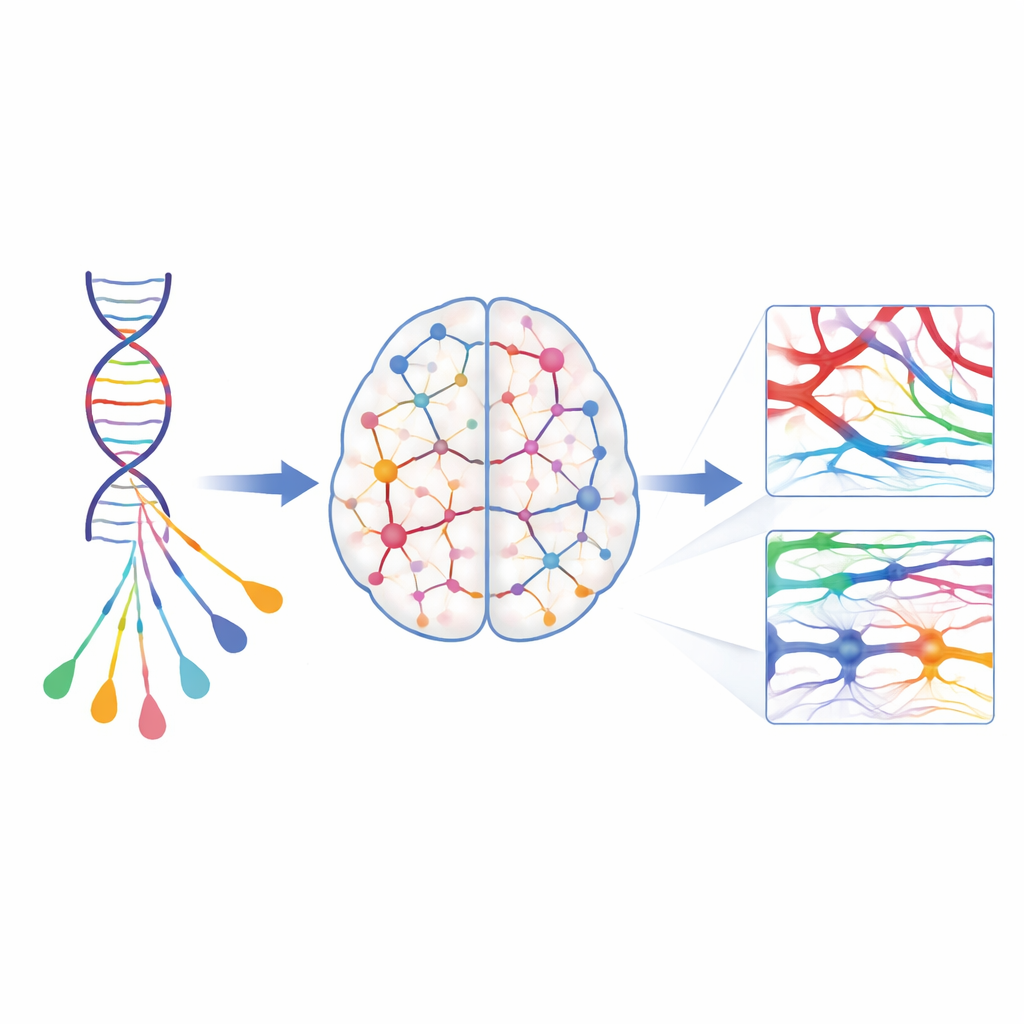
The team found that common genetic differences significantly shaped the strength of about one-third of all measured connections. On average, genes accounted for a modest but meaningful share of how strongly regions communicate. Instead of acting on a few isolated pathways, the most important genetic regions tended to influence hundreds of connections across the whole brain, suggesting a broad, shared genetic blueprint for large-scale brain organization. Several well-known resting-state networks, such as those involved in attention and higher thinking, showed particularly strong genetic contributions, reinforcing the idea that our mental abilities rest on inherited patterns of brain-wide coordination.
Key genetic players and what they do
Digging deeper, the researchers pinpointed five genes with especially strong and reliable links to functional connectivity: PAX8, EphA3, THBS1, APOE, and SLC39A12. These genes are active in processes such as brain development, blood vessel growth, and the handling of fats and metals in brain cells. For example, APOE has long been known as a major genetic factor in Alzheimer’s disease and heart health, while EphA3 helps guide growing nerve fibers during development. THBS1 is involved in the formation of new blood vessels and synapses, and SLC39A12 controls zinc transport in the brain, a metal important for nerve function and implicated in conditions like schizophrenia. Rather than affecting just one corner of the brain, variants in these genes tend to alter connectivity across many regions at once.
Links to thinking, heart health, and disease risk
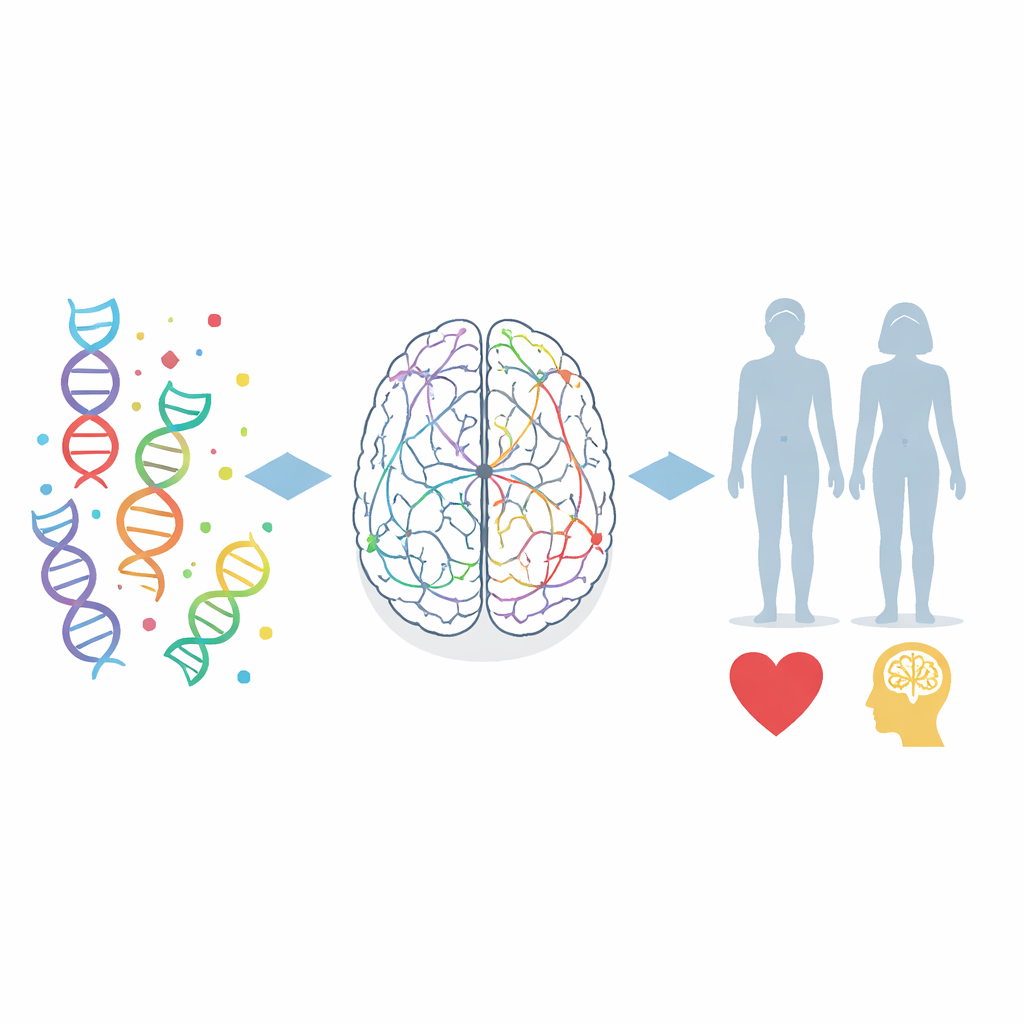
To understand the broader meaning of these genes, the authors compared their findings with large genetic studies of many other traits. The same genetic factors that influenced functional connectivity also appeared in traits related to cardiovascular health, metabolism, cognition, and aging. For instance, they overlapped with genes tied to blood pressure, blood fat levels, memory performance, and markers of Alzheimer’s pathology. Genes associated with psychiatric conditions such as schizophrenia and Alzheimer’s disease showed stronger-than-expected influence on brain connectivity, hinting that part of the risk for these disorders may travel through disrupted communication networks in the brain.
What this means for brain health
Together, the results show that our brain’s communication network is not just a product of life experience; it is also strongly shaped by a shared set of genetic instructions that affect many connections at once. These genetic influences bridge brain and body, tying together mental function, heart and blood vessel health, metabolism, and vulnerability to disorders like Alzheimer’s and schizophrenia. While the work was done in mostly older adults of European ancestry and cannot yet pinpoint cause-and-effect, it provides a detailed map of where biology and brain wiring meet. For lay readers, the key message is that keeping the brain’s networks healthy involves both the genes we inherit and the broader state of our bodies, offering future opportunities to detect and perhaps modify risk for brain disorders long before symptoms appear.
Citation: Maciel, B.d.A., Schipper, M., Romero, C. et al. The genetic landscape of human functional brain connectivity. Nat Commun 17, 3120 (2026). https://doi.org/10.1038/s41467-026-69442-9
Keywords: brain connectivity, genetics, Alzheimer’s disease, cognition, psychiatric disorders