Clear Sky Science · en
Q4ddPCR: a flexible, 4-target assay for high-resolution HIV reservoir profiling
Why Hidden HIV Matters
Modern HIV medicines can drive the virus in the blood to levels that standard tests call “undetectable.” Yet the virus survives in a hidden stronghold inside long‑lived immune cells. This silent remnant, called the HIV reservoir, can restart infection if treatment stops and stands in the way of a cure. To design and test cure strategies, researchers need tools that can measure this hidden reservoir accurately, quickly, and in many people over time. This study introduces a new laboratory test, Q4ddPCR, built to do exactly that.
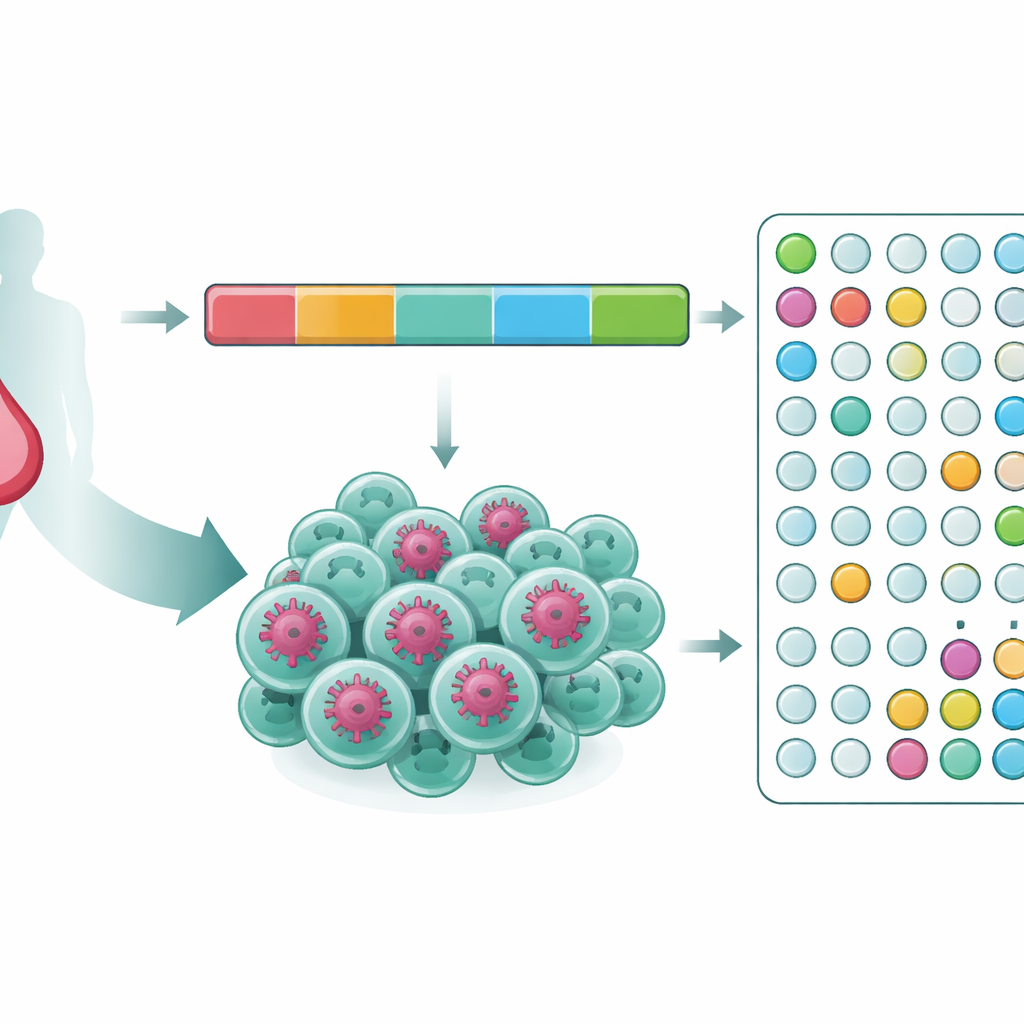
The Challenge of Finding the Real Threat
HIV leaves its genetic material behind in infected CD4 T cells, but most of these viral copies are broken and can never make new virus. Only a small fraction are fully intact and capable of roaring back if drugs are stopped. Existing tests often count both broken and intact copies together, badly overestimating the real threat. One widely used method, IPDA, looks for two specific spots in the viral genome; if both are present, it treats the virus as intact. However, HIV mutates rapidly, and small changes in these spots can cause the assay to miss or misclassify viruses. As a result, some defective viruses are counted as dangerous, some intact ones are missed, and many samples simply cannot be measured at all.
A Four‑Point Inspection for the Virus
Q4ddPCR tackles this problem by checking four conserved regions of the HIV genome at once instead of only two. It uses droplet digital PCR, a technique that breaks a DNA sample into tens of thousands of tiny droplets, each acting as a separate test tube. In each droplet, the assay asks whether the four target regions are present. By examining patterns across these regions, Q4ddPCR can more confidently decide which viral copies are truly intact and which are defective. The authors also built a decision tree that ranks readouts by reliability, giving top weight to droplets where all four regions are detected together and falling back to carefully chosen three‑ or two‑region patterns only when needed.
Putting the New Test to the Test
The team first benchmarked Q4ddPCR against a gold‑standard but cumbersome approach that combines a four‑target PCR with near full‑length viral genome sequencing. Using 3,650 proviral sequences from 13 people with long‑term viral suppression, they showed that droplets positive for all four Q4ddPCR targets closely matched sequence‑confirmed intact viruses. When they applied the test to several clinical cohorts, Q4ddPCR successfully measured intact reservoirs in 95% of samples, compared with 79% for IPDA. Because it has modular probe sets aimed at different parts of the same viral regions, Q4ddPCR could often “rescue” samples in which IPDA failed due to sequence differences in the virus. The assay also preserved key information from IPDA, such as total HIV DNA levels, while providing extra layers of detail about which combinations of targets were present.
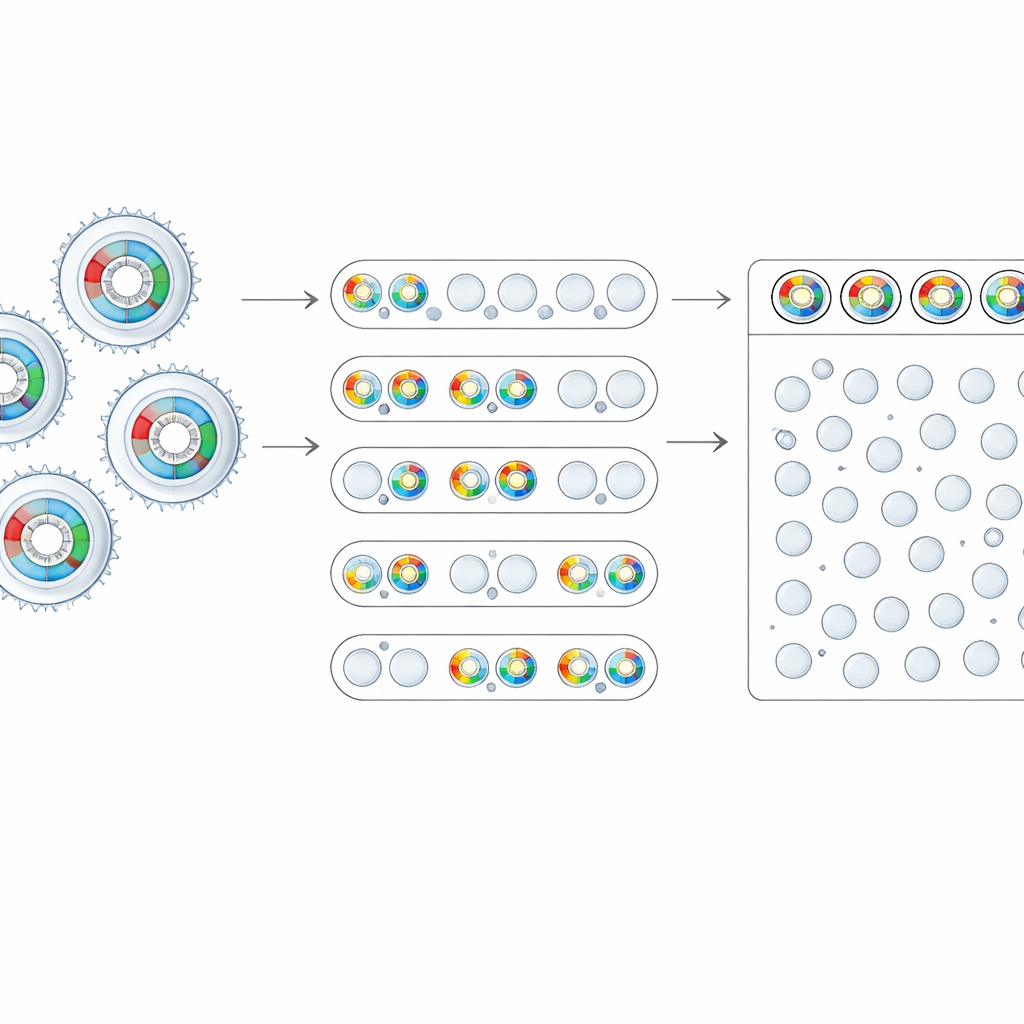
Closer to the Truly Dangerous Virus
Beyond success rates, the authors asked which assay best reflects the virus that can actually grow. In a subset of participants, they compared Q4ddPCR and IPDA with a labor‑intensive viral outgrowth test that measures cells capable of producing live virus in culture. Intact reservoir sizes measured by Q4ddPCR tracked well with viral outgrowth, whereas IPDA‑based counts showed weaker and statistically non‑significant links. In a long‑term study of 42 people during their first 4.5 years on treatment, Q4ddPCR consistently reported fewer intact proviruses than IPDA and saw them decline faster over time. This pattern fits mathematical models predicting that more precise assays, which exclude slowly decaying defective viruses, should reveal a steeper drop in the truly dangerous reservoir.
What This Means for Future HIV Cure Efforts
For people living with HIV, the immediate care does not change: antiretroviral therapy remains essential and highly effective. But for cure research, Q4ddPCR offers a sharper lens. By more reliably counting only the viral copies that matter most, it can better reveal how experimental therapies shrink or reshape the reservoir, and it can do so at scale in large trials or in groups where sample amounts are limited, such as children. While the method has so far been validated mainly for one common viral subtype, its modular design should allow adaptation to others. In practical terms, Q4ddPCR brings scientists a step closer to tracking the true biological target of cure strategies: the rare, intact copies of HIV that keep the virus poised for a comeback.
Citation: Scheck, R., Melzer, M., Gladkov, G. et al. Q4ddPCR: a flexible, 4-target assay for high-resolution HIV reservoir profiling. Nat Commun 17, 2975 (2026). https://doi.org/10.1038/s41467-026-69413-0
Keywords: HIV reservoir, droplet digital PCR, viral latency, cure research, HIV measurement