Clear Sky Science · en
Pregnancy lab test dynamics resemble rejuvenation of some organs and aging of others
Why this study matters
Pregnancy is one of the most dramatic natural experiments the human body undergoes. Hormones surge, blood volume climbs, and nearly every organ system adjusts to support a growing fetus. This study asks a surprising question with broad appeal: do these sweeping shifts make a pregnant person’s body temporarily older or younger—and can those changes teach us anything about slowing aging itself?
A new way to read routine lab tests
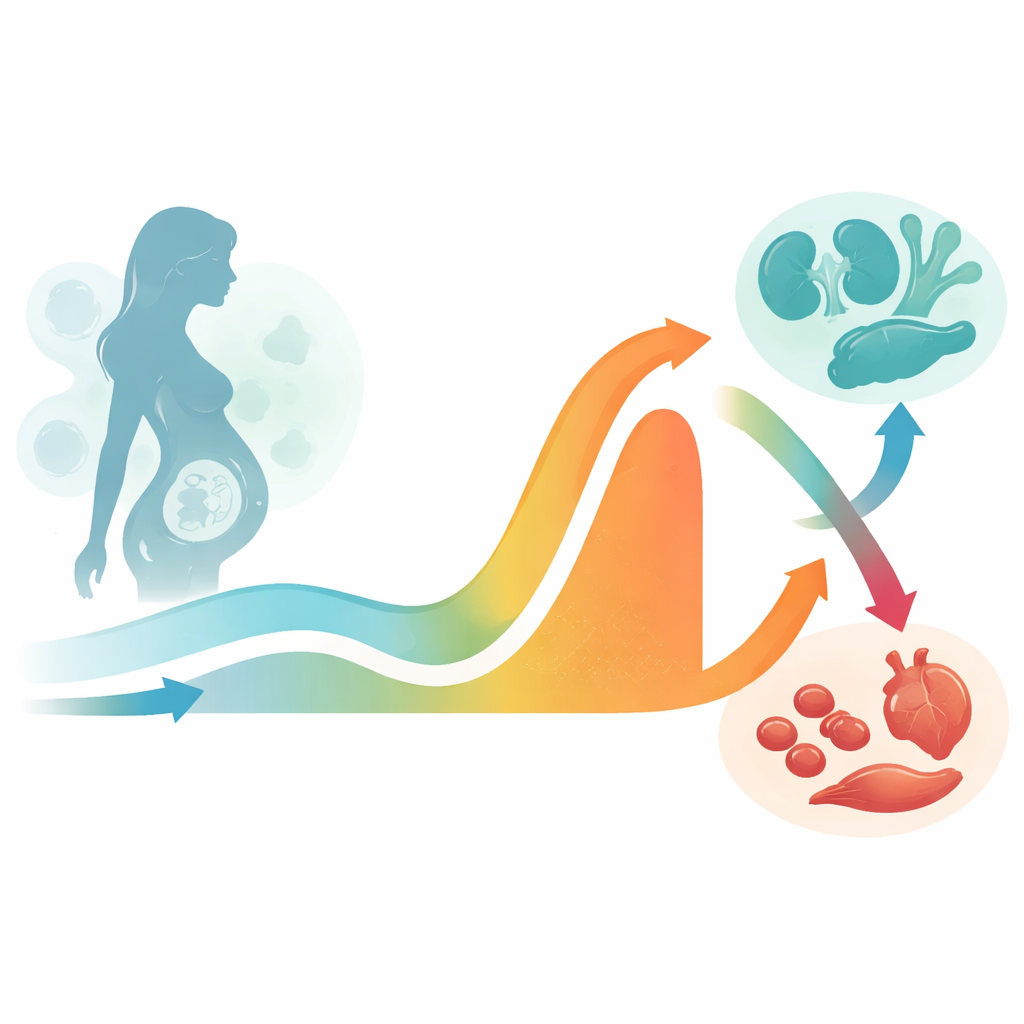
The researchers analyzed 70 standard blood and clinical tests, the same kinds of measures many people see on yearly checkups, from more than 300,000 pregnancies in Israel. They compared these results to data from 1.4 million non-pregnant women aged 20 to 89. Using the non-pregnant group, they built a statistical “lab age” clock that predicts how old someone appears based on their lab values alone. When they applied this clock week by week from more than a year before delivery to more than a year afterwards, they could watch how pregnancy reshaped the body’s apparent biological age over time.
A roller coaster of apparent age
The overall pattern was striking. At the start of pregnancy, the average lab age dipped, making women look roughly five years younger than before conception. As pregnancy progressed, the lab age then climbed steadily, peaking near delivery at about 20 years older than baseline. After birth, this apparent aging reversed: most of the shift faded within about ten weeks, with slower recovery continuing for roughly a year. Rather than a simple, one-way march toward stress and wear, pregnancy looked like a roller coaster with an early rejuvenating plunge, a steep aging-like climb, and a gradual glide back toward normal.
Some organs look younger, others older
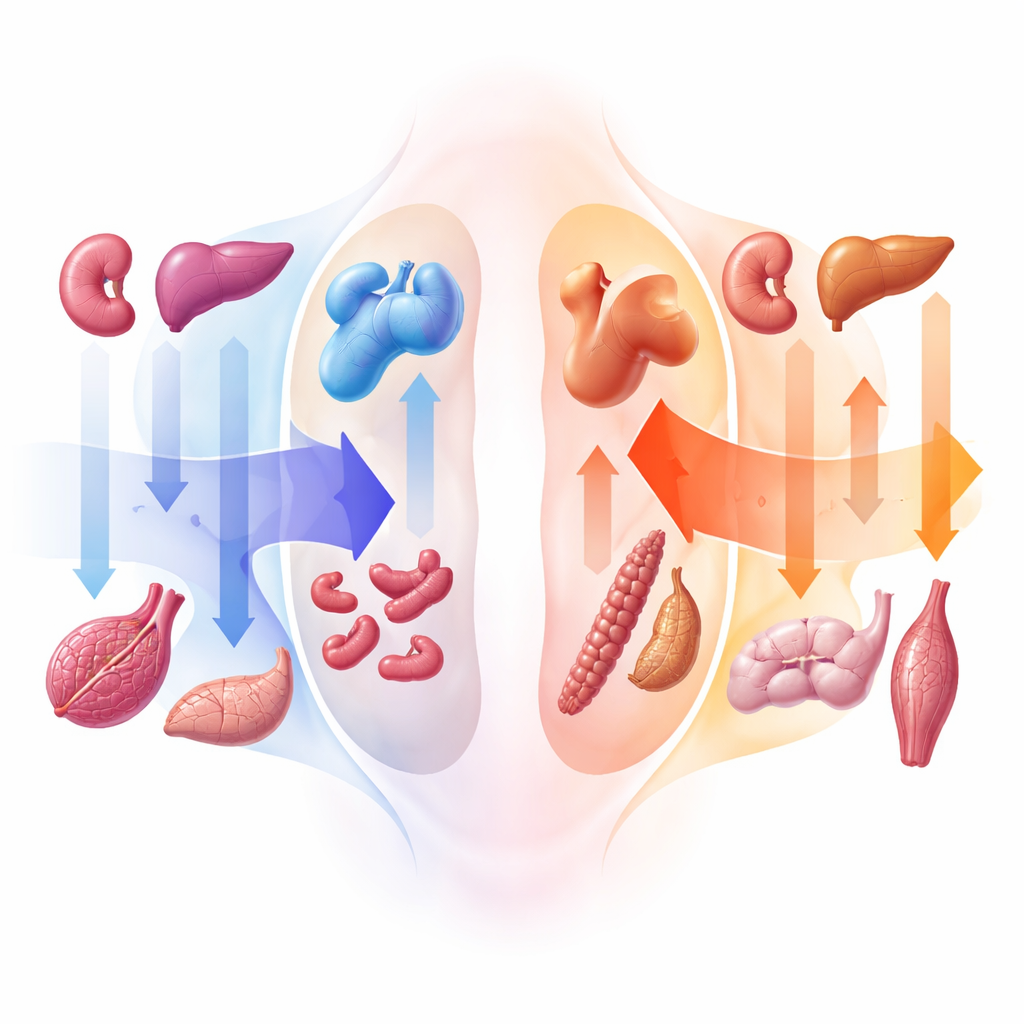
Looking beneath this single age number, the team found that different organ systems followed very different paths. Kidney-related tests changed in the opposite direction from normal aging—suggesting better filtration rather than decline. Measures tied to iron and hemoglobin also behaved like a younger state, consistent with pregnancy’s increased need for iron and mild anemia, contrasted with the iron buildup often seen in older adults. Many liver tests associated with cell damage improved during pregnancy compared with their typical trend in aging, again hinting at rejuvenation. By contrast, tests linked to blood clotting, thyroid function, muscle and bone, and metabolism mostly shifted in the same direction seen in older age: thicker blood, altered thyroid hormones, higher cholesterol and triglycerides, and weight gain. Yet the authors emphasize that these aging-like lab patterns usually arise from very different causes in pregnancy—such as hemodilution from expanded blood volume or the effects of placental hormones—rather than from the slow damage and inflammation that drive true aging.
Clues from pregnancy complications
The study also compared healthy pregnancies with those complicated by preeclampsia, gestational diabetes, and severe postpartum bleeding. Pregnancies with preeclampsia or gestational diabetes had lab ages about two to six years older than healthy pregnancies, in directions that resembled ordinary aging. For gestational diabetes, this older lab age was already present before conception, reflecting shared risk factors with type 2 diabetes such as obesity and family history. In preeclampsia, the extra apparent aging emerged later in pregnancy, matching the known timing of the disorder. By contrast, major bleeding around delivery did not noticeably shift lab age, suggesting a more acute event rather than a prolonged systemic strain.
What this means for aging and health
To non-specialists, the key message is that pregnancy is neither a pure stress test nor a simple model of growing old. Instead, it temporarily pushes some organs into a younger, more efficient state while driving others into patterns that mimic aging for very different reasons. This split view cautions against taking biological age “clocks” at face value when they are applied during intense physiological challenges. At the same time, the rejuvenation seen in kidney function, iron handling, and aspects of liver and metabolism suggests that pregnancy hormones and signals might someday inspire therapies to refresh specific organs in older adults. Pregnancy, the study concludes, offers a rare window into how the body can rapidly remodel itself—both forward and backward along the apparent aging curve.
Citation: Moran, R., Pridham, G., Toledano, Y. et al. Pregnancy lab test dynamics resemble rejuvenation of some organs and aging of others. Nat Commun 17, 2838 (2026). https://doi.org/10.1038/s41467-026-69340-0
Keywords: pregnancy and aging, biological age clocks, organ rejuvenation, lab test dynamics, pregnancy complications