Clear Sky Science · en
Recurrent introgression and geographical stratification shape Saccharomyces cerevisiae in the Neotropics
Yeast, Drinks, and Hidden Journeys
Every sip of a traditional agave spirit, such as mezcal or tequila, carries more than flavor—it carries a history of microscopic travelers. This study looks at the yeasts that help ferment agave in the tropical Americas and shows how their genes have been repeatedly reshaped by encounters with close relatives and by the geography of mountains, forests, and distilleries. In doing so, it reveals how a humble brewing microbe became one of the most diverse branches of life on Earth.
A Natural Brewery Without Walls
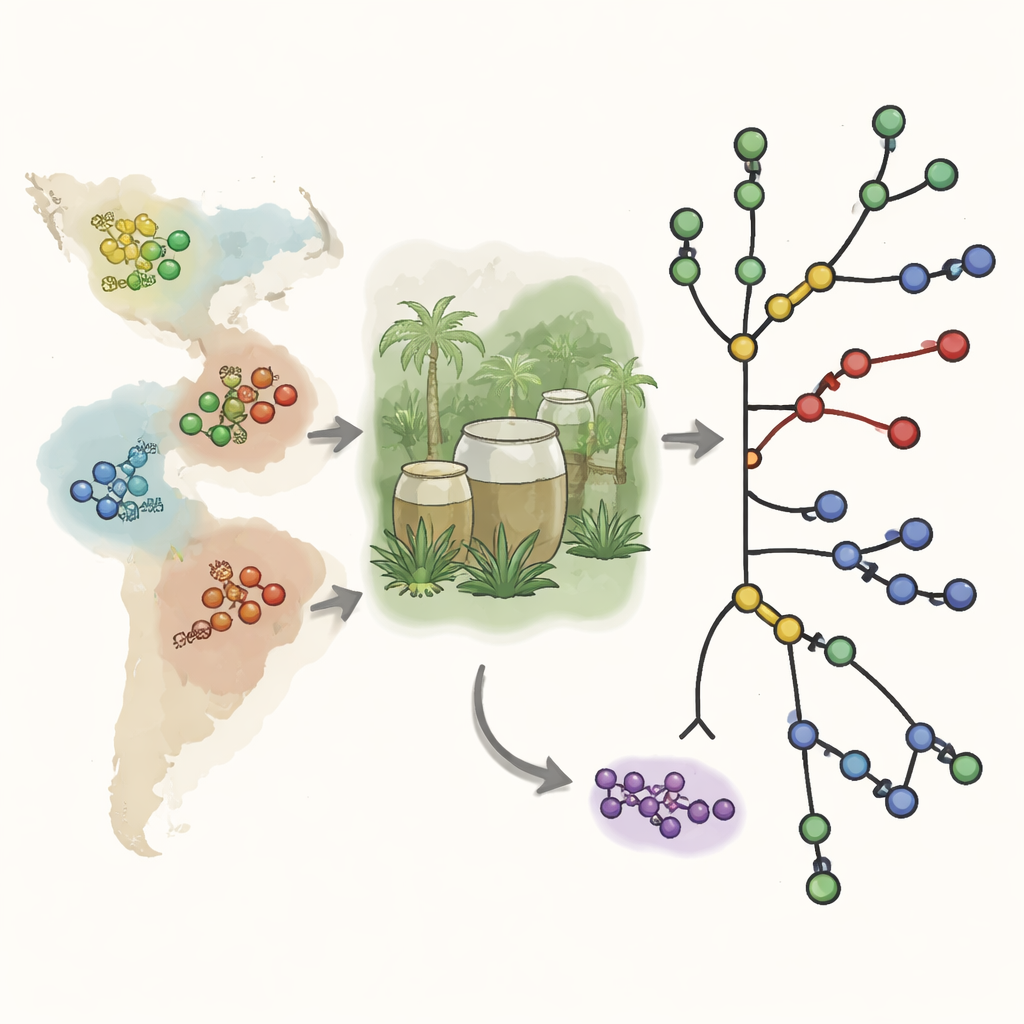
Unlike modern steel tanks sealed from the outside world, many agave spirits in Mexico are still made in open vats where wild microbes drift in from the surrounding environment. The team sequenced the complete DNA of 216 Saccharomyces cerevisiae strains, mostly from these spontaneous agave fermentations across Mexico, and compared them with hundreds of other strains collected worldwide. They found that most of the Mexican yeasts join a broader Neotropical cluster that also includes strains from French Guiana, Ecuador, and Brazil. This cluster stands out as unusually diverse, with long branches on the evolutionary tree and many genetic differences even among neighbors.
Where You Live Matters
The researchers then asked how geography shapes this diversity. Using approaches that group genomes into ancestral components, they uncovered eleven distinct genetic populations within the Neotropical cluster. These populations match where the strains were collected: specific agave-producing regions in Mexico, forest sites in Brazil, and other tropical locations each harbor their own characteristic yeast backgrounds. Even within the largest Mexican group, genetic diversity and mixing increase as one moves from north to south. A major mountain range, the Sierra Madre Oriental, appears to separate two closely related Mexican agave clades, suggesting that landscape barriers that affect plants and animals also leave a mark on microbes carried by insects, air, and human practices.
Genes Borrowed from a Sister Species
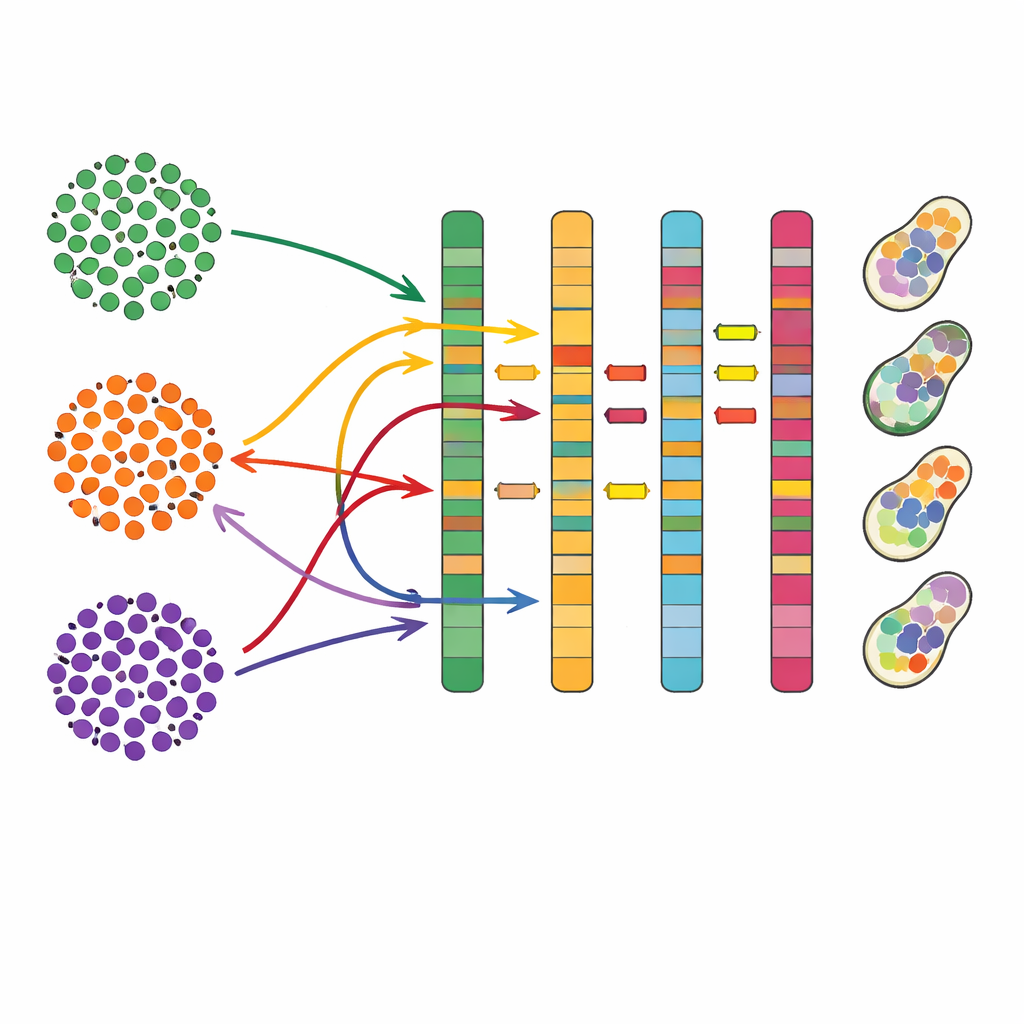
Another striking feature of these Neotropical yeasts is how much DNA they carry from a sister species, Saccharomyces paradoxus. When two related species occasionally interbreed, chunks of DNA can cross the species line—a process called introgression. The authors systematically hunted for such borrowed regions and found that Neotropical strains, especially those tied to agave, hold dozens to hundreds of these foreign genes, often in long stretches and sometimes in two versions within the same genome. By comparing these segments to a large collection of S. paradoxus genomes, they could trace where the borrowed genes came from. Agave-associated yeasts mainly received DNA from a lineage of S. paradoxus found in Mexican distilleries, while South American strains drew their foreign DNA from related lineages that live in natural tropical habitats.
Many Pulses of Gene Flow
The patterns of which genes are shared, and how they are arranged, suggest at least three separate waves of gene flow from S. paradoxus into the Neotropical cluster’s ancestors. An early event likely occurred before the Neotropical strains split into different clades, seeding all of them with a common set of foreign genes. Later, additional pulses affected mainly the Mexican agave groups, with one especially recent episode leaving very long and partially mixed segments in a subset of strains. Within some clades, different strains hold very different combinations of borrowed genes, indicating that their genomes are still being shuffled by recombination and mating rather than having settled into a single stable pattern.
Why This Microscopic Story Matters
For a lay reader, the key message is that traditional agave fermentations act like a living laboratory where yeasts from natural environments and from distilleries constantly meet, mix, and evolve. Geography sets the stage by separating populations across mountains and regions, while repeated gene borrowing from a sister species injects new variations that may help these microbes cope with local conditions. Even though the study did not pinpoint specific "super-genes" responsible for adaptation, it shows that the yeasts in agave spirits are among the most genetically rich and dynamic known for their species. Preserving traditional, open fermentation practices therefore matters not only for cultural reasons, but also for safeguarding an exceptional reservoir of microbial diversity that illuminates how gene flow and landscape together shape the evolution of complex life.
Citation: Avelar-Rivas, J.A., Sedeño, I., García-Ortega, L.F. et al. Recurrent introgression and geographical stratification shape Saccharomyces cerevisiae in the Neotropics. Nat Commun 17, 3024 (2026). https://doi.org/10.1038/s41467-026-69138-0
Keywords: yeast evolution, agave fermentation, introgression, Neotropics, microbial diversity