Clear Sky Science · en
Proteomics-based machine learning model for predicting secondary infection in HBV-related liver failure
Why hospital infections matter for liver patients
People with severe liver disease caused by hepatitis B virus often spend long stretches in the hospital, where their weakened bodies can easily fall prey to new infections. These “secondary infections” do not arrive with the patient but develop days later, and they sharply increase the chances of organ failure and death. The trouble is that doctors currently have no reliable way to know, at admission, which patients are most likely to get such infections. This study asks a simple but powerful question: can the proteins already circulating in a patient’s blood reveal who is heading for danger, early enough to intervene?
Looking inside blood to spot hidden risk
The researchers followed 234 adults with hepatitis B-related liver failure treated at three major hospitals in China. None showed signs of active infection when they were admitted, yet about one-third went on to develop serious infections of the abdomen, lungs, urinary tract, or bloodstream within a week. From blood samples taken within 48 hours of admission, the team used advanced “proteomics” tools to measure thousands of different proteins in the patients’ plasma. By comparing patients who later became infected with those who did not, they searched for protein patterns that might act as early warning signals. 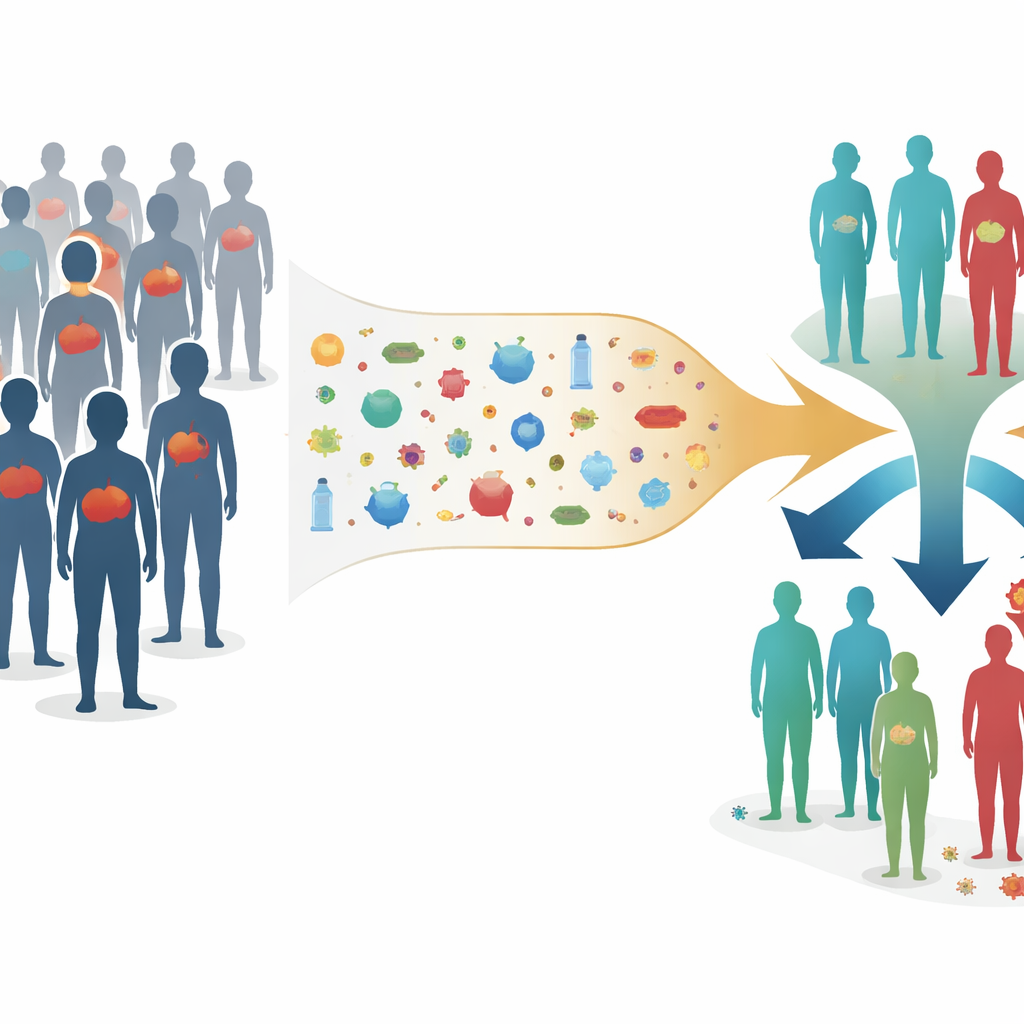
Inflammation and clotting caught in a vicious loop
The protein maps revealed broad disruptions in two tightly linked systems: inflammation and blood clotting. In patients who later developed infections, many proteins involved in clot formation, platelet activity, and the body’s inflammatory responses were shifted up or down compared with safer patients. Network and pathway analyses showed that these clotting and immune proteins were not acting in isolation. Instead, they formed dense interaction webs, supporting the idea that faulty clotting can fan the flames of inflammation and, in turn, ongoing inflammation can further damage the clotting system. This harmful feedback loop may leave the body less able to contain invading microbes, priming high-risk patients for sudden downturns.
Teaching a computer to read protein signals
To turn these complex protein changes into something doctors could use at the bedside, the team trained several machine learning models, including logistic regression and other popular algorithms. Starting with nearly 5,000 proteins, they used a feature-selection method to pick those most strongly tied to later infection, then repeatedly tested how well different combinations separated future infection cases from controls. The best-performing and most practical model, called Model 1, ended up using just four proteins—lysozyme (LYZ), calmodulin 1 (CALM1), SERPIND1, and dermatopontin (DPT)—together with two standard lab measures of liver injury and jaundice (AST and total bilirubin). When fed patients’ admission blood data, this model correctly distinguished those who would develop infection from those who would not with striking accuracy in the initial group and still strong performance in an independent test group. 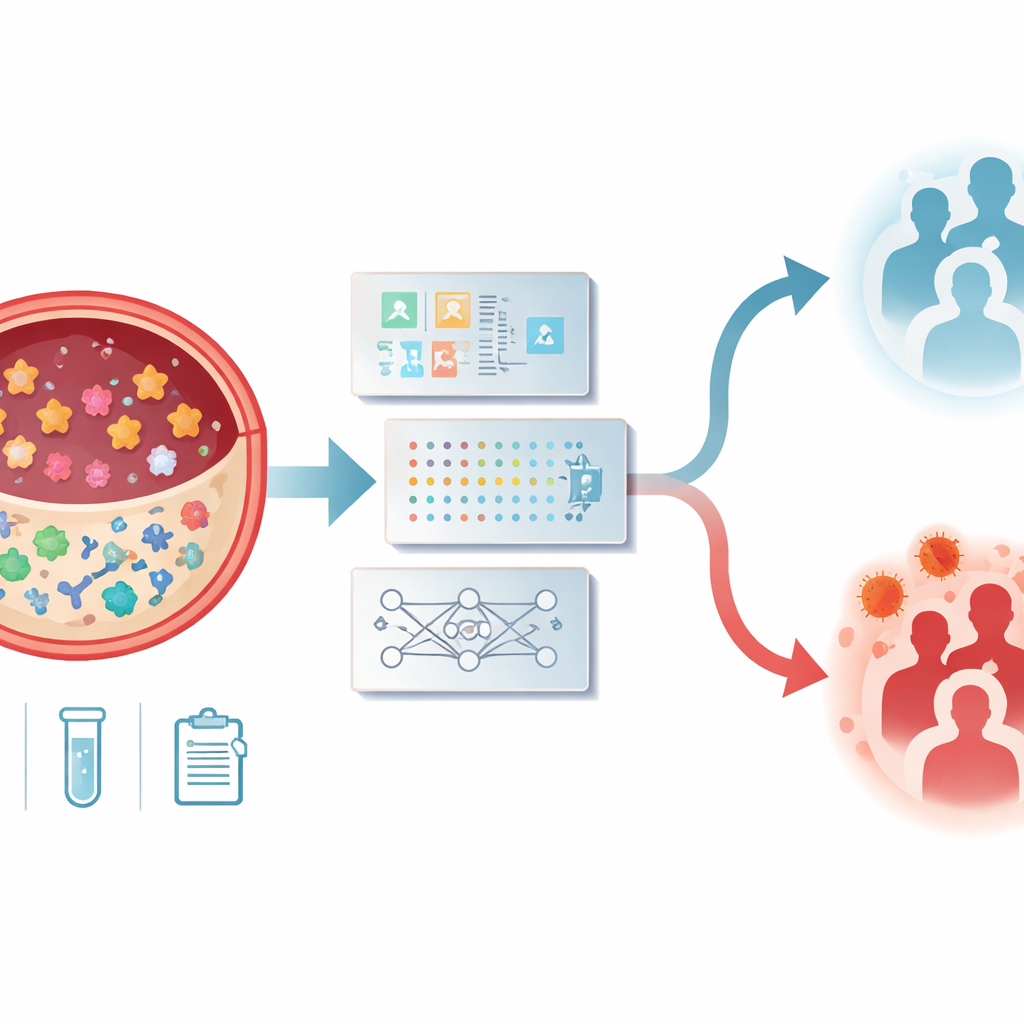
Turning complex tests into simple hospital tools
Because high-end proteomics machines are not yet routine in most hospitals, the researchers asked whether simpler lab kits could measure their key proteins. In a third group of patients, they used common ELISA tests—the kind many clinical labs already run—to quantify the same four proteins. Even with this more basic technology, a computer model based on the ELISA readings still did a very good job of telling future infection cases from non-cases. Importantly, the main model not only predicted secondary infection better than classic markers like C‑reactive protein or white blood cell counts; it also forecast who would die within 28 days more accurately than widely used liver-failure scoring systems.
What this means for patients and doctors
In plain terms, this work shows that a small “fingerprint” of blood proteins, interpreted by a machine-learning model, can warn doctors—within the first two days of hospitalization—about which hepatitis B-related liver failure patients are most likely to develop dangerous infections or die soon after. Rather than reacting once a fever or low blood pressure appears, clinicians could use such a test to monitor high-risk patients more closely, adjust antibiotic strategies, or consider earlier intensive care. While further validation and easier assays are still needed before this approach becomes routine, the study points toward a future in which a single blood draw could help personalize infection prevention and potentially save lives in one of the sickest liver patient populations.
Citation: Xiong, F., Zheng, J., Chen, J. et al. Proteomics-based machine learning model for predicting secondary infection in HBV-related liver failure. Nat Commun 17, 3667 (2026). https://doi.org/10.1038/s41467-026-69075-y
Keywords: hepatitis B liver failure, secondary infection risk, plasma proteomics, machine learning prediction, infection biomarkers