Clear Sky Science · en
Transition to bio-based plastic packaging reveals complex climate–biodiversity trade-offs
Why Rethinking “Green” Plastics Matters
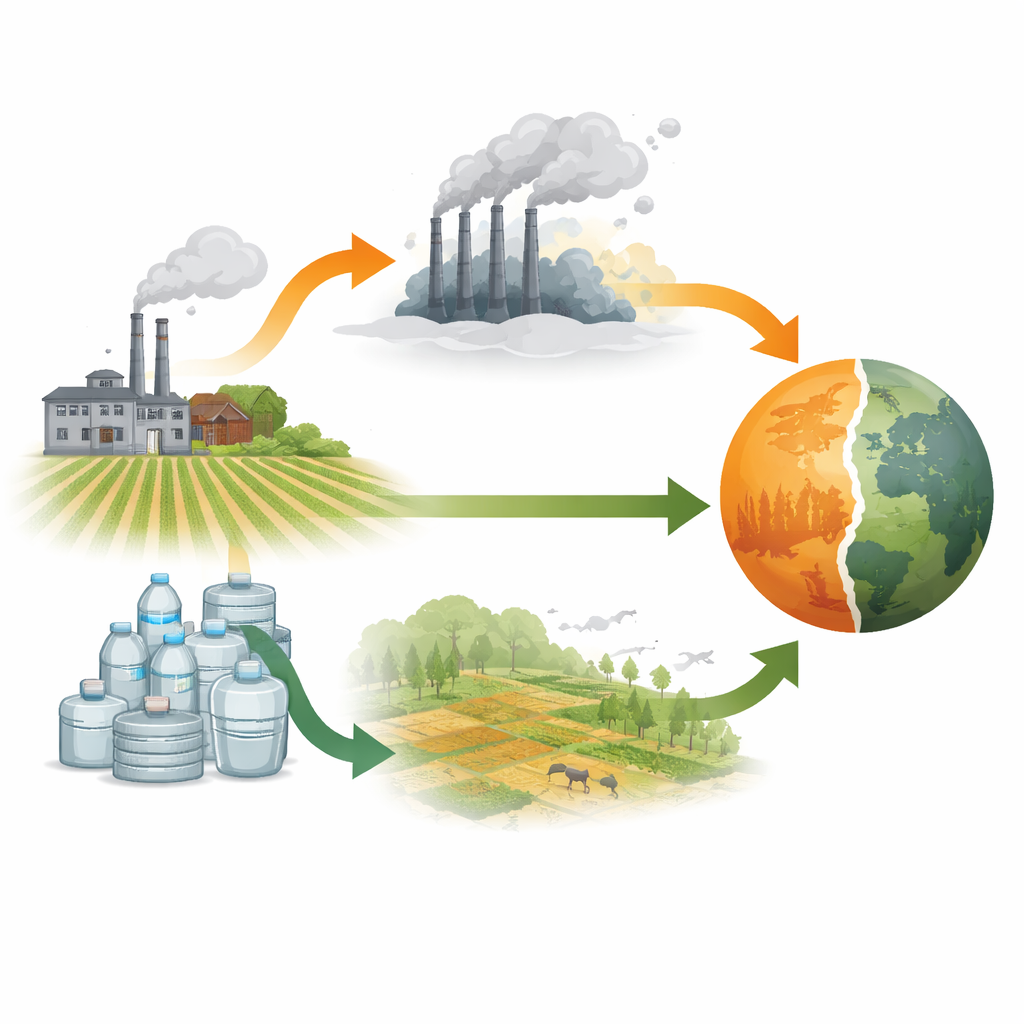
Food is safer and more convenient than ever thanks to plastic packaging, but that convenience carries a steep environmental price. In response, companies and policymakers are turning to plastics made from plants instead of oil, hoping they will be a simple climate-friendly fix. This study shows that the reality is more complicated: while plant-based packaging can help with global warming, it can also speed up the loss of wildlife and strain water and land resources unless overall demand for packaging falls and recycling improves.
Plastics, Pollution, and a New Hope
Over the past 70 years, plastic production has exploded, with packaging—especially for food and drink—making up a large share. Making and disposing of these materials emits billions of tons of greenhouse gases and leaves behind long‑lived debris that harms marine life and may affect human health. Bio‑based plastics, made from crops such as corn and sugarcane or from plant residues, are often promoted as a way to cut emissions. Some are “drop‑in” versions chemically similar to conventional plastics, while others are designed to break down in industrial composting systems. Despite this promise, their full environmental record, especially their effects on biodiversity and human health, has remained unclear.
Comparing Plant-Based and Oil-Based Packaging
The authors carried out a detailed life cycle assessment, following plastics from raw material extraction through production, use, and disposal. They compared five bio‑based plastics with seven fossil‑based ones, looking not only at climate change but also at ecosystem damage, human health, water use, and leakage of plastic into the environment. On average, plant‑based packaging materials released less climate‑warming gas per kilogram than their oil‑based counterparts, mainly because crops absorb carbon dioxide as they grow. However, turning plants into plastics is energy‑intensive, and the climate benefit depends strongly on how both the energy system and waste management are handled.
The Hidden Cost to Nature and People
Lower emissions came with a major downside: greater harm to ecosystems. Bio‑based plastics required more cropland, which means more habitat converted to fields and more pressure on species. When this damage was tallied, bio‑based options generally caused two to five times more potential loss of species than fossil plastics. Fertilizer use and irrigation also raised health‑related impacts, such as fine particle pollution and competition for freshwater, though these remained small at the scale of a single package. Plastic that escapes waste systems added another layer of concern. Even “green” plastics can linger and fragment in the ocean, where slow‑degrading materials continue to threaten marine organisms over long periods.
Product Choices and What Happens After Use
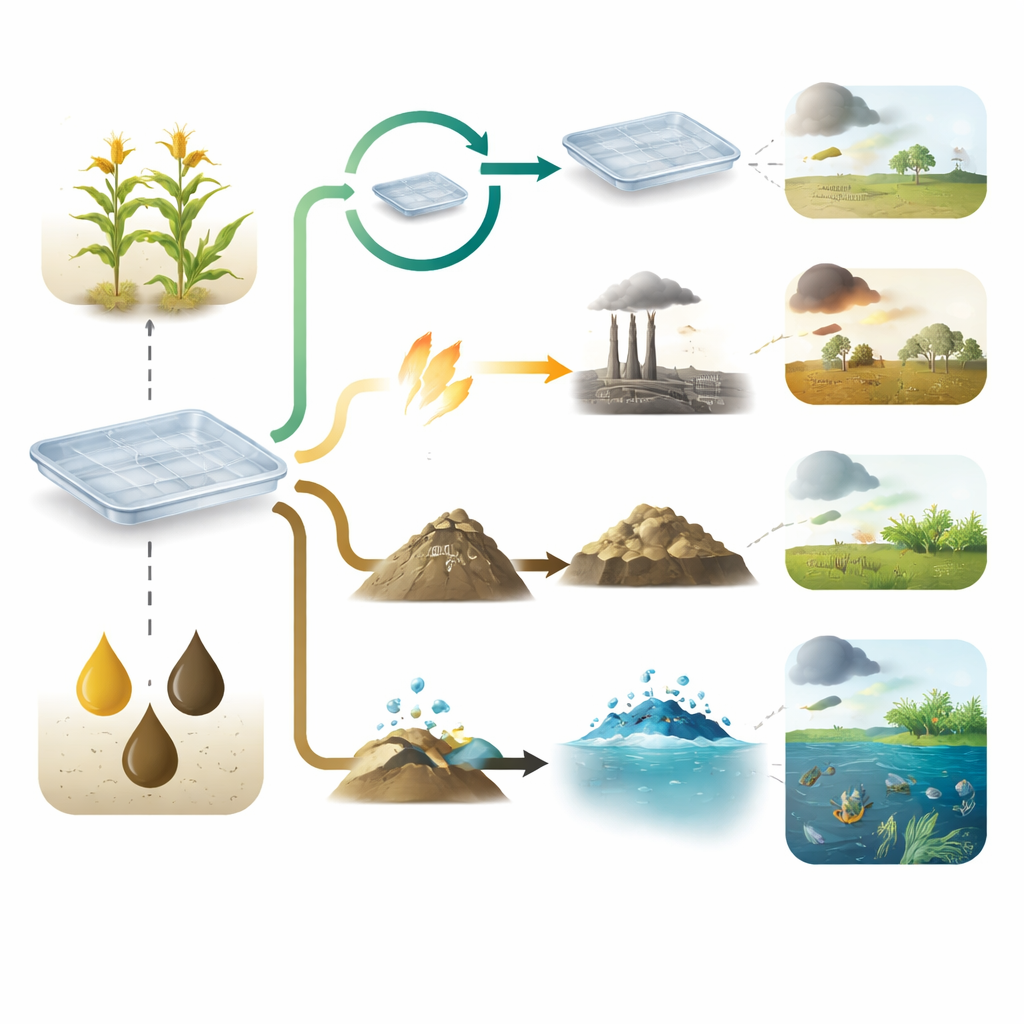
To show how design and waste choices matter, the team examined a simple food tray made from polylactic acid, a popular plant‑based plastic, and compared it with trays made from common fossil plastics. Using crop residues to produce the plant‑based tray sharply reduced damage to ecosystems compared with using dedicated corn or sugarcane fields, because less extra land was needed. Recycling the material further cut both climate and nature impacts. By contrast, composting or littering the tray led to higher greenhouse gas emissions or serious harm to marine life. Across a wide range of scenarios, plant‑based trays almost always beat fossil trays on climate grounds, but only residue‑based or recycled versions with well‑managed end‑of‑life performed as well for biodiversity.
Scaling Up and Hitting Planetary Limits
The researchers then asked what would happen if Europe gradually replaced all fossil‑based packaging with bio‑based versions by mid‑century. Even in optimistic cases with cleaner electricity and more recycling, shifting entirely to first‑generation crop‑based plastics could greatly increase overall harm to ecosystems because of the extra farmland required. At the same time, climate emissions from packaging would still sit well above levels consistent with keeping global warming to 1.5 °C if demand for packaging keeps growing at today’s pace. Only strong measures to reduce how much packaging is used—combined with better reuse, recycling, and energy decarbonization—brought both climate and biodiversity impacts down to safer levels.
What This Means for Everyday Packaging
For consumers and policymakers, the message is that switching from oil‑based to plant‑based plastics is not a silver bullet. Plant‑based packaging can help slow climate change, especially when it uses residues or recycled material and is kept in closed loops through effective collection and recycling. But if society simply replaces one type of single‑use plastic with another while allowing demand to grow, the result is likely to be more pressure on land, water, and wildlife. The study argues that truly sustainable packaging systems will depend less on what plastics are made of and more on using fewer of them, reusing what we can, and designing waste systems that prevent leakage into the environment.
Citation: Erradhouani, B., Coma, V., Sonnemann, G. et al. Transition to bio-based plastic packaging reveals complex climate–biodiversity trade-offs. Nat Commun 17, 3630 (2026). https://doi.org/10.1038/s41467-026-69016-9
Keywords: bio-based plastics, plastic packaging, climate change, biodiversity, circular economy