Clear Sky Science · en
Historical reconstruction of human moralization with word association and text corpora
How Our Sense of Right and Wrong Changes Over Time
Why did smoking go from glamorous to shameful, or slavery from a taken-for-granted institution to a clear moral outrage? This article tackles a deceptively simple question: how do ideas, practices, and even people become seen as morally good or bad over decades and centuries? Using huge collections of written English and modern AI tools, the researchers build a kind of "moral time machine" that tracks when concepts pick up moral weight—and whether that weight is positive or negative.
Turning Language into a Moral Time Machine
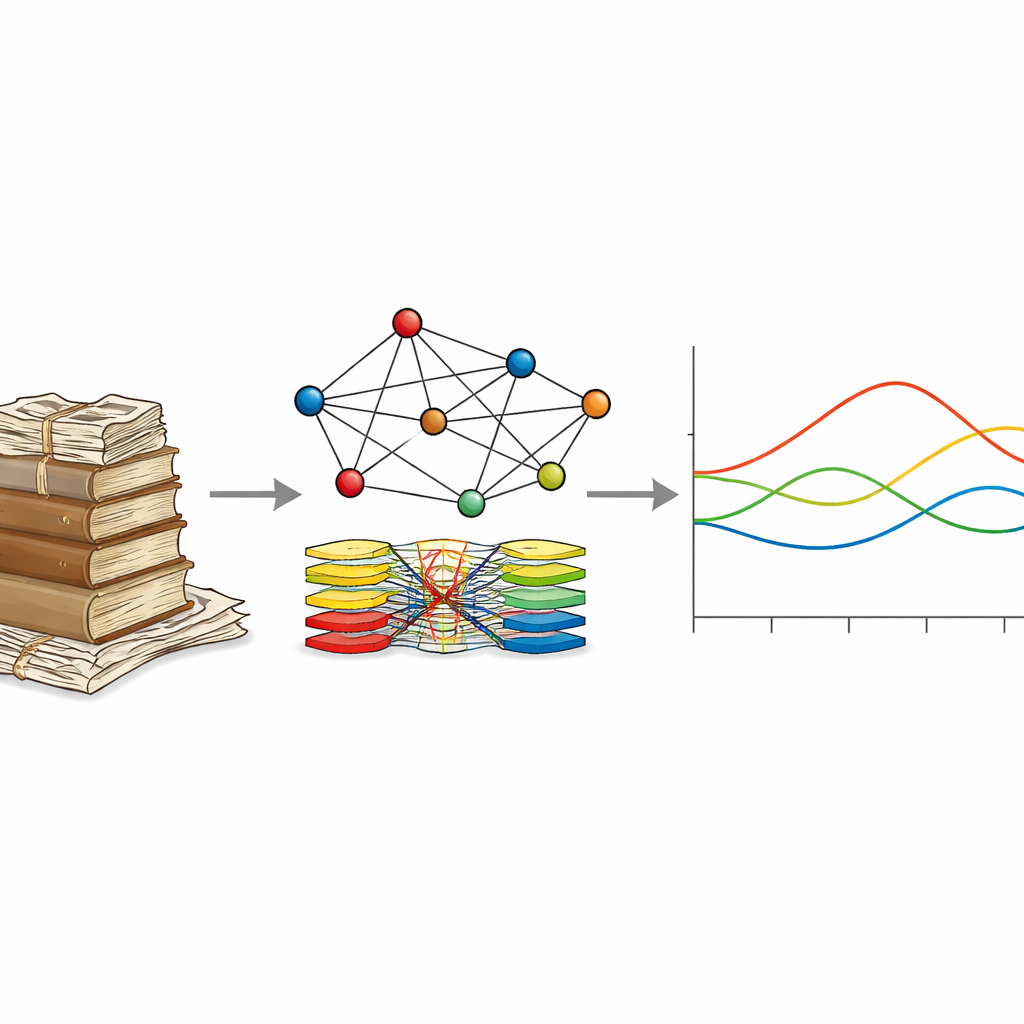
The authors introduce HistMoral, an open-access computational framework that reconstructs how moral judgment toward more than 20,000 concepts has shifted over the past 150 years. Instead of asking living participants directly about every concept, they start from large word-association experiments where people respond to a cue word, such as "smoking," with whatever comes to mind. If many responses are moral words like "bad," "wrong," or "addiction," the concept is treated as strongly moralized. These psychological data define two key measures: moral relevance (how much a concept is thought about in moral terms at all) and moral polarity (whether those moral thoughts are mainly positive or negative).
Rebuilding Lost Moral Associations from Old Texts
Historical records obviously do not come with word-association tests attached, so the team finds a clever workaround. They turn to giant text archives such as the Corpus of Historical American English and the New York Times, which together cover more than a century and a half of written language. In each decade or year, they map how often words appear near one another and feed the surrounding sentences into modern language models such as BERT to capture subtle shades of meaning. These patterns are used to build a network where each word is a node connected to others it frequently appears with, and each node has a rich numerical representation of its meaning in that era.
Teaching a Network to Sense Morality
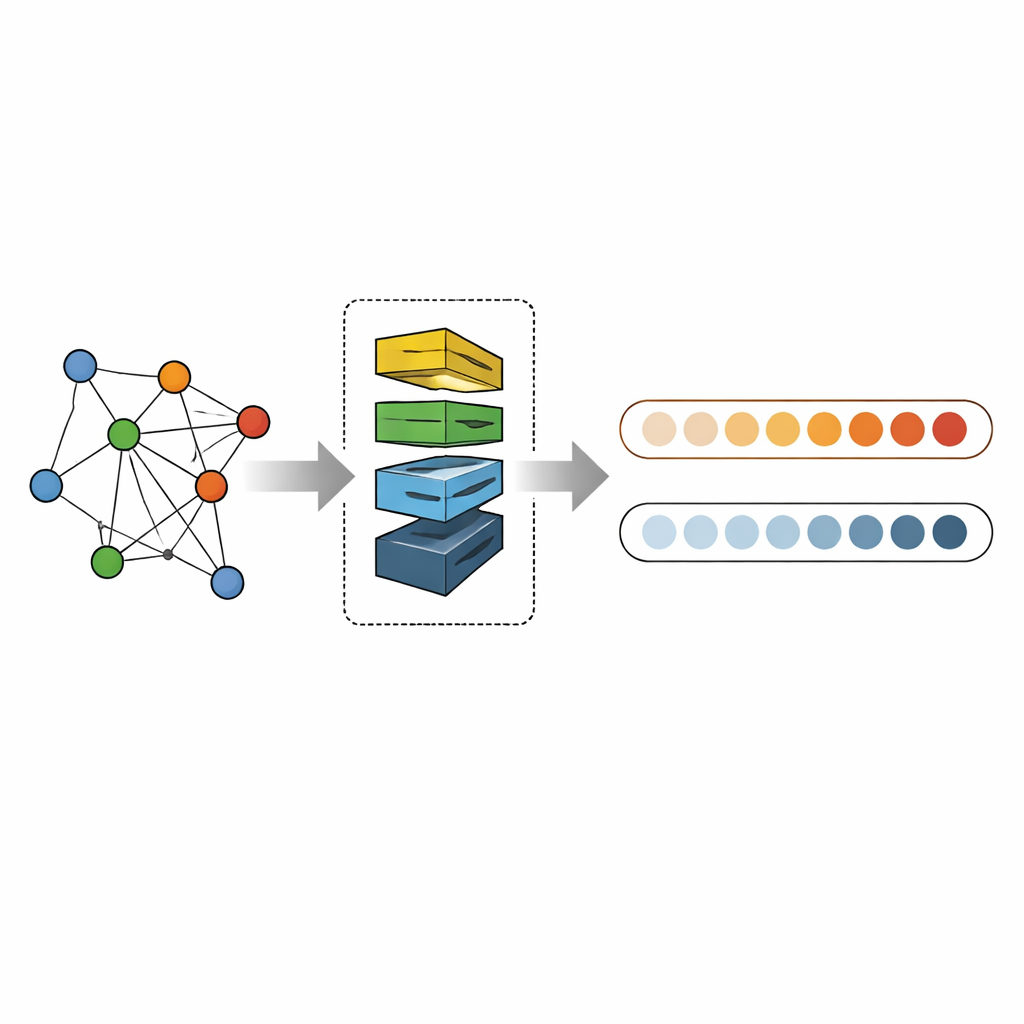
To connect these historical word networks to human moral judgment, the researchers train a graph neural network—a kind of AI designed to work on networks—to predict moral relevance and polarity for words in recent decades where human association data exist. Once the model learns how patterns of co-occurrence and meaning relate to people’s moral impressions, it can be applied backward through time, estimating how moral views of concepts like "smoking," "nuclear weapons," or "gambling" rose or fell across decades. The system produces continuous moral "time courses" that reveal, for example, how smoking gradually shifted from relatively neutral to strongly negative, aligning with mid-20th century health campaigns and legislation.
What Becomes Moral—and When
With these reconstructed timelines in hand, the authors test whether HistMoral behaves as we would expect. Diseases and world leaders—topics that past research shows are often moralized—indeed receive higher moral relevance scores than comparison words. Concepts involved in wars become more morally charged and more negative during conflict than in peace. Across 117 categories, such as "diseases," "family relationships," or "supernatural beings," the model reveals shared trends: disease-related concepts not only start out as morally loaded but become increasingly so, while supernatural beings remain moral but slowly fade in salience. The researchers also find that words in the same category often show similar moral trajectories, suggesting that entire families of concepts drift together through moral space.
Morality, Money, and Politics
The framework also uncovers links between moral language and real-world economic and political shifts. By tracking consumer products in news coverage alongside federal price statistics, the authors find that when products become associated with more morally negative ideas from one year to the next, their retail prices often rise—perhaps because of taxes, regulation, or crises that both raise costs and spark moral concern. In U.S. political speech, concepts that gain moral relevance become more prominent in Congressional debates. Around presidential elections, different topics—such as the environment, health, or taxes—wax and wane in moral intensity depending on which party wins, hinting at a two-way interaction between public moral concern and political strategy.
Why This New Lens on Morality Matters
In everyday life, moral change can feel sudden and mysterious: one generation shrugs at an issue that the next treats as a grave injustice. HistMoral shows that beneath those turning points lie gradual shifts detectable in how we use language over time. By combining psychological theories of morality, human word associations, and modern AI, this framework offers a powerful way to chart when concepts become moral flashpoints, whether they are viewed as virtues or vices, and how these shifts relate to broader social, economic, and political events. For a general reader, the key message is that our moral landscape is not fixed: it evolves in patterned ways that we can now begin to measure, compare, and perhaps even anticipate.
Citation: Ramezani, A., Stellar, J.E., Feinberg, M. et al. Historical reconstruction of human moralization with word association and text corpora. Nat Commun 17, 3412 (2026). https://doi.org/10.1038/s41467-025-67891-2
Keywords: moralization, historical language, word associations, graph neural networks, social change