Clear Sky Science · en
Systolic blood pressure and future stroke risk by asymptomatic brain lesions in a community MRI cohort: a retrospective study
Hidden Clues in a Routine Brain Scan
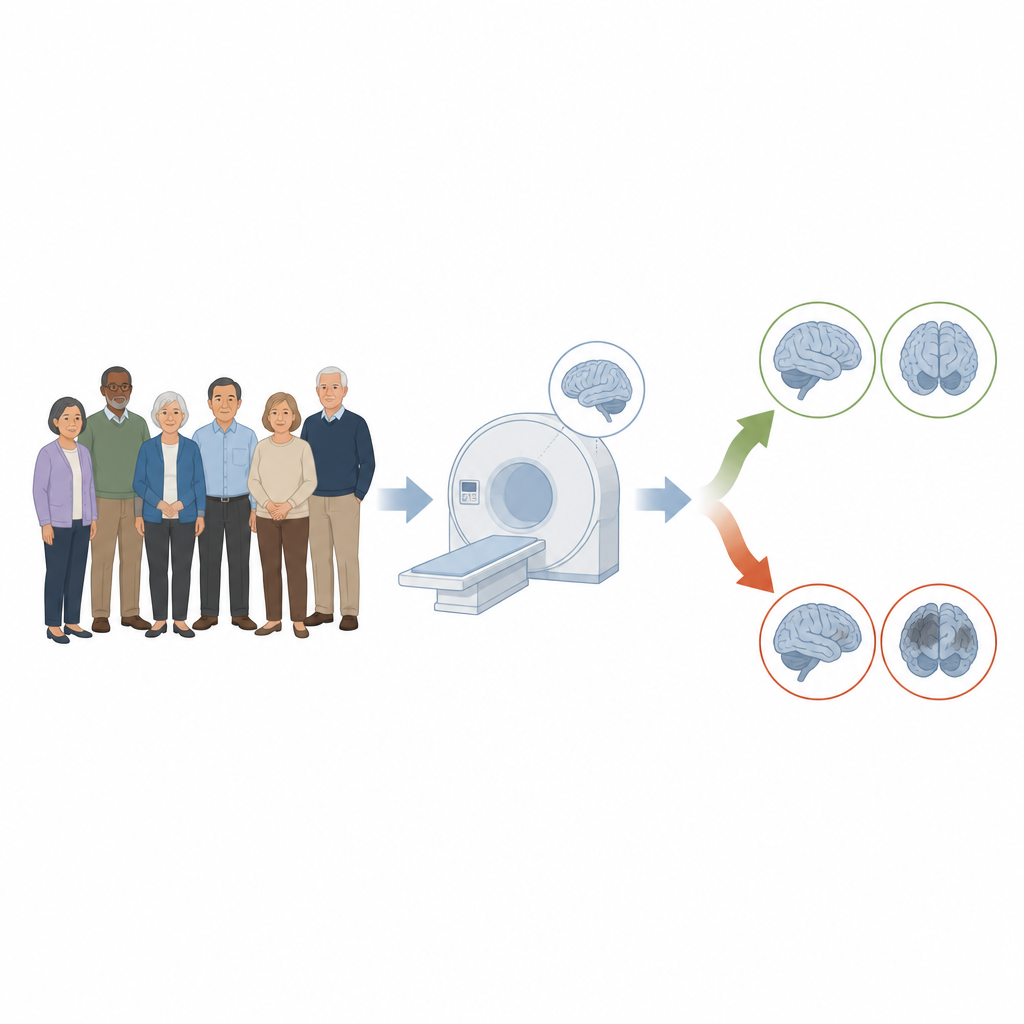
Many people go for health checkups long before they feel sick, hoping to catch problems early. In Japan, this sometimes includes a brain MRI, even for people who feel perfectly fine. This study asks a simple but important question for anyone worried about stroke: if a scan shows tiny, silent spots in the brain, does that change how carefully we should manage blood pressure to protect against future strokes?
Quiet Spots the Brain Uses as Warning Signs
Doctors have learned that certain tiny marks on a brain scan often appear years before a person has a stroke or memory problems. These marks, called asymptomatic brain lesions, include bright patches in the wiring of the brain, tiny old clots, and pinhead-sized traces of past small bleeds. People with these changes usually have no symptoms, but the spots suggest that the brain’s small blood vessels have been under long-term strain, often related to high blood pressure.
A Unique Look at a Health Conscious Community
The researchers used data from a Japanese program known as “Brain Dock,” where adults without known brain disease pay for preventive MRI screening. From more than 3800 participants, they focused on 2363 people who had no history of stroke and who were followed for nearly nine years on average. Everyone had their blood pressure measured at the time of the scan, and the images were checked for silent brain changes. About four in ten people already had these hidden lesions, even though they felt healthy.
Tracking Blood Pressure and Stroke over Time
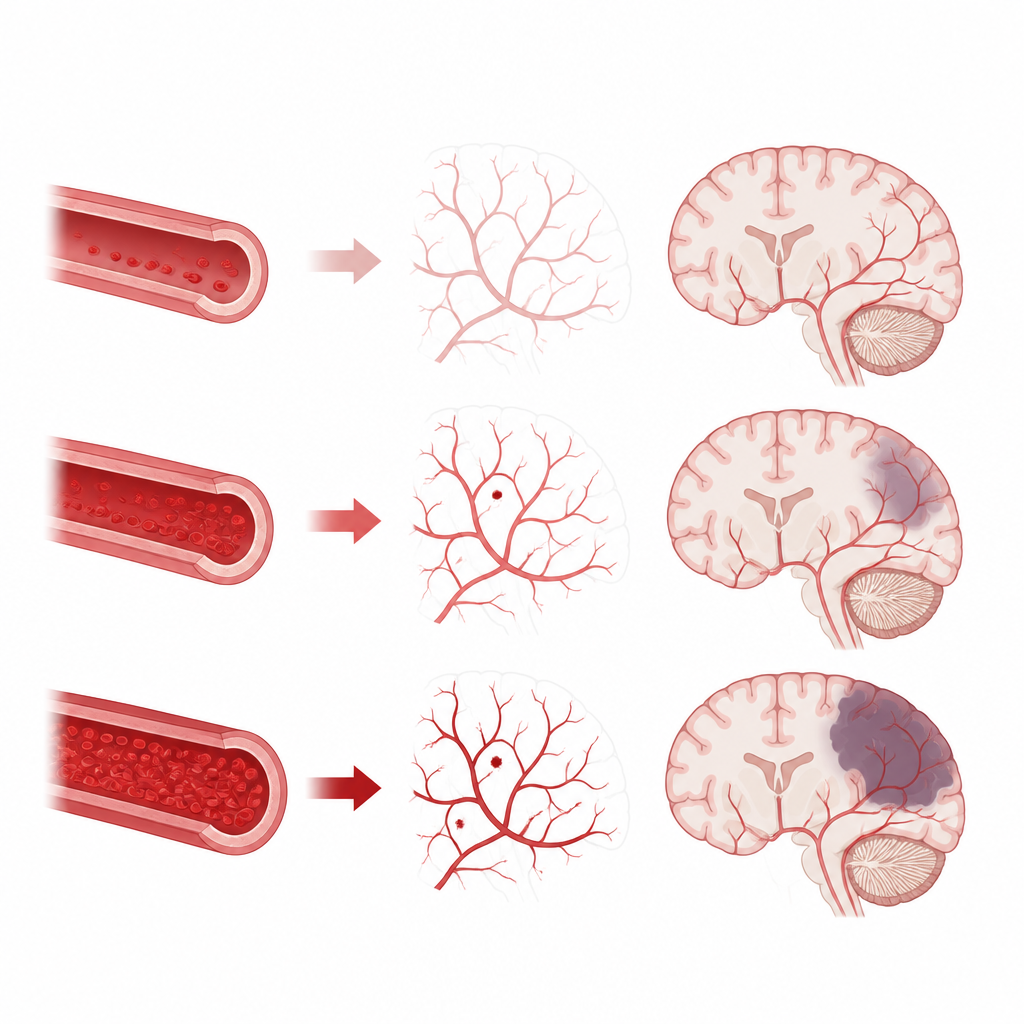
Over the follow-up period, 60 participants went on to develop a symptomatic stroke. The team used statistical models to see how stroke risk changed across the full range of systolic blood pressure, the top number in a blood pressure reading, and whether that pattern differed between people with and without silent brain lesions. After taking age, sex, blood sugar, cholesterol, and use of blood pressure drugs into account, they found a clear trend: in both groups, higher systolic pressure was linked with a higher chance of stroke. There was no strong statistical signal that the relationship between pressure and stroke was dramatically different depending on the scan findings, but there were hints that people with silent lesions might face increased risk even at somewhat lower pressure levels.
What the Patterns Suggest and What They Cannot Prove
The curves describing risk rose steadily as systolic pressure climbed, and they tended to sit higher for people whose scans already showed silent damage. However, there were only a small number of strokes overall, especially at the highest blood pressure levels, so the estimates became uncertain and the confidence ranges wide. The authors stress that the study should not be used to claim a precise blood pressure “line in the sand” for people with or without these lesions. Instead, the work is best seen as exploratory, showing overall tendencies rather than exact thresholds, and it cannot prove that lowering blood pressure to a specific target will prevent strokes.
What This Means for Everyday Health Decisions
For a layperson, the take-home message is that higher systolic blood pressure was linked with more strokes, whether or not silent spots were seen on brain MRI. The presence of these spots may signal that the brain is less able to tolerate raised pressure, but this idea needs to be tested in much larger and more detailed studies before doctors can tailor blood pressure targets based on MRI findings. Until then, the study supports current advice that careful blood pressure control is important for stroke prevention in general, while raising the possibility that, one day, brain scans could help personalize how tightly that pressure should be managed.
Citation: Iwasa, K., Omori, N., Aritake, S. et al. Systolic blood pressure and future stroke risk by asymptomatic brain lesions in a community MRI cohort: a retrospective study. Hypertens Res 49, 1866–1877 (2026). https://doi.org/10.1038/s41440-026-02639-z
Keywords: stroke, blood pressure, brain MRI, small vessel disease, hypertension