Clear Sky Science · en
Association of subjective and objective physical activity with home hypertension
Why Everyday Movement and Blood Pressure Matter
High blood pressure is one of the biggest drivers of heart attacks and strokes worldwide, yet most adults do not have it under control. Doctors often recommend being more active, but there is a catch: how we measure daily movement can change what we think we know. This study from Japan asks a simple but important question: are people’s own reports of how active they are as useful as data from motion‑sensing devices when it comes to understanding high blood pressure at home?
Two Ways to Count How Much You Move
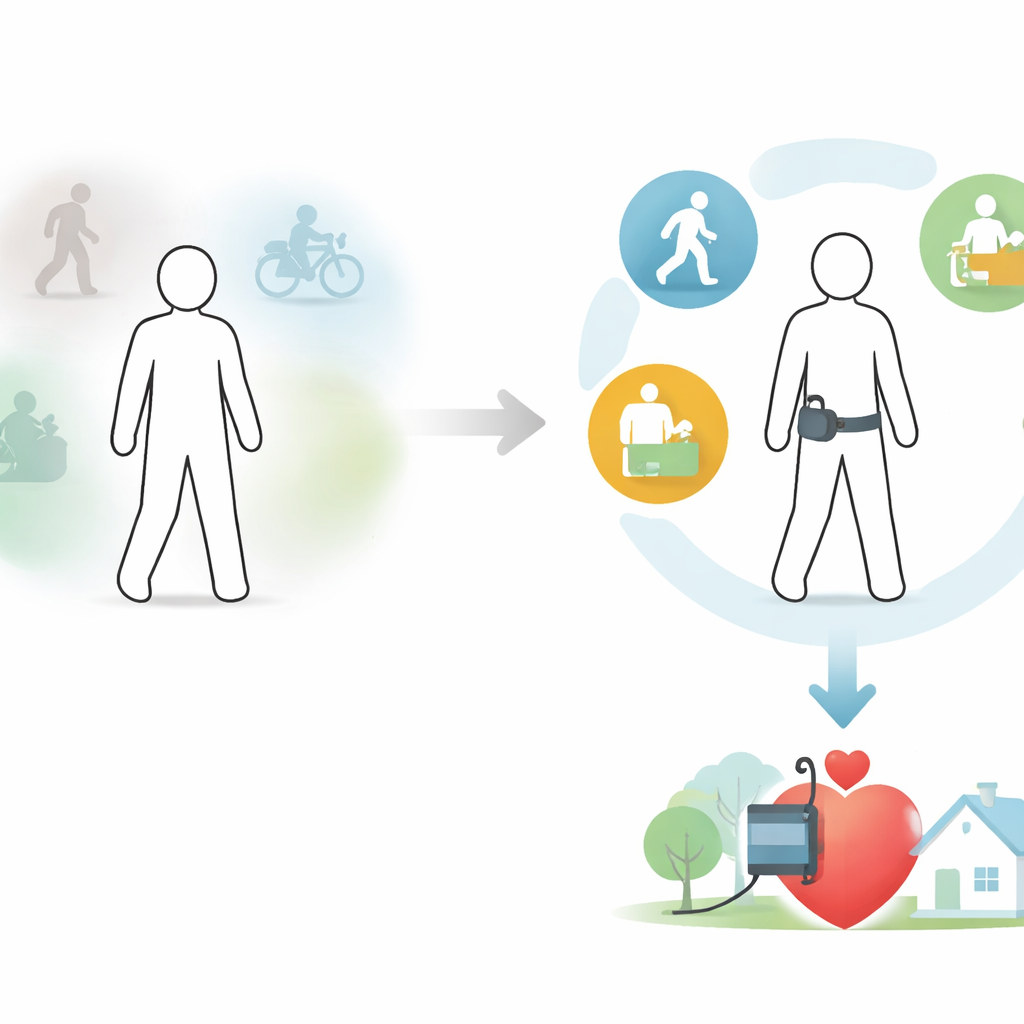
The researchers followed nearly six thousand adults taking part in a long-running community study in northeastern Japan. Participants were in their late fifties on average, and about seven in ten were women. Everyone answered detailed questions about their usual activities over the past year, including work, housework, leisure movement, and sleep. They also wore a small motion sensor on their waist for about ten days. This device, called an accelerometer, quietly recorded how much time they spent sitting still, moving lightly (such as slow walking or chores), and moving more briskly, as well as counting their daily steps.
Checking Blood Pressure Where It Really Counts
Instead of relying only on readings taken in clinics, the study focused on blood pressure measured at home, which tends to be more stable and better predicts future heart problems. For ten mornings in a row, participants used an automatic cuff at home soon after waking, before breakfast or any blood pressure pills. People were classified as having home hypertension if their average readings were high or if they were already on treatment for high blood pressure. The team also collected information on body weight, smoking and drinking habits, household income, diet-related salt and potassium balance, and the season of measurement, since activity patterns and blood pressure can change with weather.
Devices Tell a Different Story Than Memory
When the scientists compared the two movement measures, they found only a weak link between what people reported and what the accelerometer recorded. More importantly, how people said they moved was not clearly related to whether they had high blood pressure at home. In contrast, the device-based measure painted a much sharper picture: those with higher total movement recorded by the accelerometer were less likely to have home hypertension. Digging deeper, light-intensity activity and simply taking more steps each day showed clear associations with lower rates of home high blood pressure, while very vigorous activity and time spent sitting did not show consistent links once other factors were considered.
Body Weight as the Missing Link
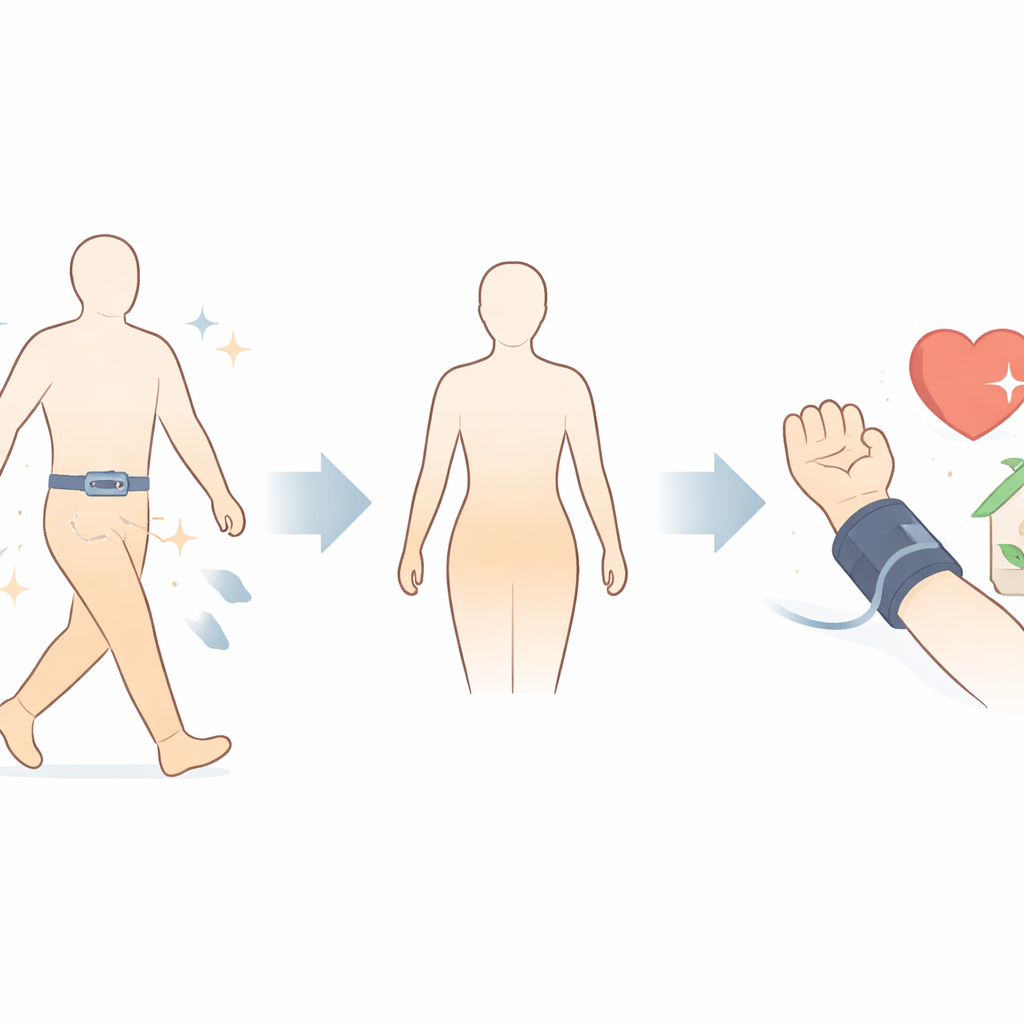
The protective effect of device-recorded activity weakened once the researchers accounted for body mass index, a standard measure of body weight relative to height. This pattern suggests that being more active may help keep blood pressure in check largely by helping people avoid weight gain. Light everyday movements—things like housework, walking around the neighborhood, or moving more during the workday—add up over time and contribute to the body’s background energy use. This “non-exercise” movement has been linked in other studies to better metabolism and fewer heart problems, and here it appears to be part of the path from daily activity to healthier blood pressure at home.
What This Means for Daily Life
To a non-specialist, the takeaway is straightforward: small, frequent movements throughout the day, captured objectively by wearable devices, seem to matter for blood pressure, even if we do not always remember or report them accurately. Questionnaires are easier and cheaper, but they can blur the true connection between how much we move and our health. Using simple devices to track steps and light activity could help doctors and public health planners get a clearer view of who is at risk and what kinds of everyday movement really help. While this study cannot prove cause and effect, it supports the idea that keeping weight in a healthy range by being regularly, even gently, active may be a practical way to reduce the burden of high blood pressure at home, both in Japan and in other rapidly urbanizing parts of Asia.
Citation: Hayashi, S., Kogure, M., Chiba, I. et al. Association of subjective and objective physical activity with home hypertension. Hypertens Res 49, 1586–1596 (2026). https://doi.org/10.1038/s41440-026-02587-8
Keywords: home blood pressure, accelerometer, physical activity, light-intensity movement, hypertension prevention