Clear Sky Science · en
Influence of inflammatory and metabolic factors on keratoconus risk: a causal inference analysis
Why this matters for everyday eyesight
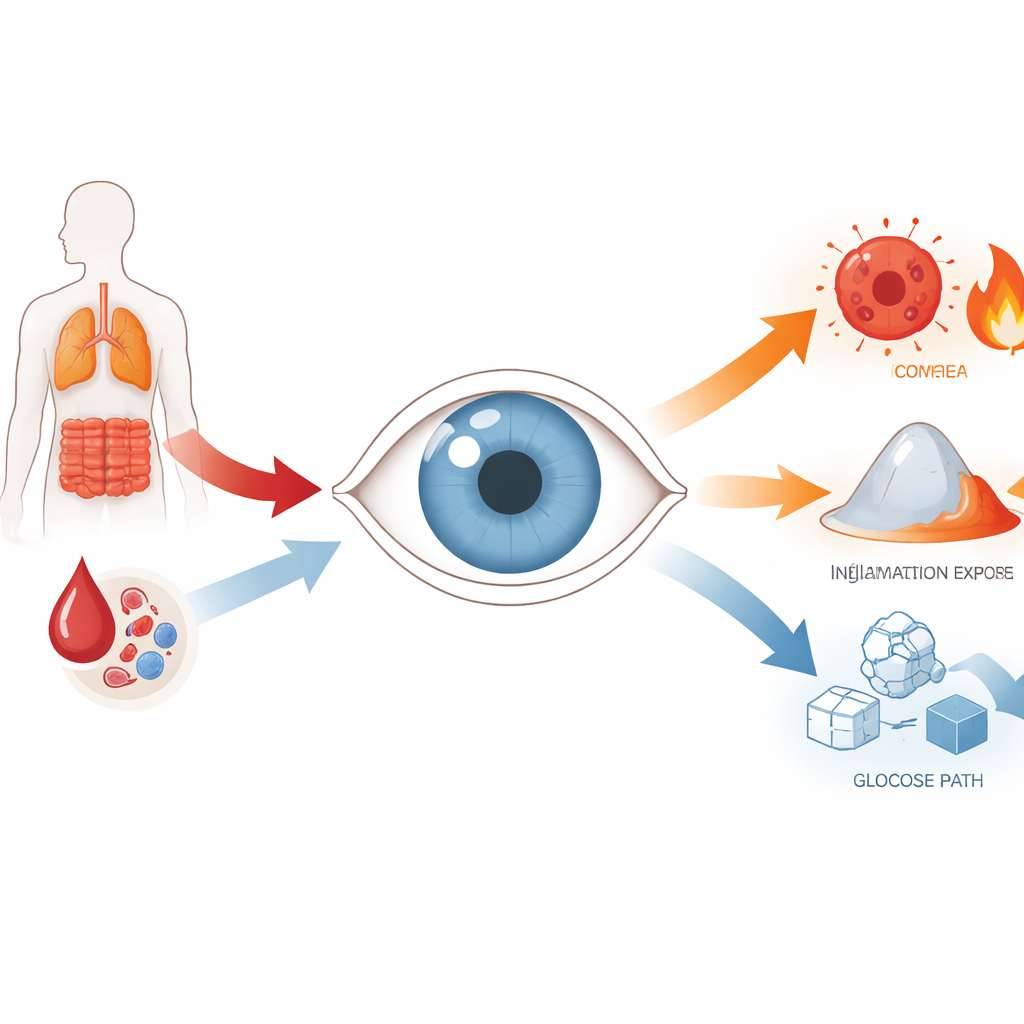
Keratoconus is a condition where the clear front window of the eye, the cornea, gradually thins and bulges into a cone-like shape, causing distorted and blurry vision that can be difficult to correct with glasses. This study asks a simple but important question with big consequences for patients: are common conditions like allergies, asthma, gut inflammation, or high blood sugar actually helping to cause keratoconus, or do they just tend to show up in the same people by coincidence? By using large genetic datasets and a technique that mimics a long-term clinical trial in nature, the researchers tease apart cause from correlation and uncover which everyday health factors truly change a person’s risk of developing this sight-threatening disease.
What keratoconus is and why risk is hard to pin down
Keratoconus affects roughly 1 in 700 people worldwide, though the numbers vary widely between regions and ethnic groups. The cornea steadily becomes thinner and more irregular, leading to severe astigmatism and sometimes the need for a corneal transplant. Family patterns and twin studies show that genes play a major role, and earlier work has already identified multiple genetic regions linked to keratoconus. But genes are not the whole story. People with keratoconus are more likely to have allergies, to rub their eyes, and in some studies to have different blood sugar levels. Untangling which of these factors are truly harmful, and which are just “fellow travelers,” has been difficult because standard observational studies can be distorted by self-reporting errors and hidden confounding factors.
Using genetics as nature’s randomized trial
To get around these problems, the authors used a method called Mendelian randomization. Instead of tracking people’s behaviors and illnesses directly, they looked at naturally occurring genetic variants that are known to slightly increase or decrease traits such as allergy risk, asthma, inflammatory bowel disease, rheumatoid arthritis, blood eosinophil counts (a type of white blood cell linked to allergy), and fasting blood glucose levels. Because these genetic variants are randomly assigned at conception and do not change over life, they act like tiny built-in “treatment assignments.” By comparing how the same variants influence keratoconus in a separate, large genetic study of the disease, the researchers could infer whether having a biological tendency toward each exposure truly shifts keratoconus risk.
Allergy, inflammation, and blood cells that raise risk
The clearest signal came from allergic disease. Genetic tendencies toward any atopic condition—such as eczema, hay fever, or allergic rhinitis—showed a strong and consistent causal link to higher keratoconus risk. Even when asthma cases were removed, non-asthma allergic disease alone still substantially increased risk. Asthma by itself, whether starting in childhood or in adulthood, did not show a firm causal effect, possibly because available data were less powerful. An objective marker of allergy severity, the number of circulating eosinophils in the blood, also emerged as a causal risk factor: genetically driven increases in eosinophil counts were associated with a higher likelihood of keratoconus. Beyond classical allergy, the study found modest but significant causal contributions from rheumatoid arthritis and Crohn’s disease, suggesting that broader, body-wide immune activation—not just itchy eyes and rubbing—may help set the stage for corneal weakening.
High blood sugar as an unexpected protector
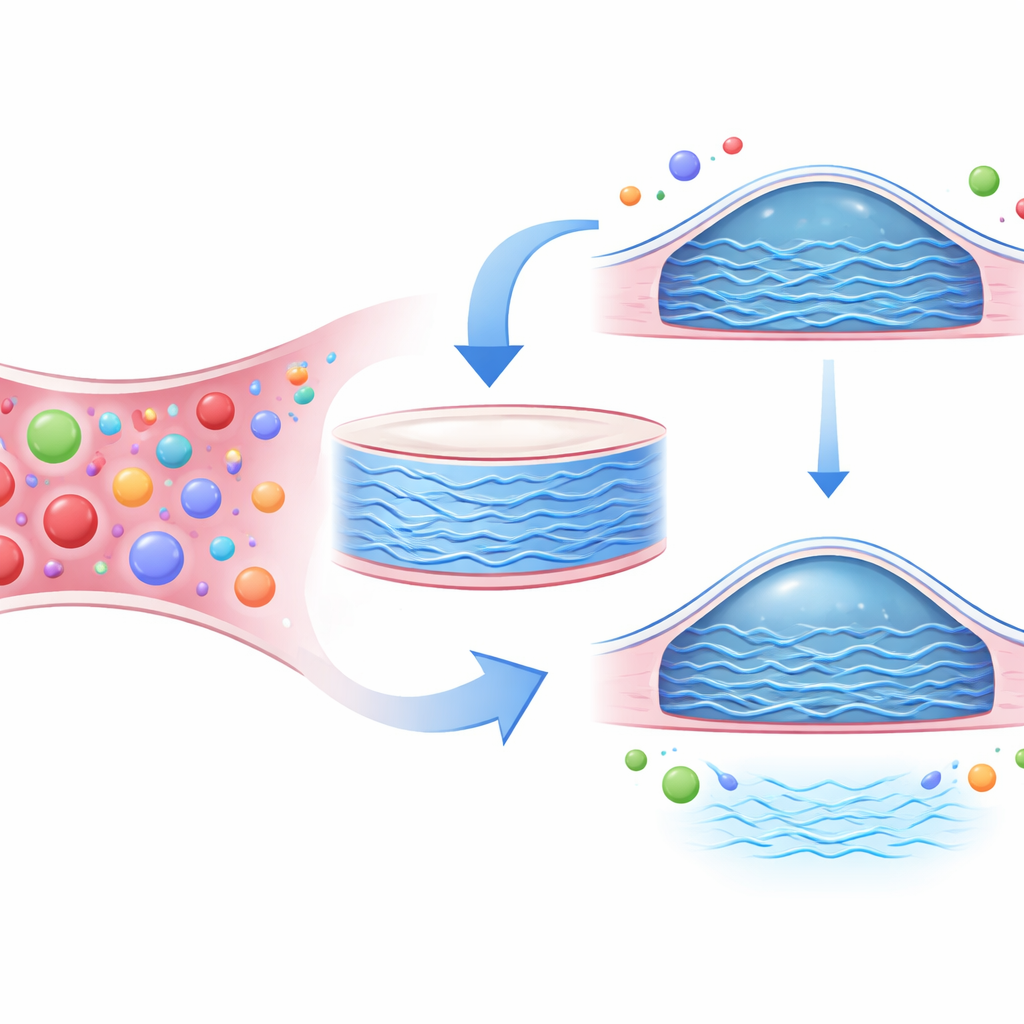
In contrast to the harmful effects of chronic inflammation, higher fasting blood glucose levels appeared to be protective. Genetic variants that push blood sugar upward were linked to a lower risk of keratoconus in two large, independent datasets. This fits with earlier clinical observations that people with diabetes seem somewhat less likely to develop keratoconus. The likely explanation is mechanical rather than metabolic: long-term high sugar levels can cause extra chemical cross-links to form between collagen fibers in the cornea, making the tissue stiffer and less prone to bulging. Still, the authors stress that this protective effect does not remotely outweigh the many serious harms of high blood sugar and diabetes elsewhere in the body.
What this means for patients and doctors
Taken together, the findings support a picture in which keratoconus risk is shaped not only by inherited eye-specific genes and local behaviors such as rubbing, but also by a person’s overall immune and metabolic landscape. Strong, genetically anchored evidence now indicates that allergic disease, elevated eosinophil counts, rheumatoid arthritis, and Crohn’s disease all nudge the cornea toward failure, while higher lifelong blood glucose has the opposite effect. For clinicians, this means that a patient’s history of allergy and systemic inflammatory conditions, combined with genetic risk markers, could be used to better gauge who is most likely to develop severe or progressive keratoconus. For patients, the study reinforces the importance of controlling allergies and chronic inflammation—not just for comfort, but potentially to protect the long-term shape and strength of the eye’s front window.
Citation: Hysi, P.G., Hardcastle, A.J., Davidson, A.E. et al. Influence of inflammatory and metabolic factors on keratoconus risk: a causal inference analysis. Eye 40, 842–847 (2026). https://doi.org/10.1038/s41433-026-04281-y
Keywords: keratoconus, allergic disease, chronic inflammation, Mendelian randomization, corneal biomechanics