Clear Sky Science · en
Accurate and cost-effective workflow integrating trio pooled-WES for novel gene discovery in neurodevelopmental disorders
Why finding hidden causes of brain disorders matters
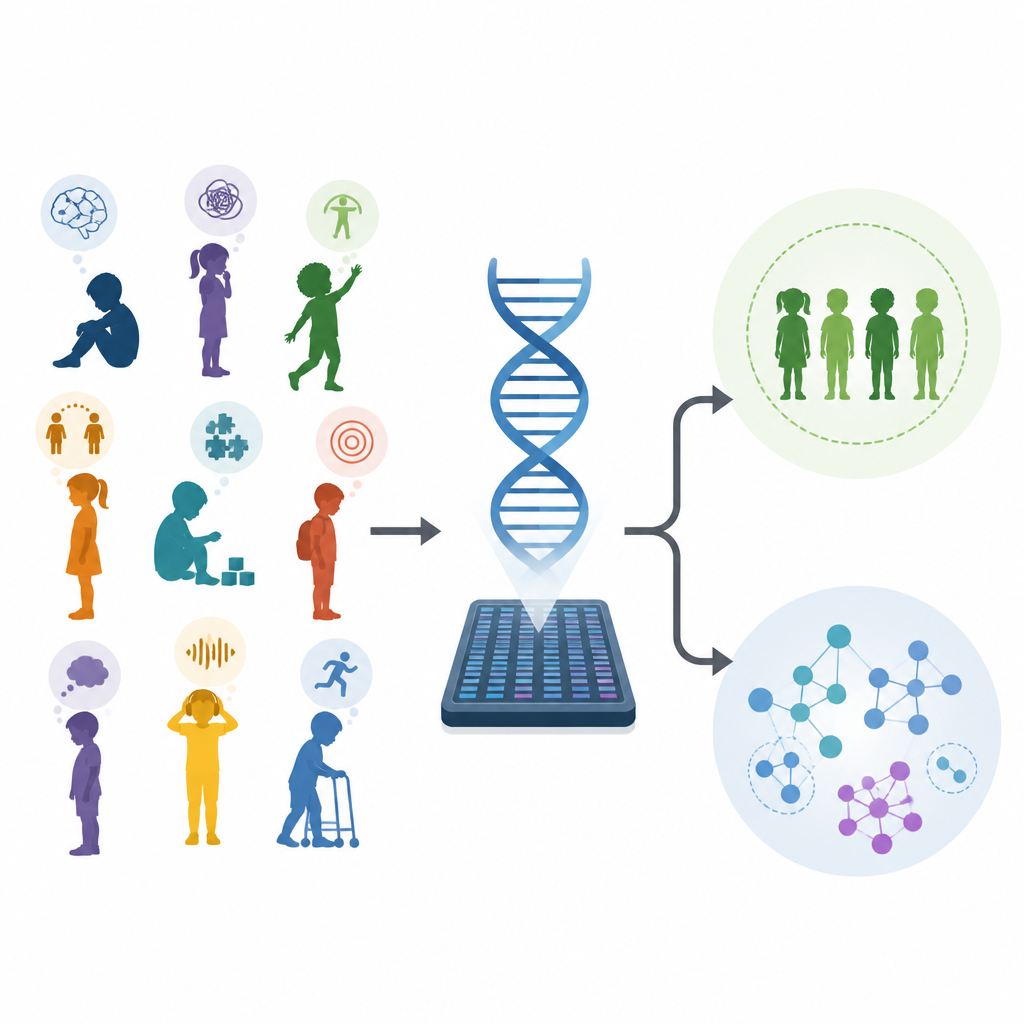
Neurodevelopmental disorders such as intellectual disability, autism and severe learning problems affect millions of children and their families. Many of these conditions are caused by changes in DNA, but the specific gene fault often remains unknown, leaving families without clear answers or guidance. This study explores a smarter, more affordable way to search a child’s DNA, helping doctors uncover both known and newly suspected genes linked to these disorders.
How doctors usually read our genes
Genetic testing for complex brain disorders has improved rapidly in the last decade. A common method, called whole exome sequencing, reads the parts of our DNA that code for proteins. When doctors test only the affected child, they often find a suspicious change but cannot tell if it is truly harmful. Testing the child together with both parents is far more powerful, because it reveals new mutations that appear only in the child and not in either parent. These fresh changes are a major cause of severe neurodevelopmental conditions. However, sequencing three people instead of one is expensive, making this ideal approach hard to use routinely in public health systems.
A new twist on family DNA testing
The researchers designed a stepwise testing plan for 221 children and young adults with severe or syndromic neurodevelopmental disorders who had already received negative results from earlier targeted tests. First, each child underwent solo exome sequencing, focusing on a large and regularly updated list of more than 3000 genes linked to brain development. If this first pass clearly identified a harmful variant, the team confirmed it with standard follow up tests. For the many children who still had no clear answer or had several uncertain variants, the scientists moved to a second step that brought in the parents’ DNA in a novel way.
Pooling parents to cut costs
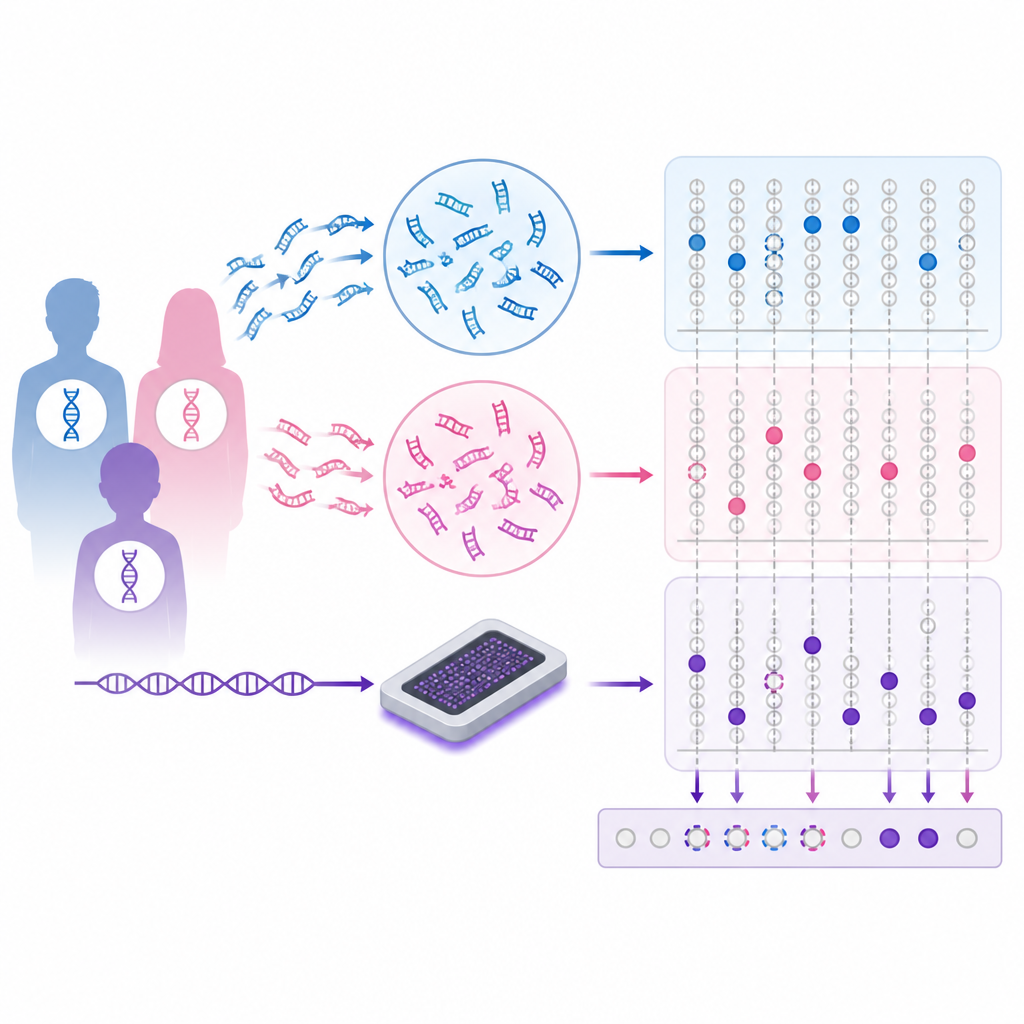
Instead of sequencing every parent separately, the team mixed DNA from several mothers into one tube and from several fathers into another tube, then sequenced these pools at high depth. By comparing the child’s exome to these mixed parental samples, they could tell whether a suspect change was truly new in the child or quietly present in a parent. Careful experiments showed that this pooling approach could still detect almost all very rare variants and reliably flag new mutations using a conservative cutoff. In test runs, the pooled strategy picked up more than 96% of ultra rare parental variants and preserved the crucial advantage of family based interpretation, while cutting sequencing costs for parents by more than half.
What the new workflow uncovered
Using this two step plan, the researchers reached a genetic diagnosis for 46 of the 221 participants through known neurodevelopmental genes. An additional three children carried compelling DNA deletions or duplications that are still being confirmed. Most strikingly, the trio pooled approach highlighted strong candidate variants in 13 genes not previously tied to these disorders. Many of these gene changes were new mutations affecting only the child and struck genes that appear intolerant to damage or had hints of a role in the brain. The team has shared these candidate genes with global databases so other groups can look for matching patients and build evidence.
What this means for families and clinics
For families seeking answers about a child’s neurodevelopmental disorder, this study shows that it is possible to get many of the benefits of full trio sequencing at a much lower cost. By starting with solo exome testing and then adding pooled parental sequencing only when needed, clinics can stretch limited resources while still uncovering important diagnoses and pointing to new genes for future research. Although this method cannot yet replace all forms of genetic analysis, it offers a practical, clinic ready path to improve detection of disease causing variants and to slowly fill in the many missing pieces of the genetic puzzle behind brain development.
Citation: López-López, L., Lapeña-Gil, L., Benítez, Y. et al. Accurate and cost-effective workflow integrating trio pooled-WES for novel gene discovery in neurodevelopmental disorders. Eur J Hum Genet 34, 675–682 (2026). https://doi.org/10.1038/s41431-026-02075-0
Keywords: neurodevelopmental disorders, whole exome sequencing, trio pooled sequencing, genetic diagnosis, de novo variants