Clear Sky Science · en
Childhood motor speech disorders: who to prioritise for genetic testing
Why speech struggles in children matter
Many children take a little longer than their peers to speak clearly, but for a small group, speech remains extremely hard to produce and understand. These youngsters may need years of intensive therapy, and their families often search for answers about the cause. This study explores whether modern genetic tests can explain severe motor speech disorders in children and, crucially, which children should be offered these tests first.
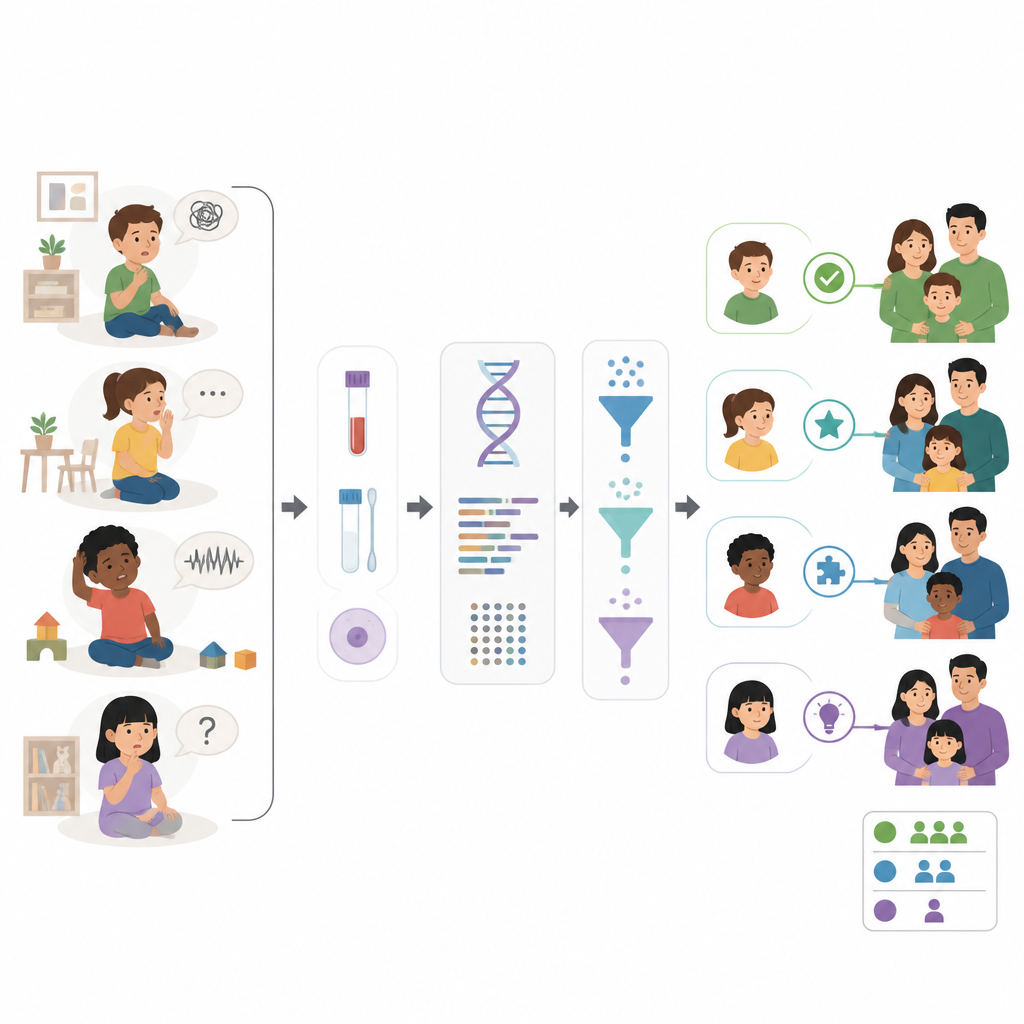
Two rare but serious speech conditions
The researchers focused on childhood apraxia of speech and dysarthria, two uncommon conditions that affect about one in a thousand children. In childhood apraxia of speech, the brain struggles to plan and sequence the mouth movements needed for speech, so words come out inconsistently and effortfully. In dysarthria, the problem lies more in controlling the muscles used for speaking, which can make speech slurred or weak. Unlike common pronunciation problems that usually clear up by early school years, these motor speech disorders often persist into adolescence and adulthood, affecting learning, social life and future employment.
Bringing clinical genetics into the speech clinic
To see how often genes could explain these speech problems, the team invited 172 children referred to a specialised motor speech clinic at a children’s hospital in Melbourne, Australia. After careful assessment by speech pathologists, paediatricians, psychologists and a clinical geneticist, 153 children went ahead with genetic testing. Each child had a chromosomal microarray to look for missing or extra pieces of DNA, a test for fragile X syndrome, and exome sequencing, which reads the protein coding parts of almost all genes. Families met with genetic counsellors before and after testing to understand the process and the results.
What the genetic tests revealed
Almost one in three children, 44 out of 153, received a clear genetic diagnosis. Most of these diagnoses involved changes in single genes, while a smaller number involved larger chromosomal alterations or extra or missing sex chromosomes. The genes that turned up were ones already known to play roles in brain development, learning, epilepsy and other neurodevelopmental conditions. Interestingly, none of the children had fragile X syndrome, and there was little evidence that pregnancy complications, infections or prematurity were driving these speech disorders. Overall, the success rate of genetic testing in this group was comparable to that seen in better known conditions such as epilepsy and cerebral palsy, where genetic testing is now routine.
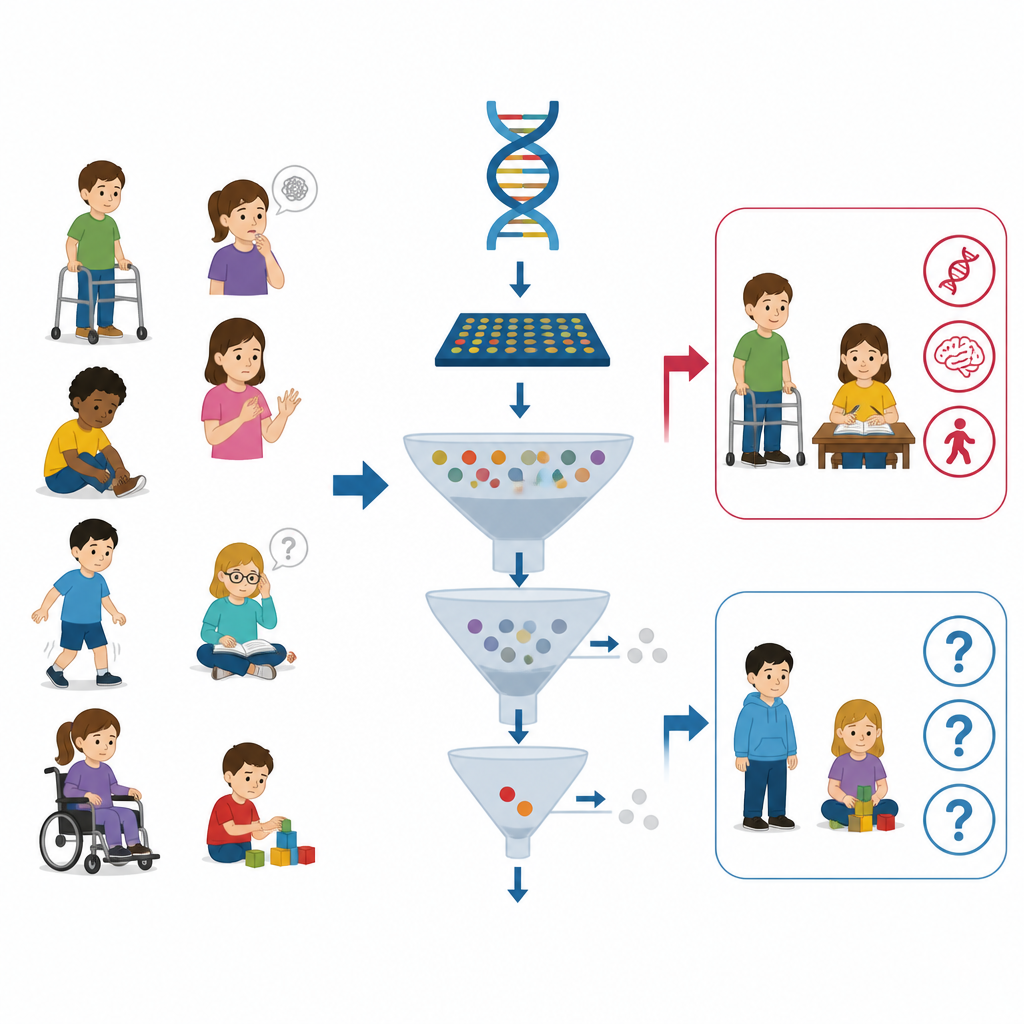
Clues to who should be tested first
The team then looked for clinical features that were linked with a higher chance of finding a genetic cause. Children who walked late, had ongoing difficulties with fine or gross motor skills, showed receptive language or learning problems, or had subtle differences in physical appearance were much more likely to have a genetic diagnosis. Children who had both childhood apraxia of speech and dysarthria together also more often had identifiable genetic changes than those with apraxia alone. In contrast, children with a formal diagnosis of autism spectrum disorder, or strong features of autism, were less likely to have a single, clear-cut genetic explanation from these tests, suggesting a different, more complex genetic background.
What this means for families and clinicians
For families facing a long and often frustrating search for answers, this study shows that modern genomic testing can explain a sizeable proportion of severe motor speech disorders. The work suggests that children who struggle not only with speech, but also with walking, coordination, understanding language or learning, and who may look a little different from their peers, should be at the front of the line for genetic testing. Identifying an underlying genetic cause will not instantly fix a child’s speech, but it can end the diagnostic odyssey, connect families with appropriate supports, and lay the groundwork for more tailored interventions in the future.
Citation: Van Niel, H., Lauretta, M., Baker, E. et al. Childhood motor speech disorders: who to prioritise for genetic testing. Eur J Hum Genet 34, 639–648 (2026). https://doi.org/10.1038/s41431-025-01993-9
Keywords: childhood apraxia of speech, dysarthria, genetic testing, neurodevelopmental disorders, genomic sequencing