Clear Sky Science · en
Four new hydroxyl fatty acids, gambaoic acids A-C and gambaoic B methyl ester, from Shrimp Jeotgal-derived Bacillus sp. SNB-066
A surprising treasure in fermented shrimp
Savory traditional foods can sometimes hide unexpected scientific riches. In this study, researchers turned to shrimp jeotgal—a salty, fermented Korean seafood—looking not for flavor, but for new natural molecules that might fight germs or cancer. By examining the bacteria that thrive in this harsh, salty environment, they discovered four previously unknown fatty acids with special chemical features and tested how these compounds affect bacteria and human cancer cells.
Life inside salty seafood
Shrimp jeotgal is made by packing small shrimp in a large amount of salt and letting them ferment for about a year. Under these conditions, only tough microbes survive, and earlier work showed that Bacillus bacteria are among the main residents. These bacteria are not just passive bystanders: they help break down the shrimp proteins and shape the taste and texture of the food. At the same time, Bacillus species are known factories for unusual natural compounds, some of which can kill harmful microbes or influence human cells. This combination—an extreme salty environment plus a microbe with a track record of making bioactive chemicals—made shrimp jeotgal an appealing place to go prospecting for new molecules. 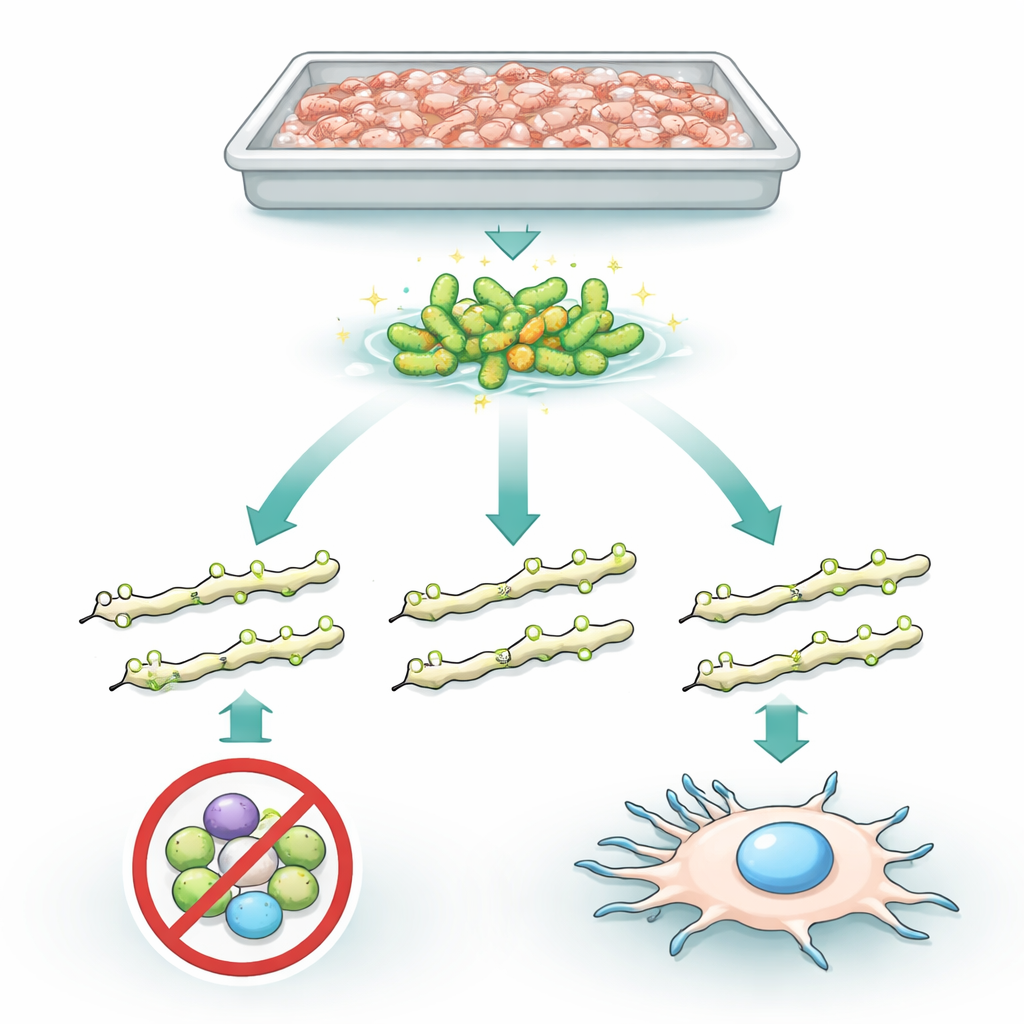
Finding and identifying new fatty molecules
The team isolated one particular strain, named Bacillus sp. SNB-066, from a sample of shrimp jeotgal bought in a Korean market. They grew this bacterium in large flasks, extracted the substances it released into the broth, and separated the mixture into smaller fractions using different kinds of chromatography, a technique that sorts molecules based on how they move through special columns. From these fractions, they purified four related molecules they called gambaoic acids A, B, and C and gambaoic B methyl ester. All four belong to a family known as hydroxyl fatty acids—long carbon chains similar to dietary fats, but with strategically placed oxygen-containing groups that can strongly influence how the molecules behave in living systems.
Peering into structure with modern tools
To understand what made these gambaoic molecules unique, the researchers had to work out their precise 3D structures. They relied on a toolbox of advanced methods, including nuclear magnetic resonance (NMR), mass spectrometry, and optical measurements that track how the molecules bend polarized light. Because some details cannot be seen directly, they also used computer simulations based on quantum mechanics to predict NMR signals for different possible arrangements and then statistically matched these predictions to the real data. This careful combination of experiment and computation allowed them to define not only the sequence of atoms along each chain, but also how the atoms are oriented in space—which can be crucial for biological activity.
Testing effects on bacteria and cancer cells
With the structures in hand, the team asked what these molecules actually do. They first tested all four against several disease-related bacteria. Only gambaoic B methyl ester showed any antibacterial effect, and even then, it was weak and limited to a couple of Gram-positive species. The scientists then turned to human colorectal cancer cells, focusing on a line called Caco-2. Here the picture was more intriguing. Gambaoic acids B and C reduced cell survival modestly, while the methyl ester form was far more potent, cutting cell viability to less than one-third at the highest tested dose. Even more striking, gambaoic acid C strongly blocked the ability of Caco-2 cells to invade through a porous barrier—a lab stand-in for how cancer cells spread into surrounding tissues—without being highly toxic to the cells themselves. Gambaoic acid B, which is structurally similar, did not share this anti-invasive effect, underscoring how small chemical differences can lead to big changes in behavior. 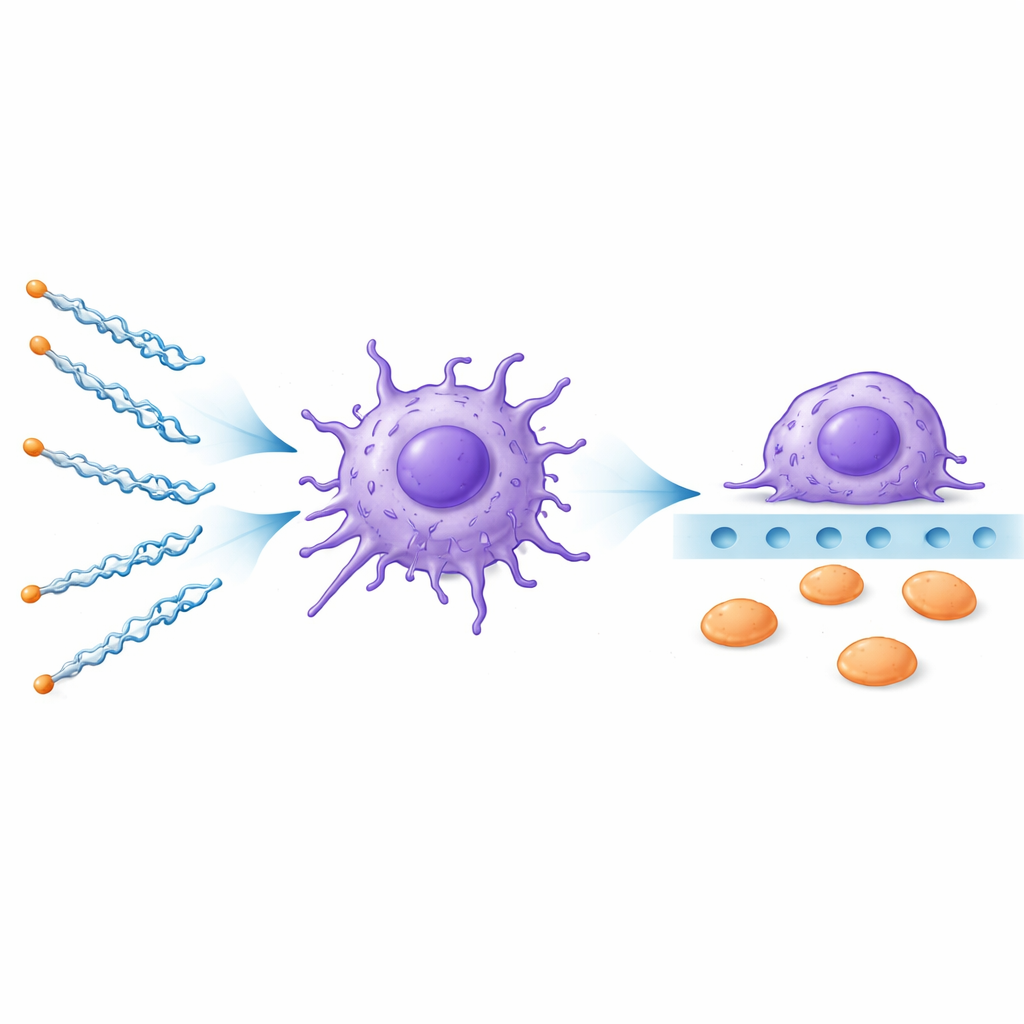
What this means for future treatments
To a lay reader, the takeaway is that a humble fermented seafood—valued for generations mainly as a condiment—has yielded four new natural molecules with distinct biological personalities. One shows mild antibacterial activity, another powerfully slows cancer cell invasion in a dish, and a closely related form is more directly toxic to cancer cells. While these findings are far from a new medicine, they highlight how traditional foods and the microbes that help make them can serve as a discovery engine for new bioactive compounds. With further work to produce larger quantities and probe exactly how these fatty acids act inside cells, such molecules could inspire future drugs aimed at infections or at halting the spread of cancer.
Citation: Hillman, P.F., Lee, C., Varlı, M. et al. Four new hydroxyl fatty acids, gambaoic acids A-C and gambaoic B methyl ester, from Shrimp Jeotgal-derived Bacillus sp. SNB-066. J Antibiot 79, 359–366 (2026). https://doi.org/10.1038/s41429-026-00914-2
Keywords: fermented foods, Bacillus bacteria, natural products, hydroxy fatty acids, cancer cell invasion