Clear Sky Science · en
Lipid metabolism reprogramming shapes the immune landscape in the tumor microenvironment
Fats and Cancer’s Hidden Conversation
Cancer does not grow in isolation. It lives within a bustling neighborhood of blood vessels, immune cells, and support cells known as the tumor microenvironment. This review explains how fats and fat-like molecules—together called lipids—quietly reshape that neighborhood. Far from being just fuel or cell “bricks,” lipids turn out to be powerful messengers that help tumors grow, spread, and escape the body’s defenses. Understanding this hidden conversation between cancer, fats, and immune cells is opening new paths to make immunotherapy work for more patients.
How Cancer Cells Rewrite Their Fat Rules
Healthy cells use lipids to build membranes, store energy, and fine-tune signals. Cancer cells, under constant pressure to divide in a low-oxygen, low-nutrient setting, drastically rewrite these rules. They boost their own fat production and import more fatty acids and cholesterol from their surroundings, then stash the excess in tiny droplets. These stores are not just fat depots: they attract enzymes that break down key safeguards such as the p53 tumor suppressor and help cancer cells survive stress. By adjusting the types of fats in their membranes, tumors can make their outer shell more flexible, resist certain forms of cell death, and fine-tune growth signals that drive invasion and metastasis.
When Fuel for Fighters Becomes a Trap
Immune cells that should attack cancer also depend on lipids for energy and durability. In a hostile tumor environment, however, lipid use becomes distorted. Killer T cells and natural killer (NK) cells, which normally rely on a balanced mix of fuels, are pushed into harmful states: their fat-burning machinery is blocked or, in some cases, forced into overdrive at the expense of other pathways they need to make toxic molecules and multiply. Excess or poorly handled fats pile up in these cells, damaging their power plants and membranes, and even triggering a specialized form of cell death. Over time, they become “exhausted” or paralyzed, losing their ability to recognize and destroy cancer cells effectively. 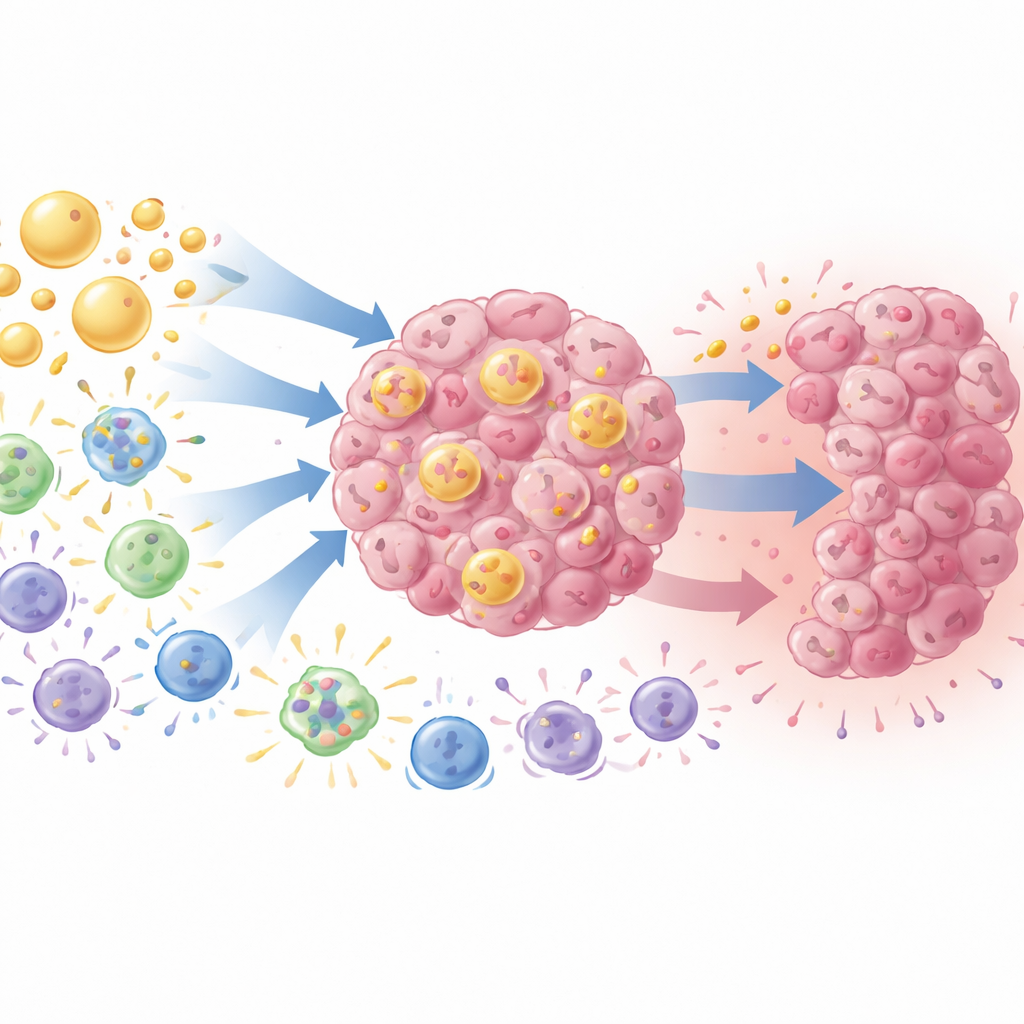
Turning Protectors into Enablers
Other immune and support cells in the tumor neighborhood twist lipid metabolism to the tumor’s advantage. Tumor-associated macrophages, regulatory T cells, and myeloid-derived suppressor cells all take up or make large amounts of lipids, then burn or store them in ways that favor a calm, wound-healing–like state rather than an aggressive, tumor-fighting one. These cells secrete soothing signals that blunt inflammation, block T cell activity, and recruit more suppressive partners. Fibroblasts and fat cells near the tumor are also reprogrammed: they release waves of fatty acids and fat-rich packages that feed cancer cells, encourage new blood vessel growth, and help create a welcoming niche for metastases. In metastatic sites such as the liver or lung, complex lipid circuits emerge, where stromal cells, neutrophils, and tumor cells trade fats back and forth in self-reinforcing loops that both fuel growth and weaken immune surveillance.
Fat-Based Messages That Silence Immunity
Beyond serving as fuel, specific lipid molecules act as communication signals that change how cells behave. Tumor cells remodel their own membranes so that key surface proteins involved in immune recognition are hidden, degraded, or placed into specialized patches that shield them from attack. They also release fatty acids, oxidized cholesterol, and modified phospholipids into the surrounding fluid. These molecules bind to sensors on immune cells or slip into their membranes, tipping macrophages toward a nurturing, tumor-supporting identity and draining the vigor from T cells and NK cells. In some cases, cholesterol-like intermediates even steer helper T cells into forms that foster chronic, low-grade inflammation rather than sharp anti-tumor responses. 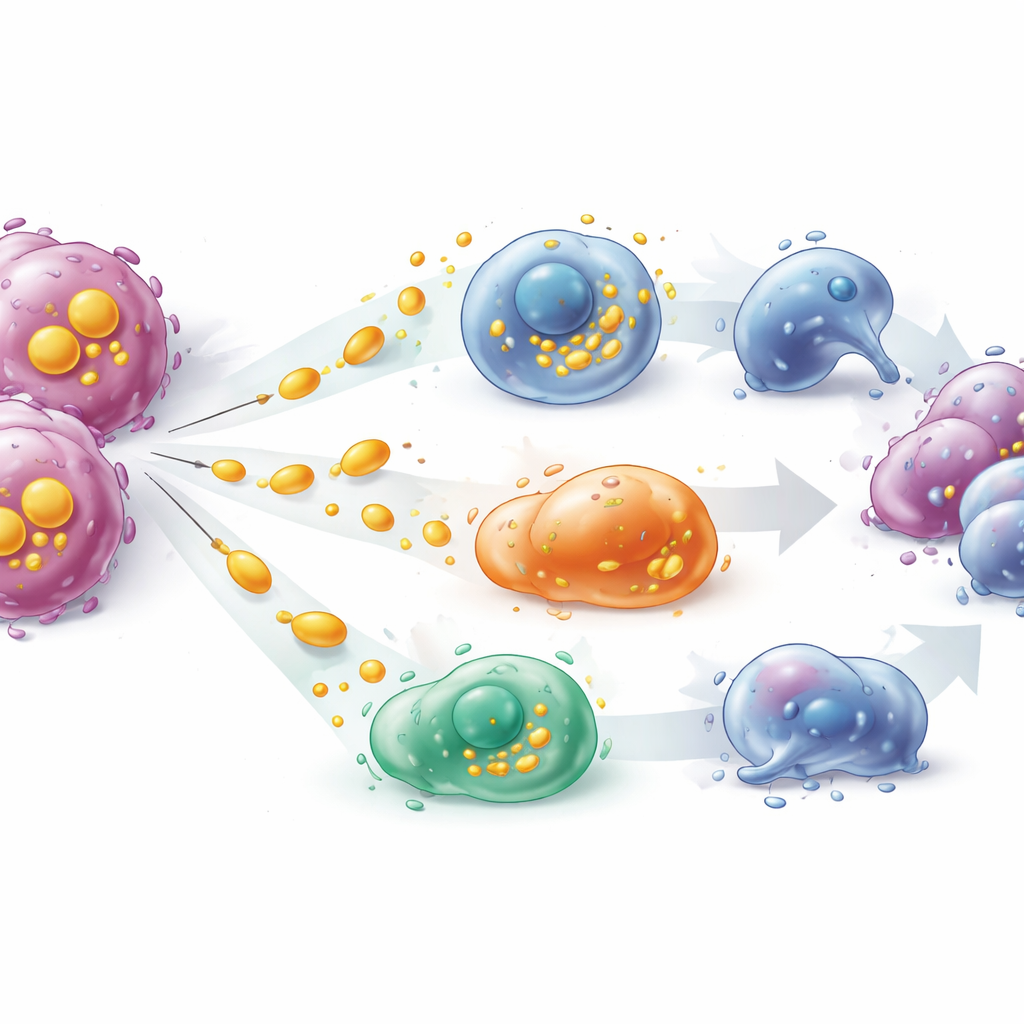
New Ways to Starve the Tumor, Not the Immune System
Because so many of these circuits depend on altered lipid handling, they offer attractive drug targets. The review highlights experimental strategies that block fat-making enzymes, fat transporters, or cholesterol-synthesis steps in tumors or in specific immune-cell subsets. In animal models, these approaches can strip tumors of survival advantages, reawaken exhausted T cells and NK cells, and make checkpoint-blocking drugs more effective. Yet broad “fat-blocking” treatments risk harming helpful immune cells or triggering unexpected detours in tumor metabolism. To move forward safely, researchers are turning to detailed multiomics tools that map lipids, genes, proteins, and cell locations at high resolution. These technologies are beginning to reveal which lipid pathways must be rewired in which cells, and when, to convert a fat-driven, immunosuppressive niche into one where the immune system regains the upper hand.
Citation: Du, YW., Cai, ZR., Duan, XT. et al. Lipid metabolism reprogramming shapes the immune landscape in the tumor microenvironment. Cell Mol Immunol 23, 457–470 (2026). https://doi.org/10.1038/s41423-026-01411-0
Keywords: tumor microenvironment, lipid metabolism, cancer immunotherapy, immune evasion, tumor metabolism