Clear Sky Science · en
BIRC3/CAV1 co-expression drives GBM aggressiveness as a prognostic signature and therapeutic vulnerability
Why this brain cancer study matters
Glioblastoma is one of the most aggressive brain cancers, and even with surgery, radiation, and chemotherapy, most patients survive little more than a year. Many tumors quickly learn to shrug off the standard drug temozolomide, leaving doctors with few options. This study asks two key questions: can we better predict which tumors will resist treatment, and can we find a weak spot that lets us switch those resistant tumors back into a vulnerable state?
Spotting a hidden danger signal in tumors
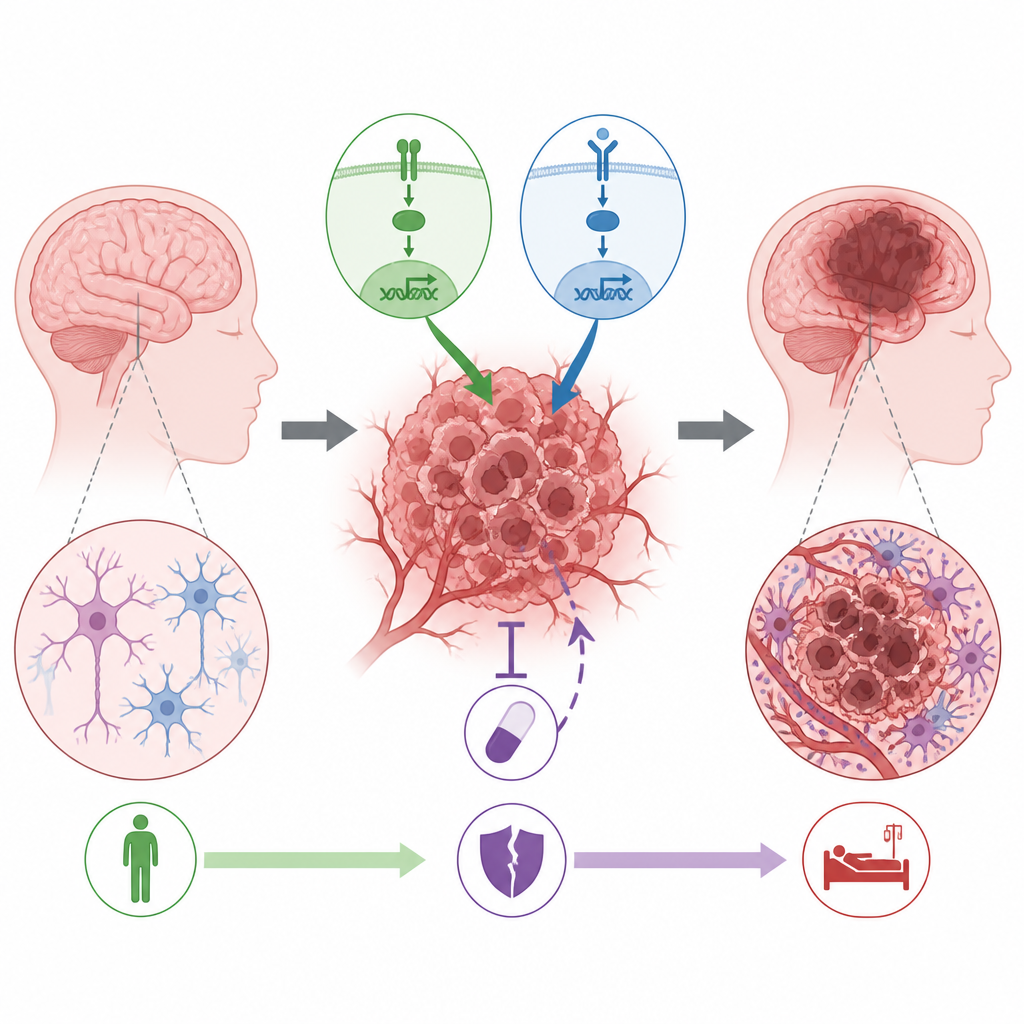
The researchers began with living samples of glioblastoma taken from patients and grown as tiny tumor pieces in the lab. Using an imaging method that reads out cell metabolism in real time, they exposed these explants to temozolomide and grouped them as responders or non-responders. They then compared gene activity between the two groups and repeatedly found higher levels of two genes, BIRC3 and CAV1, in resistant tumors. These genes help cancer cells avoid self-destruction and adapt to stress, so their rise in non-responders suggested they might be part of a shared resistance program.
Two markers that flag high-risk patients
To test whether these genes matter in real patients, the team mined several large brain tumor databases. Across thousands of samples, BIRC3 and CAV1 were both more active in glioblastoma than in lower grade tumors or normal brain tissue, and tended to be switched on together. Patients whose tumors had high levels of either gene lived for a shorter time, but those with both genes high fared worst of all, with median survival of only about five months. When the researchers combined these markers with the standard MGMT methylation test, they could sort patients into four risk groups and pinpoint a small, ultra high-risk subset with less than a seven percent chance of being alive at two years.
How the tumor dodges cell death
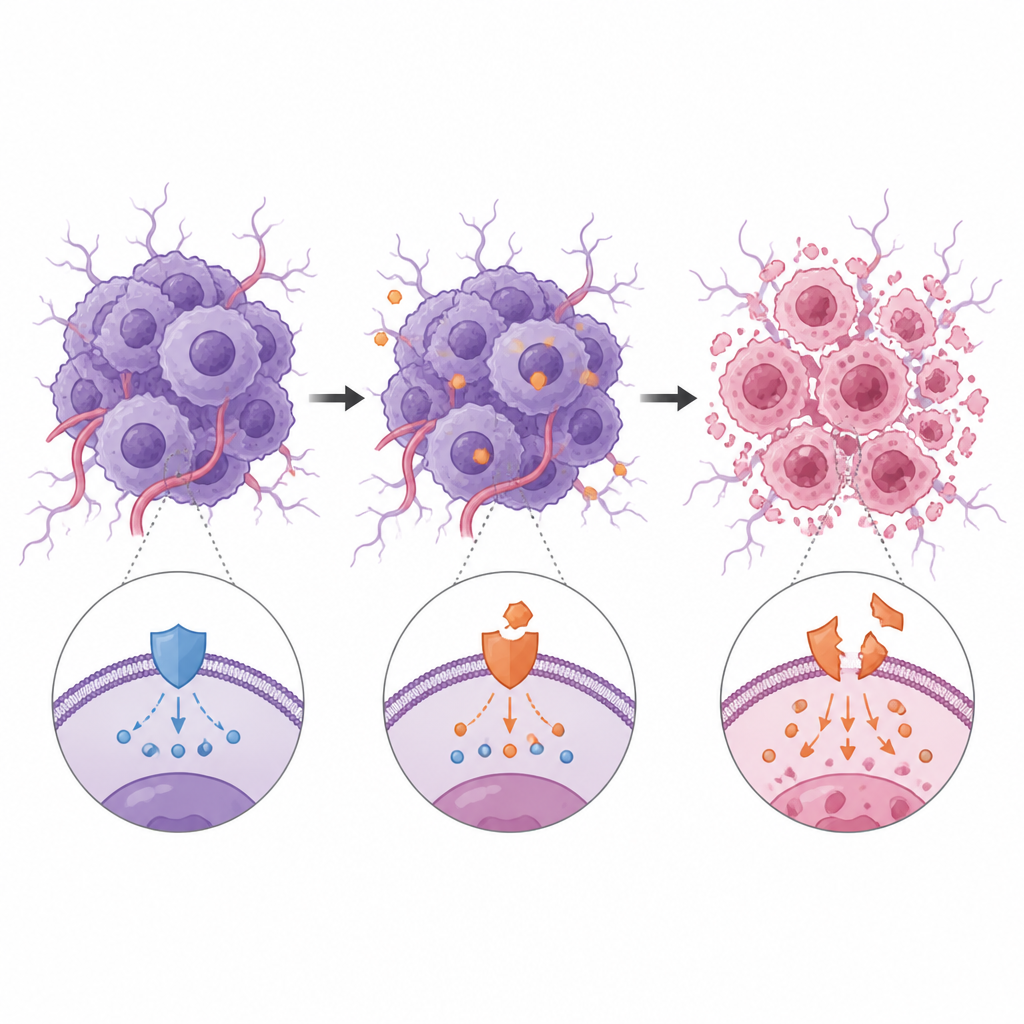
Next, the scientists moved from patterns to mechanism. They engineered usually sensitive glioblastoma cells to produce extra BIRC3 and CAV1. These cells were no healthier under normal conditions, but once exposed to temozolomide they resisted killing, migrated faster, and formed more colonies, mirroring an aggressive clinical behavior. At the molecular level, the drug still switched on pro-death signals inside the cells, but BIRC3 appeared to act like a brake at the final step of the suicide program, holding key death enzymes in a stalled, inactive state. CAV1 did not sit directly upstream of BIRC3, but worked in a parallel route that boosted survival and movement, together creating a hardened, therapy-resistant tumor.
Turning stalled death into a therapeutic opening
Because BIRC3 is a member of a family of proteins that can be blocked by new “Smac-mimetic” drugs, the team tested one such compound, AZD5582, in resistant glioblastoma cells. On its own, AZD5582 slowed growth but did not cause many cells to die. When combined with temozolomide, however, it sharply increased the number of cells undergoing apoptosis, the programmed form of cell death. Protein measurements showed that the combination reduced BIRC3 levels and allowed the previously stalled death enzyme to become active and be consumed as cells died. In slices of patient tumors grown ex vivo, the same drug combination restored sensitivity to temozolomide, but only in samples with high BIRC3, suggesting that BIRC3 levels could guide which patients might benefit.
What this means for patients and future care
Together, these findings identify co-activation of BIRC3 and CAV1 as a warning sign of especially aggressive, treatment-resistant glioblastoma, and show that at least part of this resistance can be reversed by targeting BIRC3 with an IAP-blocking drug. While this work is still at the laboratory and explant stage, it outlines a strategy where doctors might one day use these markers to rank patient risk more precisely and select those most likely to respond to combinations of temozolomide with IAP inhibitors, nudging even stubborn tumors back toward self-destruction.
Citation: Franceschi, S., Morelli, M., Lessi, F. et al. BIRC3/CAV1 co-expression drives GBM aggressiveness as a prognostic signature and therapeutic vulnerability. Cell Death Discov. 12, 232 (2026). https://doi.org/10.1038/s41420-026-03112-z
Keywords: glioblastoma, temozolomide resistance, BIRC3 CAV1, apoptosis, IAP inhibitor