Clear Sky Science · en
Mytho/Phaf1 is required to prevent DNA damage and tissue degeneration in Danio rerio
Keeping Cells Clean and Healthy
Our bodies, and those of other animals, depend on tiny cleanup crews inside cells to remove damaged parts and keep tissues working. This study uses zebrafish, a small tropical fish widely used in research, to explore a little-known gene called Mytho and shows how losing this cellular housekeeper can set the stage for weak muscles, poor fertility, and even cancer.
A Hidden Guardian Inside Cells
Mytho is part of the cell’s recycling system, a process that breaks down worn-out proteins and organelles so their building blocks can be reused. This system, known as autophagy, helps cells adapt to stress and supports long-term tissue health. Mytho had already been linked to healthy aging and muscle maintenance in worms and mice, but its importance in vertebrate organs as a whole was not clear. The researchers found that zebrafish carry a single version of the mytho gene, which is highly similar to the human and mouse versions, and that it is especially active in the brain, muscles, eyes, and reproductive organs.
What Happens When Mytho Is Switched Off
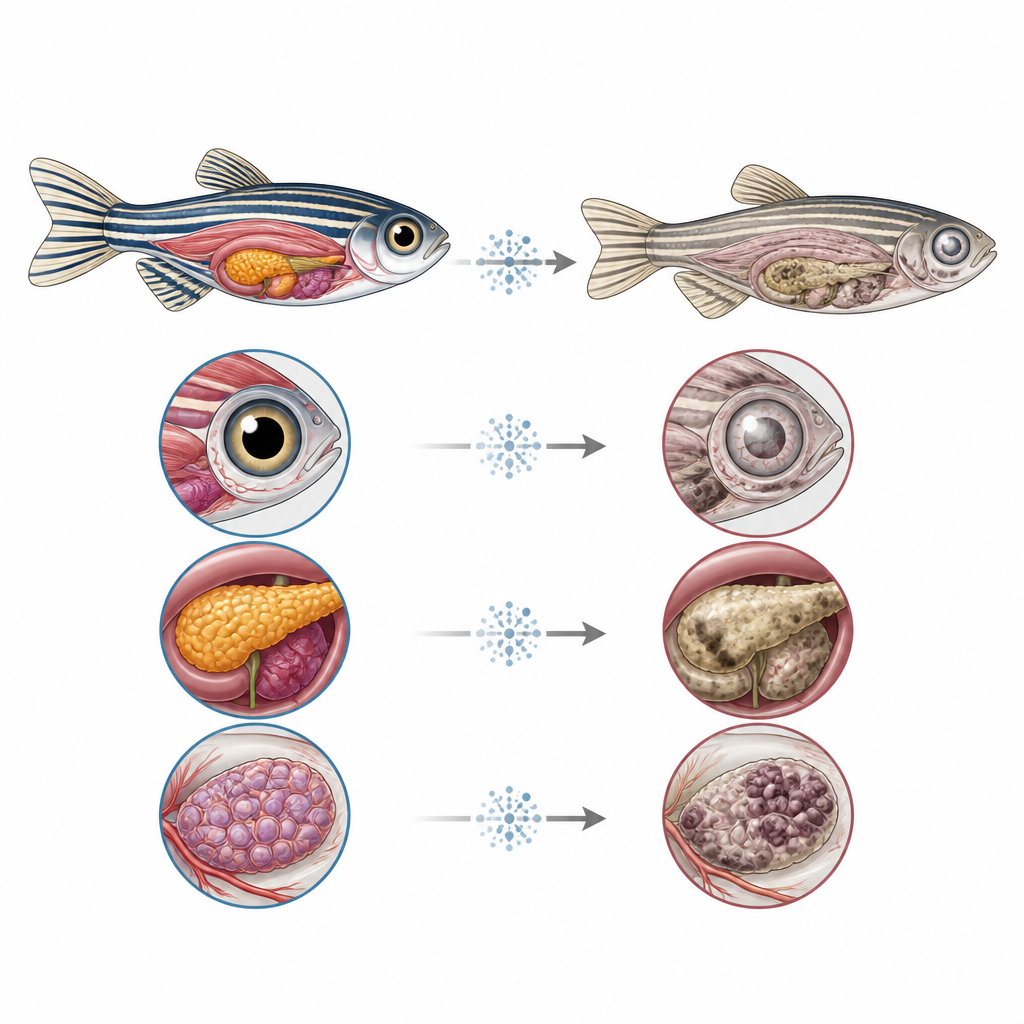
To test Mytho’s role, the team used gene-editing tools to create zebrafish that completely lack a working copy of mytho. These mutant fish developed to normal size, but they paid a price during stressful periods. Young mutants were more likely to die during the transition from living off their yolk to feeding on their own, a stage when cells rely heavily on internal energy supplies. When exposed to oxidative stress, a chemical challenge that damages molecules inside cells, mutant larvae died more often than their normal siblings. They also swam less and had weaker-looking muscle fibers, signs that their muscles were structurally and functionally compromised.
Breakdown of the Cellular Recycling System
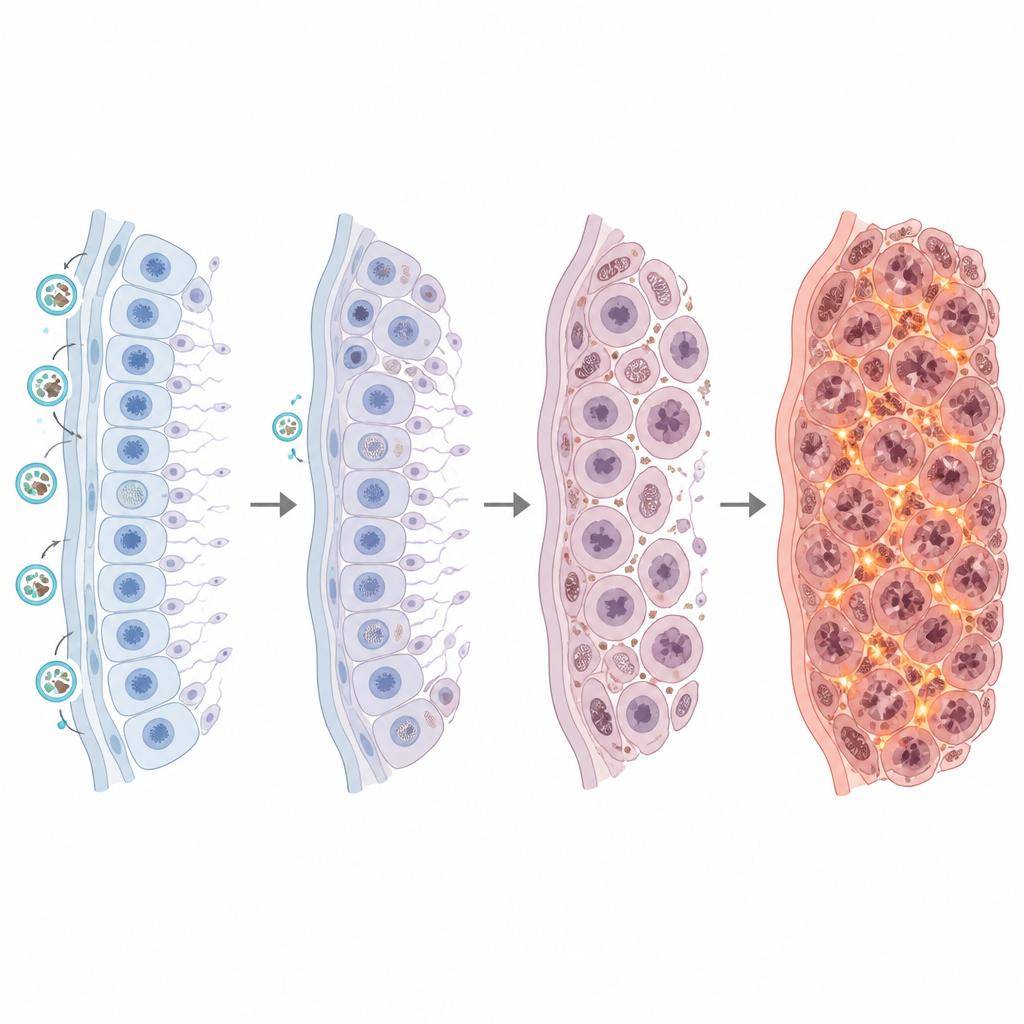
The scientists then looked directly at the recycling machinery. Using fluorescent markers and chemical blockers, they measured how many recycling vesicles formed in muscles and brains. In fish lacking Mytho, both the number of new vesicles and their progression to fully degradative compartments were reduced, showing that the cleanup process was clogged at an early step. Electron microscope images confirmed that cells in muscles and testes of mutant fish accumulated swollen mitochondria and large, partially digested structures instead of neatly processed waste. This buildup is typical of aging or diseased tissue, suggesting that the absence of Mytho makes cells grow old before their time.
From Faulty Cleanup to DNA Damage and Cancer
The most striking effects appeared in the reproductive organs, especially in males. Mutant testes often showed tissue degeneration and, in many cases, a common type of testicular tumor called seminoma. Mutant males were less successful in fertilizing eggs, and even when they did, their sperm carried clear signs of trouble. Many sperm cells retained excess cytoplasm that should normally be removed, and their movement was reduced. Most importantly, tests that visualize breaks in DNA showed that sperm from mutant males contained much more fragmented genetic material, including serious double-strand breaks. Gene activity profiles from mutant testes revealed increased expression of many DNA repair and cell cycle genes, indicating that the tissue was struggling to cope with ongoing genetic damage.
Why This Matters for Health and Disease
Taken together, the results show that Mytho is a key protector of tissue integrity in zebrafish. By helping the cellular recycling machinery run smoothly, it prevents the slow buildup of damaged components that can weaken muscles, cloud the retina, disrupt the pancreas, and compromise fertility. Just as importantly, it helps shield the genome from breakage, reducing the chance that cells in the testis will accumulate mutations and turn cancerous. Because the Mytho protein is strongly conserved between fish and humans, this work suggests that similar mechanisms may help guard our own tissues against degeneration and DNA damage over a lifetime.
Citation: Pagliarusco, T., Franco-Romero, A., Terrin, F. et al. Mytho/Phaf1 is required to prevent DNA damage and tissue degeneration in Danio rerio. Cell Death Discov. 12, 252 (2026). https://doi.org/10.1038/s41420-026-03106-x
Keywords: autophagy, zebrafish, fertility, DNA damage, testicular cancer