Clear Sky Science · en
NAT10 promotes gallbladder cancer progression by remodeling cholesterol metabolism via PCSK9 mRNA acetylation
Why this cancer story matters
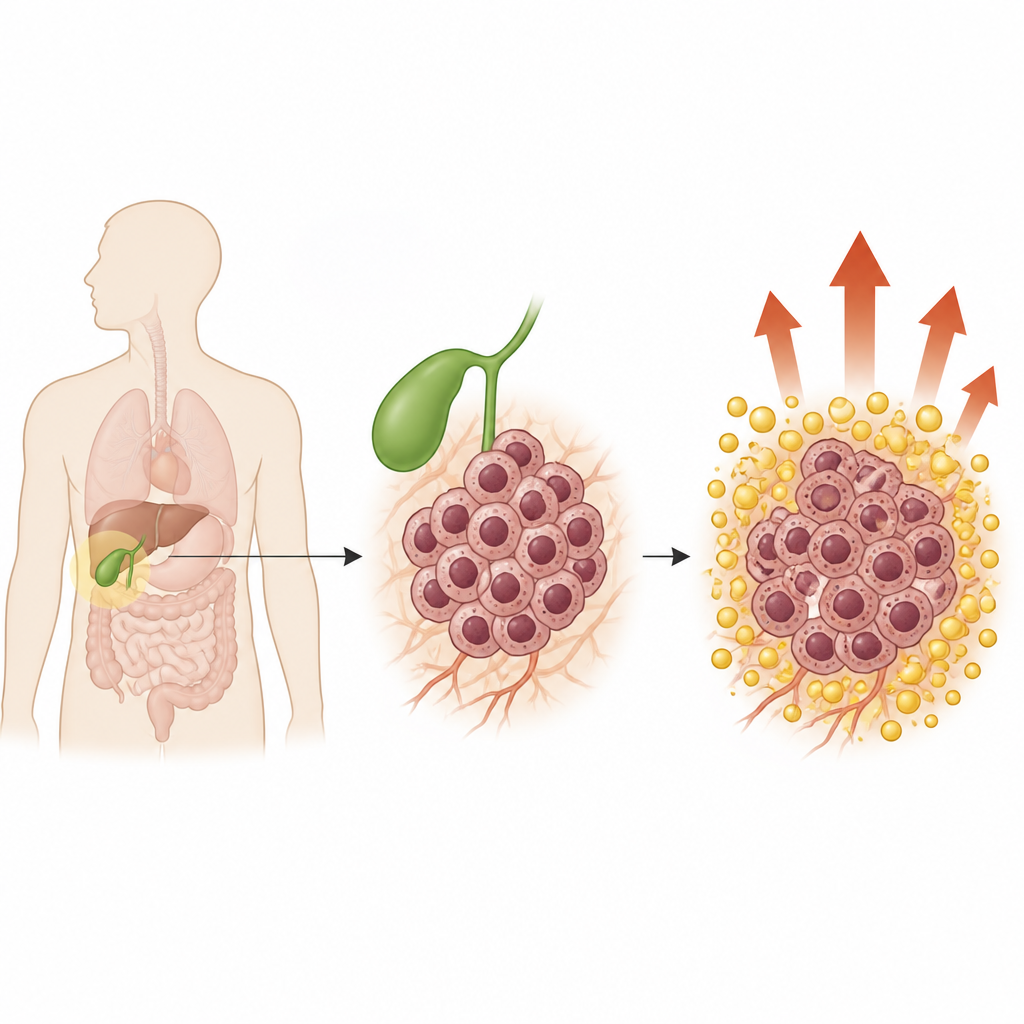
Gallbladder cancer is rare but often deadly because it is usually found late and resists treatment. This study uncovers how a single cellular regulator helps gallbladder tumors hoard cholesterol and grow faster, and shows that blocking this regulator can slow tumors and boost the effect of an existing chemotherapy drug. Understanding this hidden fuel line offers a fresh route for making a hard-to-treat cancer more vulnerable.
A hidden switch inside tumor cells
The researchers focused on a molecule called NAT10, a protein that chemically tweaks RNA, the working copy of our genes. By mining large cancer databases and examining patient tissue samples, they found that NAT10 levels are much higher in gallbladder tumors than in nearby normal tissue. Patients whose tumors carried more NAT10 tended to have more advanced disease and shorter survival, suggesting that NAT10 is not just a bystander but a driver of aggressive behavior.
How NAT10 helps cancer cells spread
In laboratory experiments, turning down NAT10 in gallbladder cancer cell lines slowed their growth, reduced their ability to copy DNA, and made them less able to migrate across a surface or move through a membrane. When these altered cells were implanted into mice, they formed smaller tumors with fewer dividing cells. In contrast, forcing cells to make extra NAT10 had the opposite effect, strengthening the case that NAT10 acts as an accelerator for tumor growth and spread.
Cholesterol as unexpected fuel
To understand how NAT10 exerts this power, the team measured thousands of small molecules and genes in cancer cells with and without NAT10. The clearest signal pointed to fats, especially cholesterol. When NAT10 was lowered, cholesterol and many genes that build or import cholesterol dropped; when NAT10 was raised, these measures climbed. The cells also lost lipid droplets, tiny storage bubbles rich in cholesterol, and had less free cholesterol in their membranes. Depriving cells of cholesterol in their culture medium weakened their growth and migration and shut down a key growth-control network known as the PI3K/AKT pathway. Adding cholesterol back to NAT10-deficient cells restored both their movement and the activity of this pathway, linking cholesterol directly to their malignant behavior.
A molecular relay from RNA to cholesterol
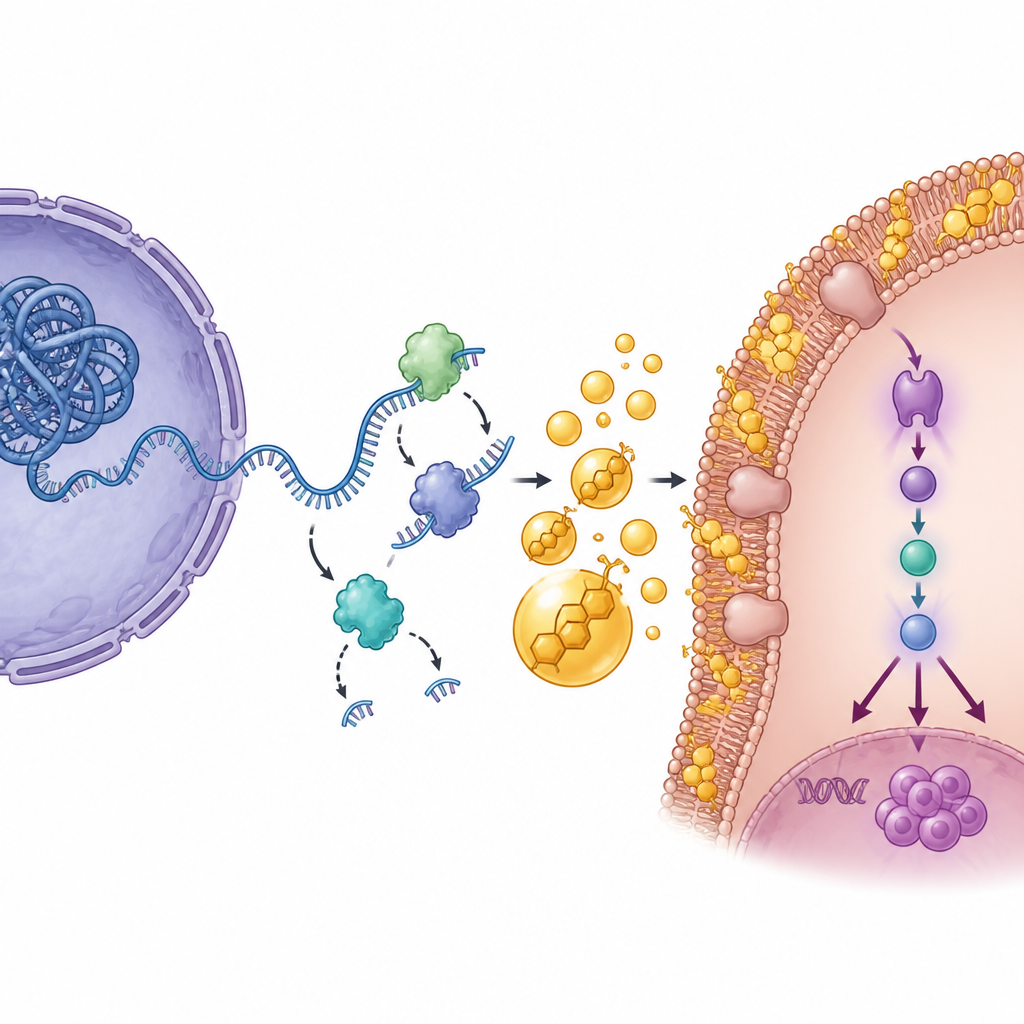
The study pinpoints a crucial middleman called PCSK9, better known for controlling blood cholesterol and heart disease risk. NAT10 chemically decorates PCSK9 RNA with a small acetyl group, which makes the RNA more stable and longer-lived. This leads to higher PCSK9 protein levels inside cancer cells. In turn, PCSK9 boosts another master regulator, SREBF2, which switches on many cholesterol-building and cholesterol-importing genes. When PCSK9 was blocked or reduced, cholesterol levels and these downstream genes fell, mimicking the effect of lowering NAT10. Restoring PCSK9 in NAT10-deficient cells brought cholesterol production, growth signals, and aggressive behavior back online, showing that NAT10 largely works through this PCSK9–SREBF2 relay.
Turning the switch off with a drug
Because NAT10 depends on its chemical activity to stabilize PCSK9 RNA, the team tested Remodelin, a small molecule that inhibits NAT10. Remodelin curtailed gallbladder cancer cell growth and colony formation in dishes and shrank tumors in mice, while normal bile duct cells were less sensitive, hinting at a therapeutic window. Importantly, when combined with gemcitabine, a standard drug for gallbladder cancer, Remodelin further reduced tumor growth compared with either treatment alone. This suggests that blocking the NAT10–PCSK9 pathway may not only slow tumors but also help existing chemotherapy work better.
What this means for patients
This work reveals that gallbladder tumors can rewire their internal cholesterol supply by using NAT10 to stabilize PCSK9 RNA, which then activates a chain of events that boosts cholesterol production and powerful growth signals. By cutting this chain at NAT10 with Remodelin, the researchers dampened tumor growth and improved the impact of a current drug in animal models. While much more testing is needed before patients could benefit, the study highlights a new, druggable weakness in gallbladder cancer rooted in how tumor cells handle both RNA messages and cholesterol.
Citation: Chen, Zy., Wang, My., Ma, B. et al. NAT10 promotes gallbladder cancer progression by remodeling cholesterol metabolism via PCSK9 mRNA acetylation. Cell Death Discov. 12, 251 (2026). https://doi.org/10.1038/s41420-026-03104-z
Keywords: gallbladder cancer, cholesterol metabolism, NAT10, PCSK9, PI3K AKT signaling