Clear Sky Science · en
CX3CR1-mediated immune networks in sepsis: implications for precision therapy
Why this infection story matters
Sepsis is a sudden, life-threatening reaction to infection that can shut down organs even with modern intensive care. This article explores a lesser known but powerful control switch on immune cells, called CX3CR1, that helps decide whether our defenses go into destructive overdrive or become dangerously weak. Understanding this switch could point the way to more precise treatments that calm harmful inflammation without leaving patients defenseless.
The body’s two-stage crisis in sepsis
When sepsis begins, the immune system often erupts in a storm of signals that rapidly inflame tissues throughout the body. Later, many patients swing into the opposite state, where immune cells are exhausted, slow to respond, and vulnerable to new infections. The authors explain how this back-and-forth is driven by shifting patterns of activation, movement, and death among many immune cell types. Current care relies on antibiotics, fluids, and organ support, but there is still no way in the clinic to steer this immune imbalance with precision, which helps explain why sepsis remains a leading killer worldwide.
A traffic controller on immune cells
CX3CR1 is a receptor that sits on the surface of key immune cells, including monocytes, macrophages, natural killer cells, and T cells. It senses a small protein signal in tissues and blood, guiding immune cells toward sites of infection or injury and shaping how strongly they respond. The review describes how, in the early phase of sepsis, CX3CR1-related signals can boost the killing of microbes and raise inflammatory chemicals that help clear bacteria. Later, the same network supports the survival of certain protective cells but can also contribute to organ damage or prolonged immune paralysis, depending on which cells are involved and how strongly the pathway is engaged. 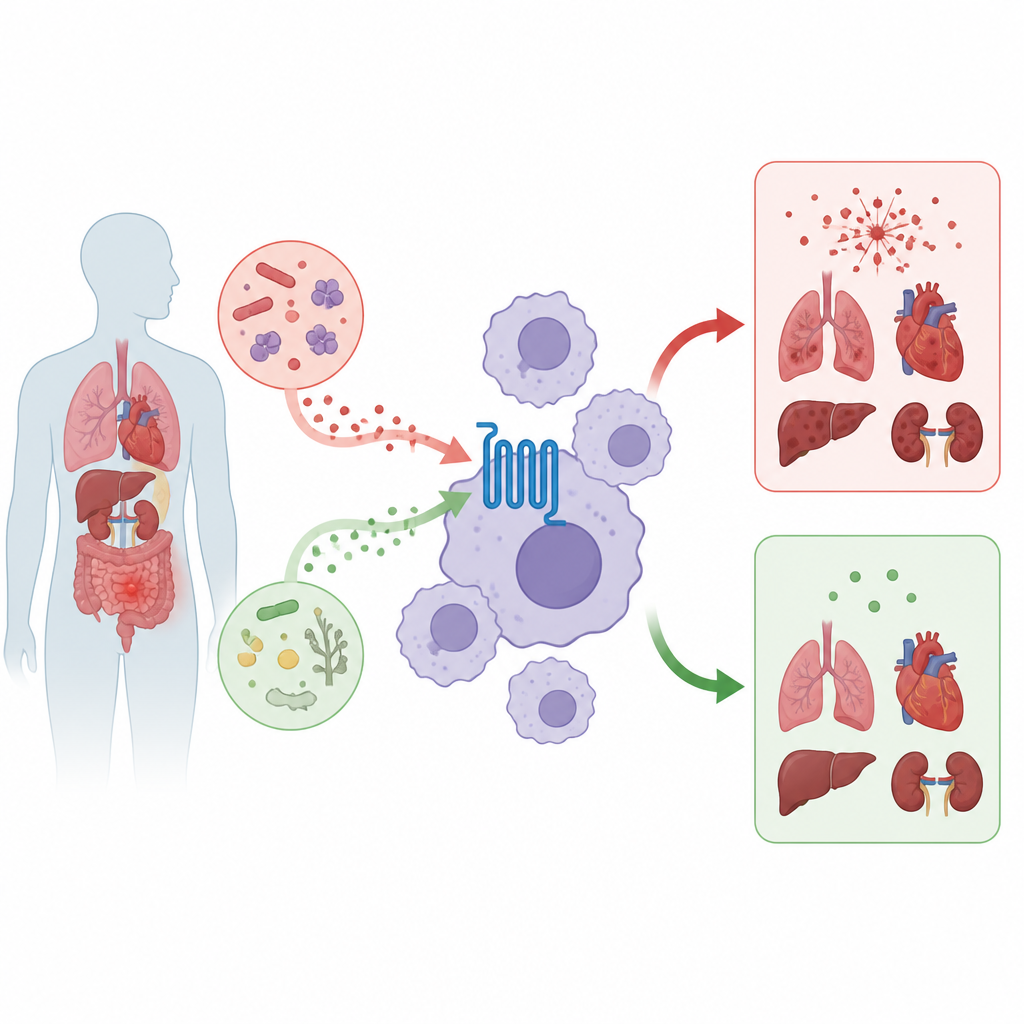
Different immune players, different jobs
A central message of the paper is that CX3CR1 does not behave the same way in every cell. In some monocytes and macrophages, it helps cells live longer, clean up debris, and repair tissues after injury. In others, it drives their migration into organs, where they may fuel scarring or worsen lung and kidney damage during sepsis. On certain T cells and natural killer cells, CX3CR1 marks highly active, sometimes highly toxic subsets that can be helpful in fighting infections or tumors but may also add to bystander damage in the brain and other organs. Because of this diversity, the authors argue that any future therapy must distinguish between cell types rather than bluntly turning the pathway on or off everywhere.
A potential guide for prognosis and treatment
The authors highlight growing evidence that CX3CR1 levels in the blood may help predict who survives sepsis. Higher expression on particular monocyte subsets tends to associate with better short-term survival, while high levels on some T cell populations may signal worse outcomes. These patterns suggest that measuring CX3CR1 in specific cell types might complement existing markers used to detect immune suppression in sepsis. At the same time, experimental work in animals indicates that drugs, gene tools, or engineered immune cells that alter CX3CR1 activity can lessen organ injury or improve host defense, hinting that the pathway could be directly targeted in future therapies. 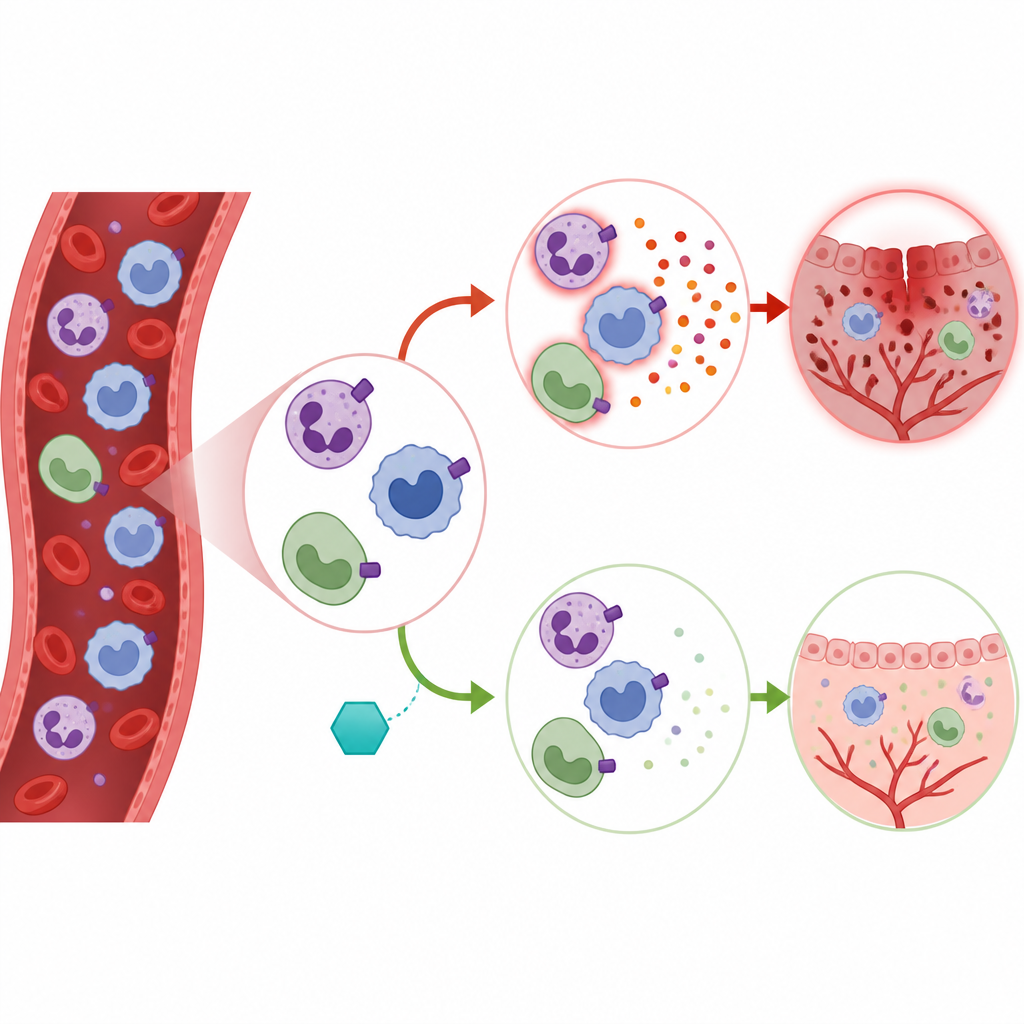
From lab concepts to precision care
Because CX3CR1 is structurally well understood, pharmaceutical groups have already created small molecules and antibodies that interfere with its signaling, some of which are in trials for other conditions. The review envisions adapting these tools, and newer approaches such as gene editing and engineered macrophages or T cells, to gently adjust CX3CR1 activity in selected immune populations during different stages of sepsis. The challenge will be to preserve helpful functions, like clearing germs and repairing tissues, while curbing damaging inflammation and long-lasting immune shutdown.
What this means for future sepsis patients
In plain terms, this article argues that CX3CR1 acts as a master knob on several branches of the immune system during sepsis. Because its effects vary by cell type and disease stage, carefully tuned, cell-specific interventions could one day turn this knob to restore balance rather than bluntly suppressing or stimulating immunity. If these ideas translate from models to the bedside, doctors might use CX3CR1-based tests and treatments to move sepsis care from one-size-fits-all toward true precision therapy.
Citation: Tang, Y., Jia, L., Liu, Y. et al. CX3CR1-mediated immune networks in sepsis: implications for precision therapy. Cell Death Discov. 12, 220 (2026). https://doi.org/10.1038/s41420-026-03102-1
Keywords: sepsis, immune regulation, CX3CR1, precision medicine, biomarkers