Clear Sky Science · en
Oncoprotein CYB561, acting in IRE1-XBP1-SREBF1 and FAK-ERK pathway, promotes breast cancer lipogenesis and progression
Why this research matters
Breast cancer remains the most common cancer in women, and its most aggressive forms often resist current treatments. This study uncovers how a little-known protein, called CYB561, helps breast tumors grow, spread, and change their behavior by rewiring how they handle fats. Understanding this hidden control switch could open doors to smarter combination therapies for hard-to-treat breast cancers.
A protein turned up in aggressive tumors
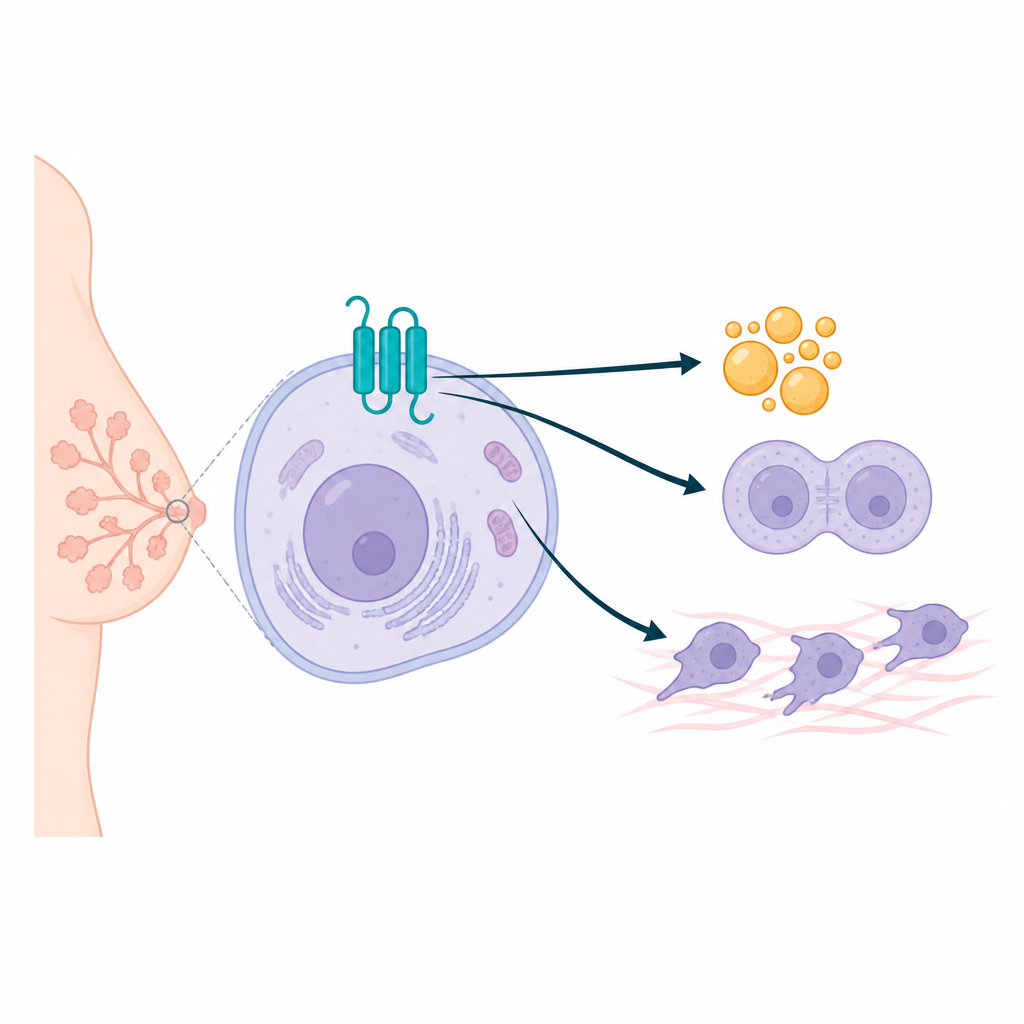
The researchers first examined CYB561 levels in breast tumor samples compared with nearby normal tissue. They found that CYB561 was much more abundant in cancer cells, especially in two high-risk groups: HER2-positive and triple-negative breast cancers. High levels of CYB561 were linked to larger tumors, more frequent spread, and poorer patient survival. In cell culture, dialing CYB561 down slowed cancer cell growth and shrank tumors in mice, while boosting it had the opposite effect, driving rapid tumor expansion.
How CYB561 fuels growth and movement
Beyond simple growth, cancer cells must also move and invade to form metastases. The team showed that CYB561 pushes breast cancer cells through a shape-shifting program called epithelial-mesenchymal transition, in which cells loosen their attachments and become more mobile. When CYB561 was reduced, cells moved and invaded less in lab tests and showed more features of stable, non-migratory cells. When CYB561 was increased, cells became spindle-shaped, more flexible, and far better at crossing membranes and closing artificial “wounds” in dishes.
Rewiring fat production inside cancer cells
A key insight from this work is that CYB561 does not act alone; it reshapes the way tumor cells make and use fats. By analyzing large cancer gene databases and performing targeted experiments, the scientists found that tumors with high CYB561 activity were enriched in genes involved in building fatty acids and storing lipids. In multiple breast cancer cell lines, lowering CYB561 reduced fat droplets inside cells and decreased the levels of several enzymes that drive fat production, while raising CYB561 did the reverse. Blocking a central fat-making enzyme erased both lipid buildup and the shape-shifting program, and adding back a key fatty acid restored those aggressive traits. This showed that boosted fat production is not just a side effect but is required for CYB561-driven changes.
Two inner control circuits working together
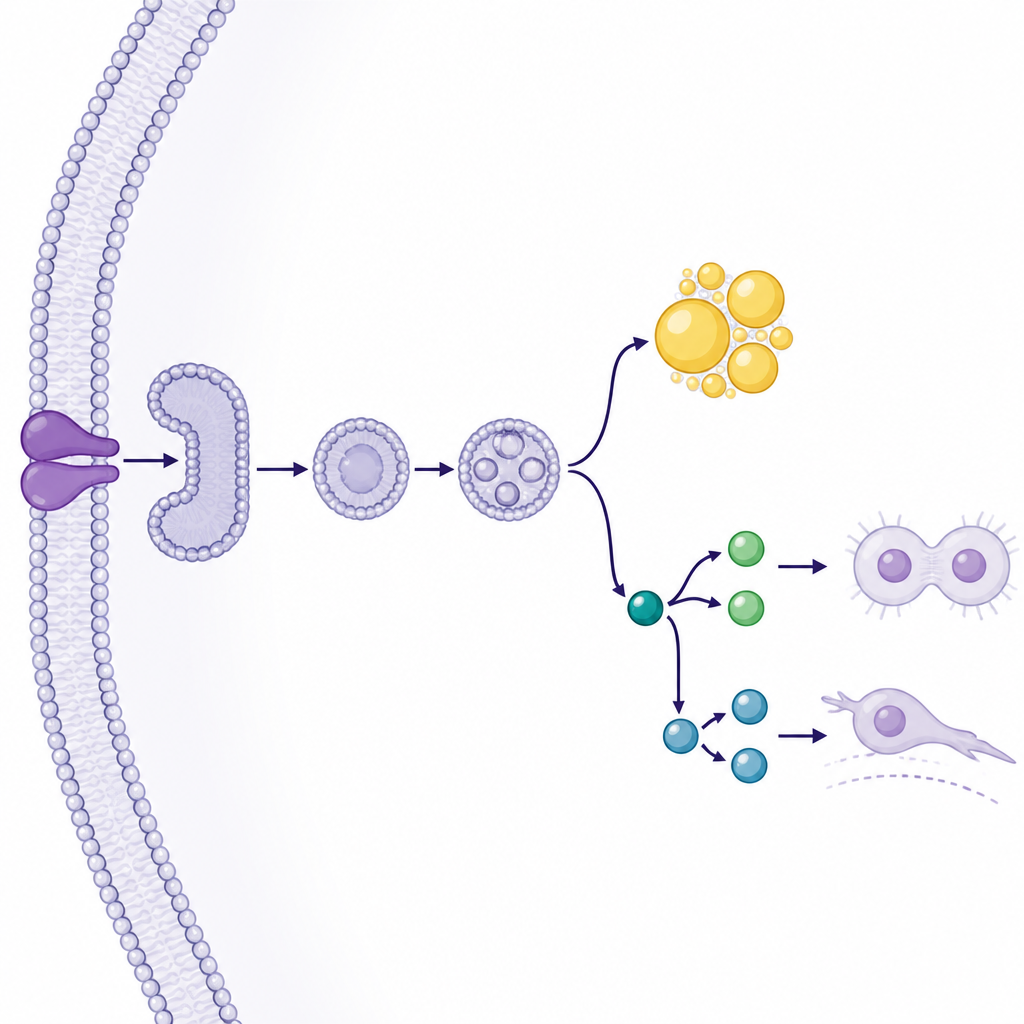
To understand how CYB561 exerts such broad influence, the team mapped its molecular partners. They discovered that CYB561 directly binds to a stress-sensing protein in the cell’s internal membranes called IRE1. This contact activates a chain of events: IRE1 turns on a messenger called XBP1, which in turn raises the levels of SREBF1, a master regulator of fat and cholesterol synthesis. When IRE1 was silenced, the fat-building program stalled, and CYB561 could no longer efficiently promote growth, movement, or cell shape changes. At the same time, CYB561 switched on another key route, the FAK–ERK pathway, which is well known for helping cells divide and migrate. Inhibiting ERK cut down CYB561-driven fat buildup, cell growth, movement, and markers of the shape-shifting process, suggesting that these two circuits reinforce each other.
What this could mean for future treatment
Taken together, the findings reveal CYB561 as a central hub that links stress sensing inside the cell, fat production, and growth signals into a single pro-tumor network. Rather than choosing between growing or moving, CYB561-positive breast cancer cells can do both, helping explain why certain subtypes are so aggressive. While this research is still at the laboratory stage, it points to a strategy in which drugs that target CYB561, fat-producing enzymes, and growth pathways could be combined to weaken the engine that drives tumor survival and spread.
Citation: Yang, X., Tao, Y., Xu, Y. et al. Oncoprotein CYB561, acting in IRE1-XBP1-SREBF1 and FAK-ERK pathway, promotes breast cancer lipogenesis and progression. Cell Death Discov. 12, 227 (2026). https://doi.org/10.1038/s41420-026-03101-2
Keywords: breast cancer, lipid metabolism, CYB561, tumor progression, cell signaling