Clear Sky Science · en
Lipid droplets in neurodegenerative diseases: pathological drivers and therapeutic vulnerabilities
Hidden Fat Pockets in the Brain
Most of us think of fat as something stored around the waist or under the skin, not as a player in brain health. Yet tiny fat-filled bubbles inside our brain cells, called lipid droplets, may help decide whether nerve cells stay healthy or slowly die. This review explores how these droplets can both shield the brain from damage and, when out of balance, help drive conditions such as Alzheimer’s, Parkinson’s, and certain inherited movement disorders.
What These Tiny Droplets Really Are
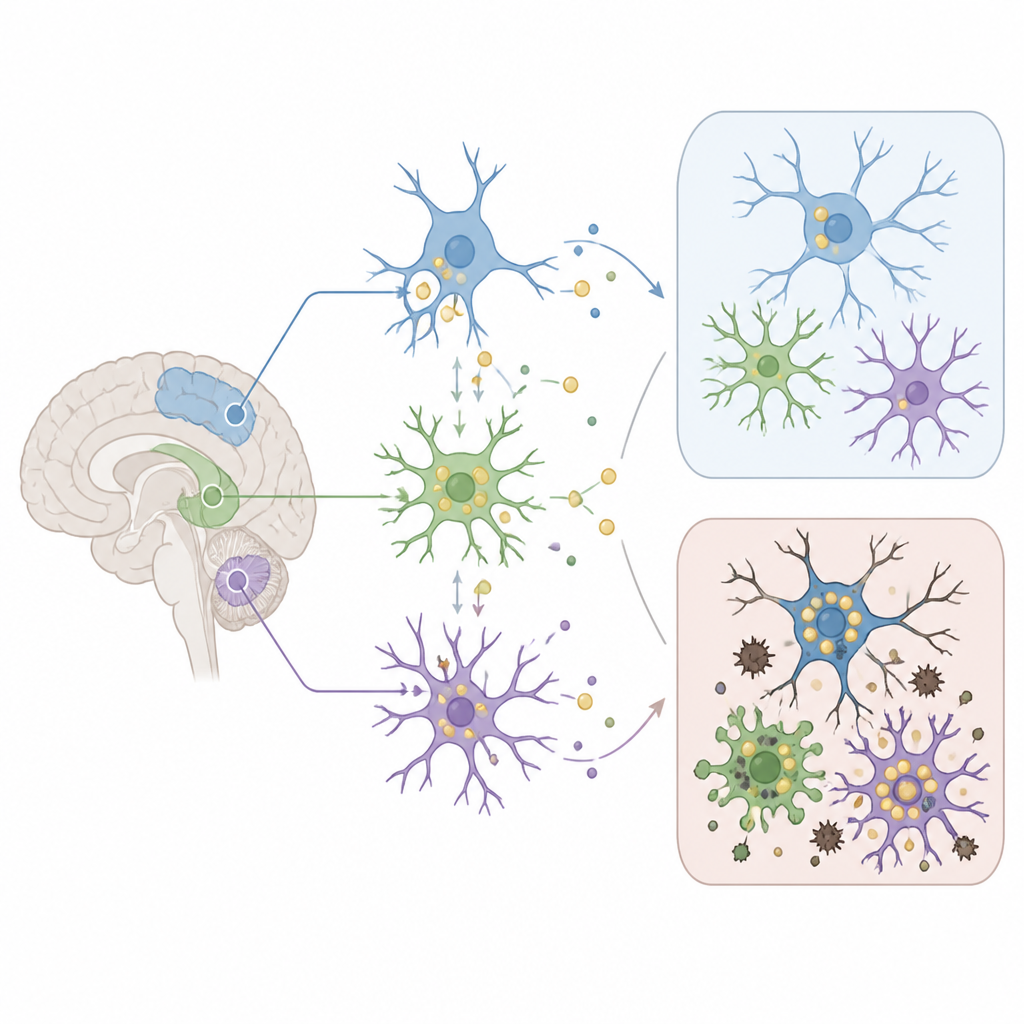
Lipid droplets are small round structures found in almost every cell type. They contain neutral fats at their core and are wrapped in a thin layer of membrane studded with special proteins. Once seen as simple storage depots for extra fat, they are now known to be active hubs that manage energy, help clear harmful fatty molecules, and talk to other cell parts. In the brain, which is especially rich in fat, these droplets are most common in support cells such as astrocytes and microglia, but they can appear in neurons as well. When the machinery that builds or breaks down these droplets goes wrong, the imbalance can disrupt energy supply, promote toxic by-products, and set the stage for disease.
Balancing Protection and Harm in the Aging Brain
Under stress, such as during aging, poor blood supply, or high-fat diets, more lipid droplets appear in brain cells. At first this can be protective. Droplets soak up excess free fatty acids that would otherwise damage cell membranes and generate harmful reactive molecules. Astrocytes, for example, take in fatty waste from neurons and pack it into droplets, helping to keep nerve cells safe. Microglia and neurons also adjust their droplet content to cope with changing demands. But if this state persists, droplets can build up to unhealthy levels. In microglia, heavy droplet loads are linked with poor waste clearance, increased release of inflammatory signals, and a feedback loop of ongoing stress that can harm nearby neurons.
Links to Specific Brain Diseases
In several neurodegenerative diseases, the same droplet systems and proteins repeatedly appear at fault. In hereditary spastic paraplegia, mutations in droplet-associated proteins such as spastin, DDHD2, and spartin disturb how droplets form, move, and are cleared, causing abnormal droplet size and number in nerve cells. In Alzheimer’s disease, faulty handling of fats between neurons and glial cells, strongly influenced by risk versions of the ApoE gene, leads to droplet build-up, especially in microglia and astrocytes. This build-up is tied to inflammation and to the appearance of classic Alzheimer’s features such as amyloid plaques and abnormal tau. In Parkinson’s disease, the protein alpha-synuclein interacts with droplet surfaces and nearby membranes. At moderate levels, droplets may buffer toxic fats, but when they accumulate excessively they can favor alpha-synuclein clumping and the loss of dopamine-producing neurons.
Turning Droplet Biology into Treatment
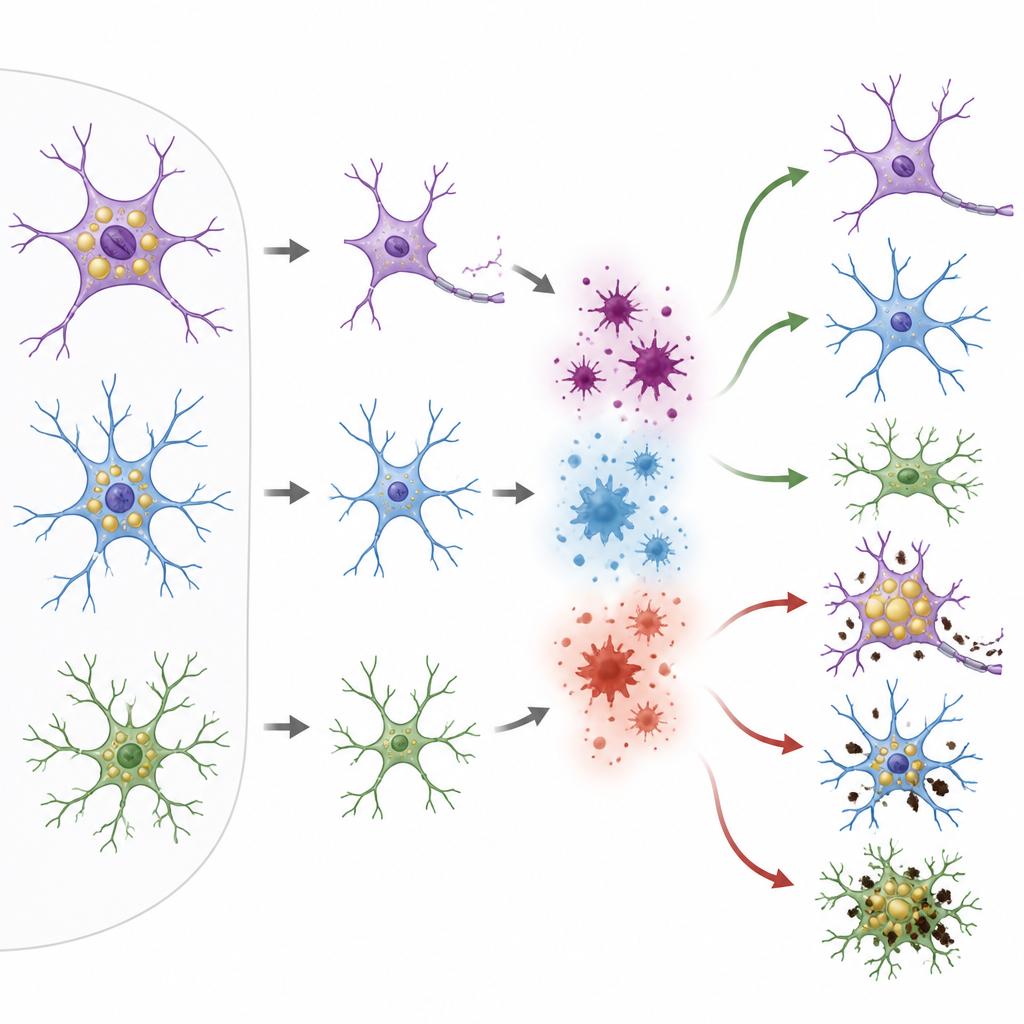
Because lipid droplets can be either helpful or harmful, they offer several possible treatment angles. One idea is to enhance lipophagy, a clean-up route in which cells selectively digest excess droplets, restoring a healthier balance of fats. Experimental compounds, including some natural molecules, have been shown in animal models to reduce droplet overload, improve energy handling in brain cells, and ease disease-like symptoms. Other strategies aim to adjust specific droplet coat proteins, or to nudge enzymes that control fat breakdown and transport so that droplets do not become overloaded in the first place. Researchers are also asking whether early changes in droplet number or shape could act as warning signs that a neurodegenerative disease is starting before memory loss or movement problems appear.
What This Means for Future Brain Health
This article argues that lipid droplets are not passive fat blobs but active decision points in brain cells, capable of guarding neurons from toxic fats or, when mismanaged, pushing them toward degeneration. By understanding when these droplets switch from friend to foe, scientists hope to design therapies that gently rebalance fat handling rather than simply blocking one pathway. Such approaches might complement existing drugs that target proteins like amyloid or alpha-synuclein. In the long run, tracking lipid droplets could help diagnose disease earlier and guide tailored treatments, offering a more complete way to protect the aging brain.
Citation: Papapanagiotou, O., Cotton, K., Edwards, C. et al. Lipid droplets in neurodegenerative diseases: pathological drivers and therapeutic vulnerabilities. Cell Death Discov. 12, 236 (2026). https://doi.org/10.1038/s41420-026-03096-w
Keywords: lipid droplets, neurodegeneration, Alzheimer’s disease, Parkinson’s disease, brain lipids