Clear Sky Science · en
NT5DC2 inhibits ferroptosis by stabilizing ACSL3 in bladder cancer
Why this research matters
Bladder cancer is a common and often stubborn disease, especially when tumors spread or stop responding to treatment. This study uncovers how certain cancer cells dodge a type of self-destruct process that would normally help keep them in check. By revealing a new weak point in these cells, the work points to fresh ideas for therapies that might make bladder tumors easier to control.
A special kind of cell self-destruct
Our cells can die in several ways, and one of the newest to be described is ferroptosis, a form of cell death driven by iron and the build-up of damaged fats in cell membranes. Ferroptosis is drawing interest because triggering it can kill cancer cells that have learned to resist more familiar routes of cell death. In bladder cancer, however, the detailed rules that decide when ferroptosis switches on or off have remained cloudy, making it hard to design treatments that reliably use this route to wipe out tumors.
A protein that helps bladder tumors thrive
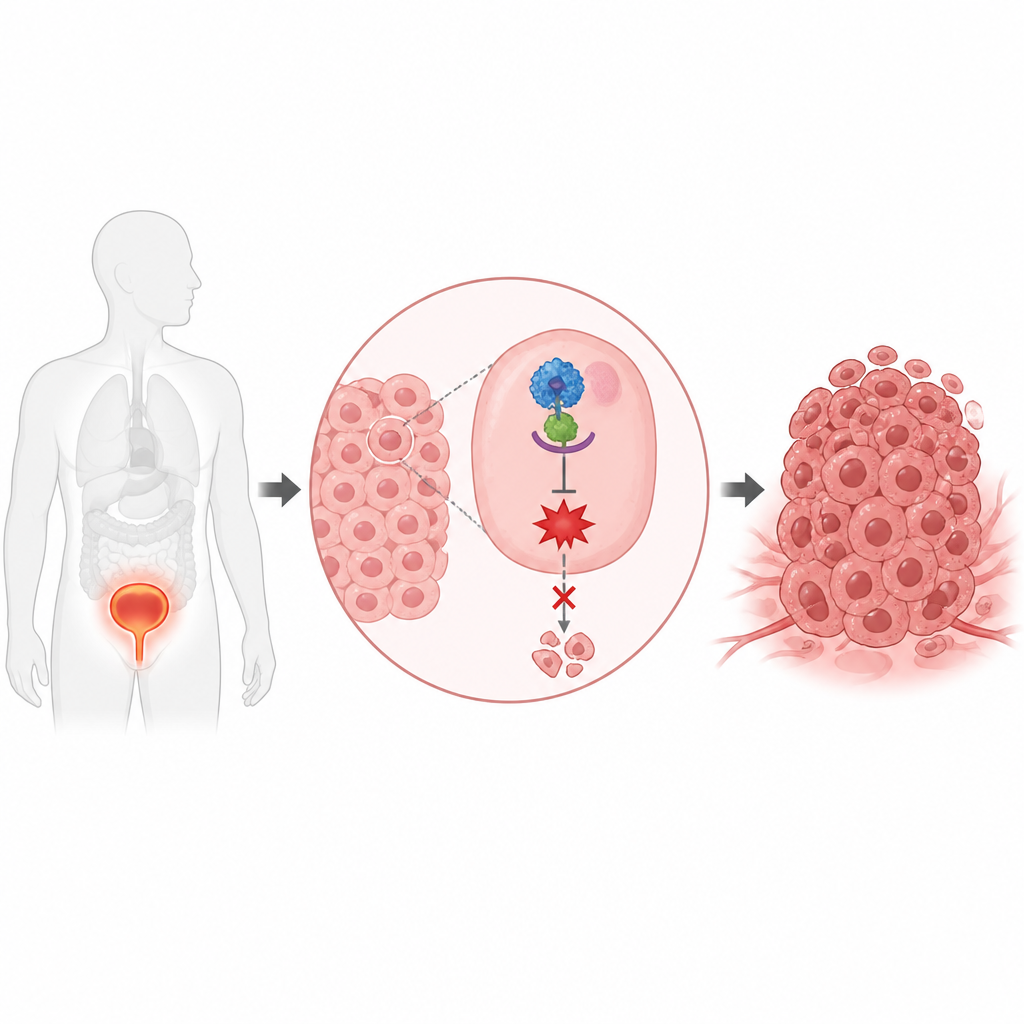
The researchers focused on a gene called NT5DC2, previously linked to cancer growth and to ferroptosis in other tumor types. By mining large public datasets, they found that NT5DC2 levels are much higher in bladder cancer tissue than in normal bladder tissue, and that patients with more NT5DC2 tend to have poorer survival. In cell experiments, turning down NT5DC2 slowed the growth of bladder cancer cells, reduced their ability to migrate and invade, and shrank tumors in mice. Turning NT5DC2 up had the opposite effect, helping cancer cells multiply and spread more easily.
How cancer cells dodge ferroptosis
To understand how NT5DC2 protects tumor cells, the team tested several cell death pathways at once. When NT5DC2 was silenced, bladder cancer cells showed hallmarks of ferroptosis: less of the protective proteins NRF2, GPX4 and Ferritin; higher levels of reactive oxygen molecules, damaged fats, and iron; and lower levels of the antioxidant glutathione. A chemical that blocks ferroptosis largely reversed these changes and restored the cells’ ability to grow, move, and invade. These findings indicate that NT5DC2 helps bladder cancer cells survive in part by keeping ferroptosis turned off.
A protective partnership inside the cell
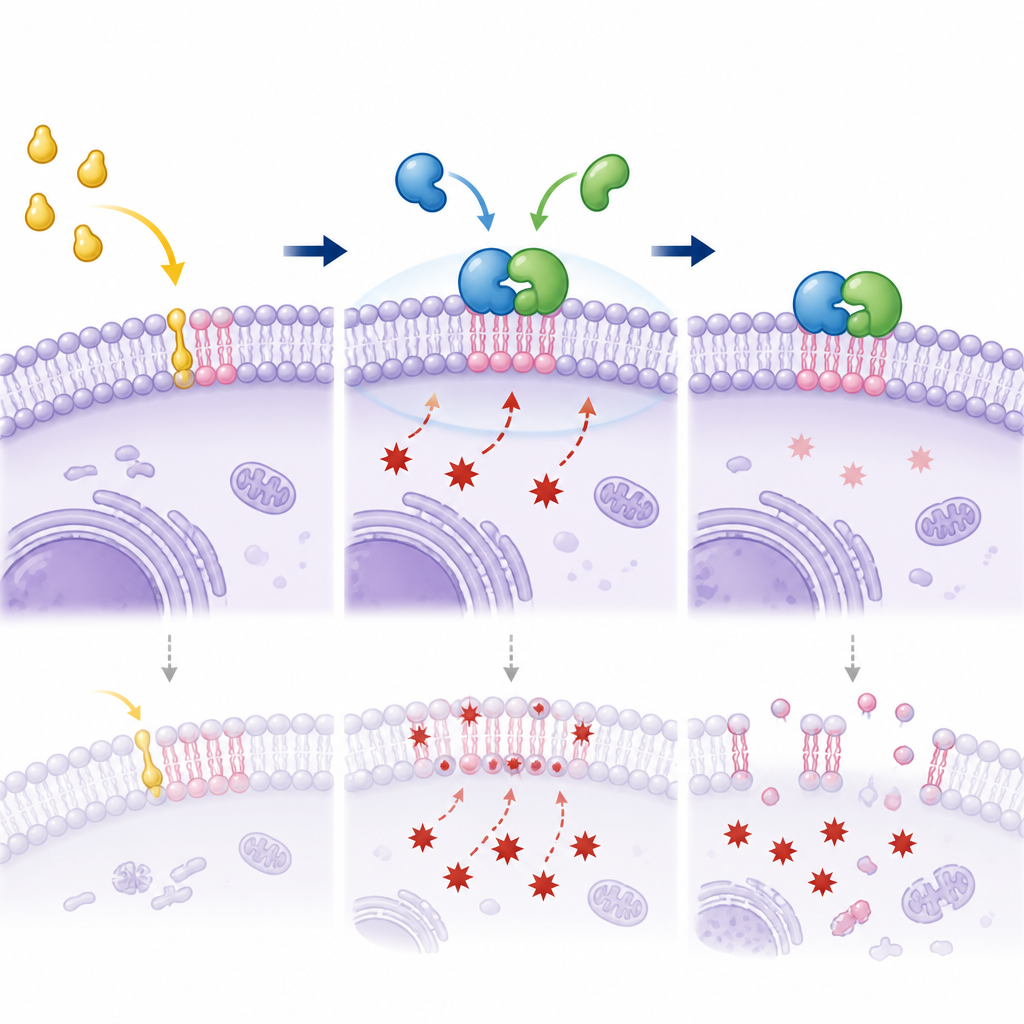
The investigators then asked which other molecules NT5DC2 works with. Using protein fishing techniques, they identified ACSL3, an enzyme that activates certain fatty acids and is known to shield cells from ferroptosis. NT5DC2 physically binds to ACSL3 and makes it more stable by reducing its tagging with ubiquitin, a signal that normally marks proteins for destruction. When NT5DC2 levels are high, ACSL3 protein accumulates, even though its genetic message does not change. Reducing ACSL3 in bladder cancer cells slowed their growth and made them more prone to ferroptosis, mirroring the effects of NT5DC2 loss. Importantly, restoring ACSL3 in NT5DC2-deficient cells rescued much of their growth and ferroptosis resistance, showing that ACSL3 is a key partner in this survival pathway.
Fat from the body’s own tissues joins in
The story does not stop inside the tumor cell. Oleic acid, a common dietary fat that is enriched in lymph nodes where tumors often spread, was found to boost the levels of both NT5DC2 and ACSL3 protein in bladder cancer cells. This boost mainly occurred after the proteins were made, rather than by increasing their gene activity. Oleic acid treatment helped cells resist a ferroptosis-triggering drug, but this protection disappeared when either NT5DC2 or ACSL3 was knocked down. These results suggest that fats present in the body’s own tissues can feed into the NT5DC2–ACSL3 partnership, further helping bladder cancer cells withstand ferroptosis during growth and spread.
What this could mean for future treatment
Put simply, this study shows that bladder cancer cells can team up two proteins, NT5DC2 and ACSL3, to block a self-destruct process that would otherwise kill them. NT5DC2 prevents ACSL3 from being broken down, ACSL3 helps protect cell membranes from damage, and together they shield tumor cells from ferroptosis and support more aggressive behavior. Interrupting this partnership, or weakening the oleic acid signal that strengthens it, could make bladder tumors more vulnerable to treatments that trigger ferroptosis. While more work in patients is needed, the NT5DC2–ACSL3 axis now stands out as a promising target for more effective bladder cancer therapies.
Citation: Niu, S., Yang, P., Yao, Y. et al. NT5DC2 inhibits ferroptosis by stabilizing ACSL3 in bladder cancer. Cell Death Discov. 12, 235 (2026). https://doi.org/10.1038/s41420-026-03091-1
Keywords: bladder cancer, ferroptosis, NT5DC2, ACSL3, oleic acid