Clear Sky Science · en
Ubiquitin ligase RCHY1 regulates autophagosome-lysosome fusion
Cells and Their Inner Recycling System
Every cell in our body runs a busy recycling center that breaks down worn-out parts and clears away clutter. When this clean-up system falters, damaged material can pile up, contributing to diseases and ageing. This study explores a little-known helper protein called RCHY1 that keeps a key step of cellular recycling running smoothly, revealing how cells merge waste-filled bubbles with digestive bubbles to complete the job.
How Cellular Clean Up Normally Works
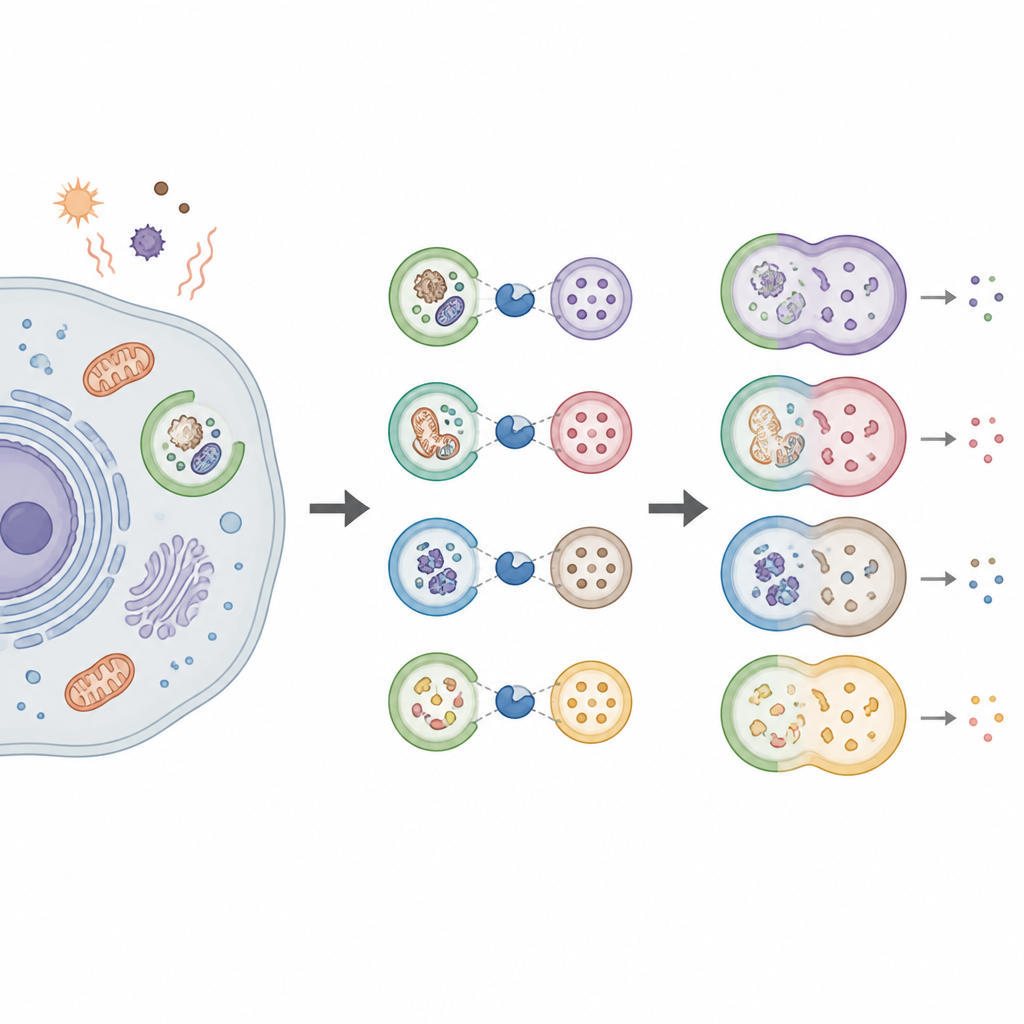
Cells rely on a process known as self-eating to recycle their own components when nutrients are scarce or when old parts need to be removed. In this process, unwanted material is first wrapped inside a double-membrane bubble, forming a recycling packet. This packet then needs to fuse with a separate digestive bubble, packed with corrosive enzymes, so that its cargo can be broken down and reused. The smooth joining of these two bubbles is crucial; if they fail to meet and merge, cellular junk accumulates and normal functions can suffer.
The Role of RCHY1 in Fruit Fly Gut Cells
The researchers first turned to the fruit fly, a powerful model for studying programmed cell removal during development. As fly larvae transform, parts of their gut are deliberately dismantled using the recycling pathway. By dialing down RCHY1 only in these gut cells, the team found that old tissue lingered longer than it should have, and recycling bubbles piled up. Detailed imaging showed that early steps of bubble formation were intact, but fully formed recycling packets were not fusing efficiently with digestive bubbles, pointing to a specific block at the fusion stage.
Strange Hybrid Bubbles and Traffic Jams
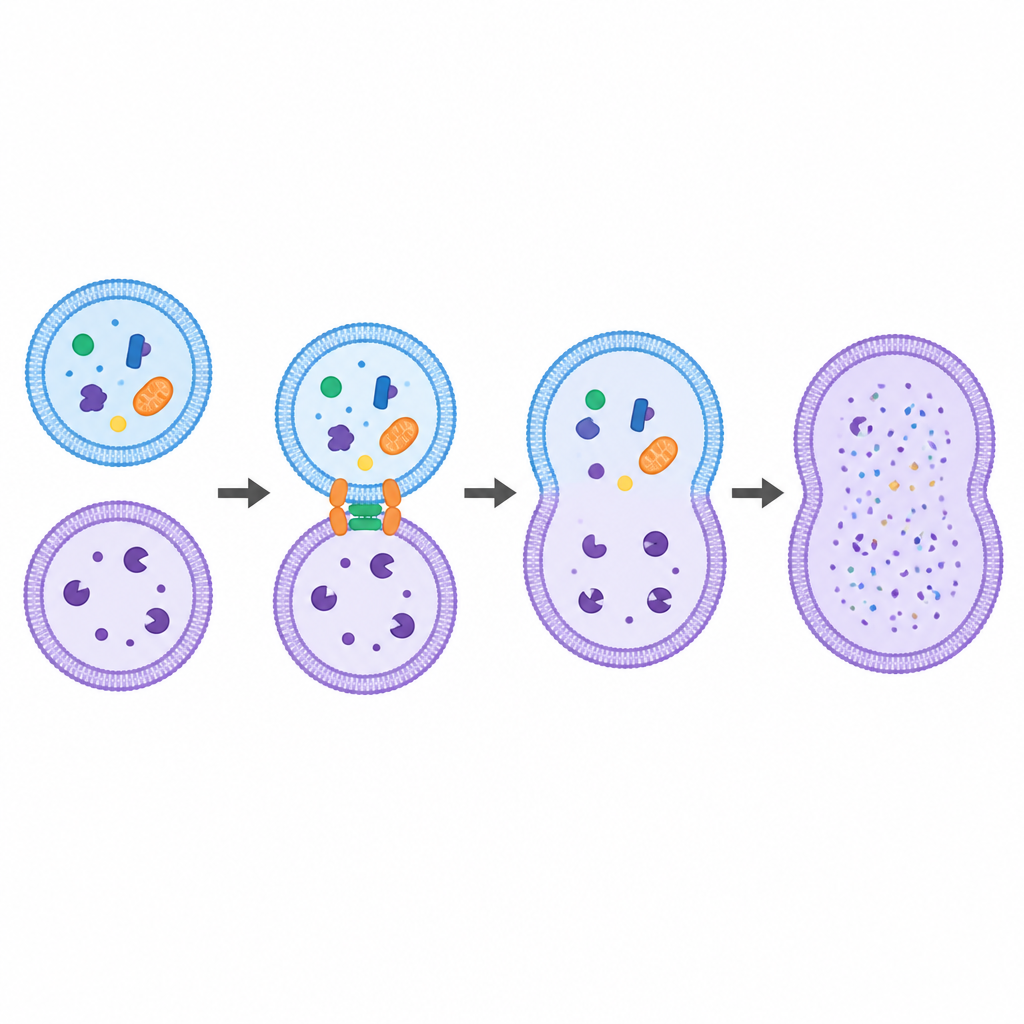
Under the electron microscope, fly gut cells lacking RCHY1 were filled with large hybrid bubbles containing both recycling packets and material from another cellular delivery route. These structures, called amphisomes, form when recycling packets merge with transport bubbles that normally carry material to digestion sites. Their build-up suggested that, when the usual fusion with digestive bubbles is disturbed, cells reroute cargo into these hybrids instead. Additional markers revealed more late transport bubbles and altered acidity inside digestive bubbles, reinforcing the idea that RCHY1 helps guide recycling packets to the right destination for proper breakdown.
Conserved Function in Human Cells
To see whether this role is shared in humans, the team reduced RCHY1 levels in cultured human cancer cells and tracked a standard recycling marker protein. When cells were starved to trigger recycling, loss of RCHY1 caused a slowdown in the rate at which recycling packets were cleared. Using a dual-color fluorescent reporter that changes appearance once a packet merges with a digestive bubble, the scientists observed that packets accumulated while fully merged digestion bubbles became rarer. This pattern mirrored the fly results, suggesting that RCHY1 plays a similar fusion-supporting role in both species, especially under nutrient stress.
What This Means for Cell Health
Taken together, the findings position RCHY1 as a key assistant that helps recycling packets fuse with digestive bubbles, allowing their contents to be dismantled and reused. Without this helper, cells assemble the packets but struggle to complete the final fusion step, leading to traffic jams of half-processed material and the rise of hybrid bubbles. While the exact molecular target of RCHY1 remains unknown, uncovering its role in this critical junction of the recycling pathway offers new clues about how cells maintain internal cleanliness and how failures in this system may contribute to disease.
Citation: Umargamwala, R., Manning, J., Carosi, J.M. et al. Ubiquitin ligase RCHY1 regulates autophagosome-lysosome fusion. Cell Death Discov. 12, 247 (2026). https://doi.org/10.1038/s41420-026-03088-w
Keywords: autophagy, lysosome fusion, RCHY1, cellular recycling, Drosophila midgut