Clear Sky Science · en
Cannabinoid type 2 receptor regulates skeletal muscle regeneration by NLRP3-GSDMD mediated macrophage pyroptosis after injury
Why this matters for sore and injured muscles
Whether from a sports collision, a fall, or surgery, deep bruises to muscle can take weeks to heal and sometimes never fully recover. This study explores a surprising player in that healing process: a cannabis-related switch on immune cells called the CB2 receptor. By uncovering how this switch calms damaging inflammation after muscle injury, the researchers point to new ways medicines based on the body’s own cannabis system might help muscles rebuild faster and stronger.
From bruise to repair: a delicate balancing act
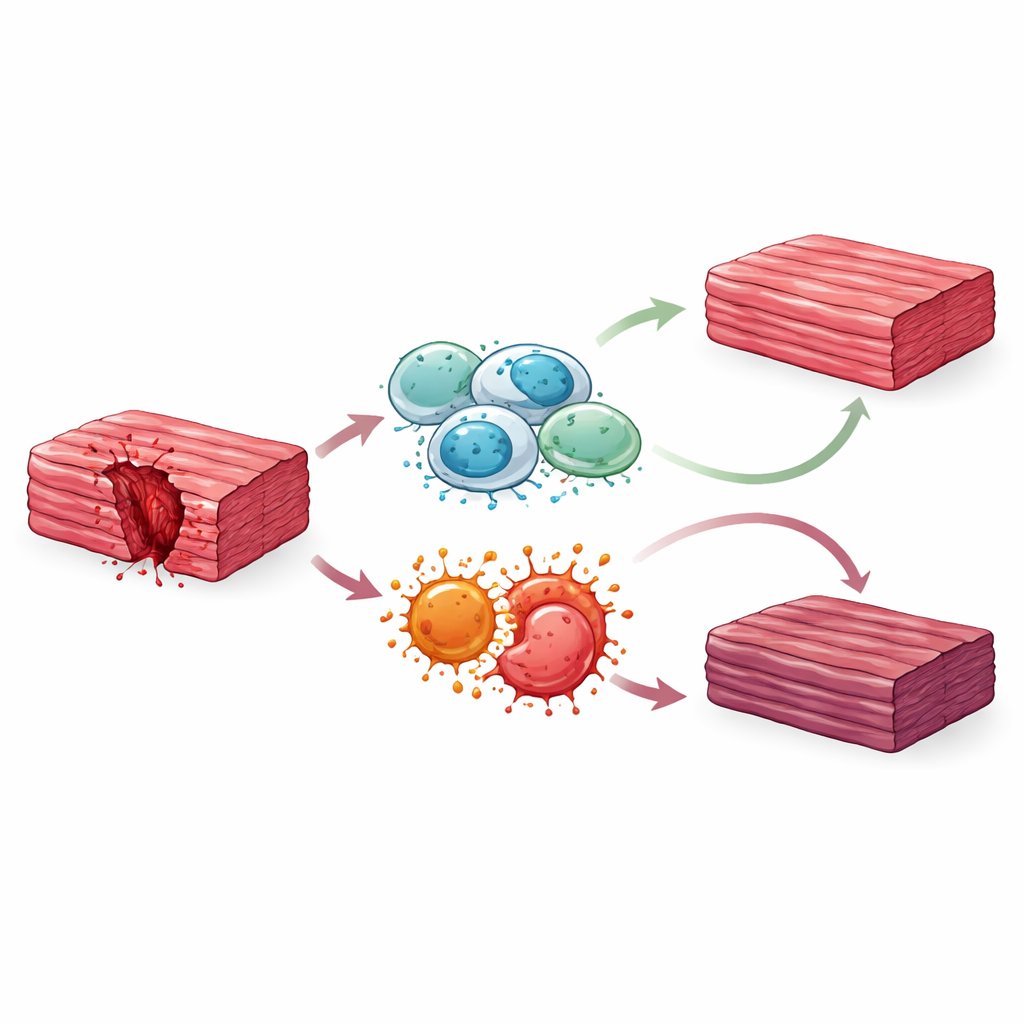
When a muscle is badly bruised, its fibers tear and bleed, triggering a rapid clean‑up response. Immune cells called macrophages rush in to remove dead tissue and signal stem‑like muscle cells to start rebuilding. For repair to go well, this early "attack" phase of inflammation must later switch to a calmer, nurturing phase. If the inflammatory response stays too fierce for too long, it can damage nearby healthy fibers and slow or even derail regeneration. The authors used a mouse model of blunt muscle contusion to watch this process unfold over time and asked which cells were responsible for the most intense, damaging form of inflammatory cell death in the injured area.
When immune cells explode instead of help
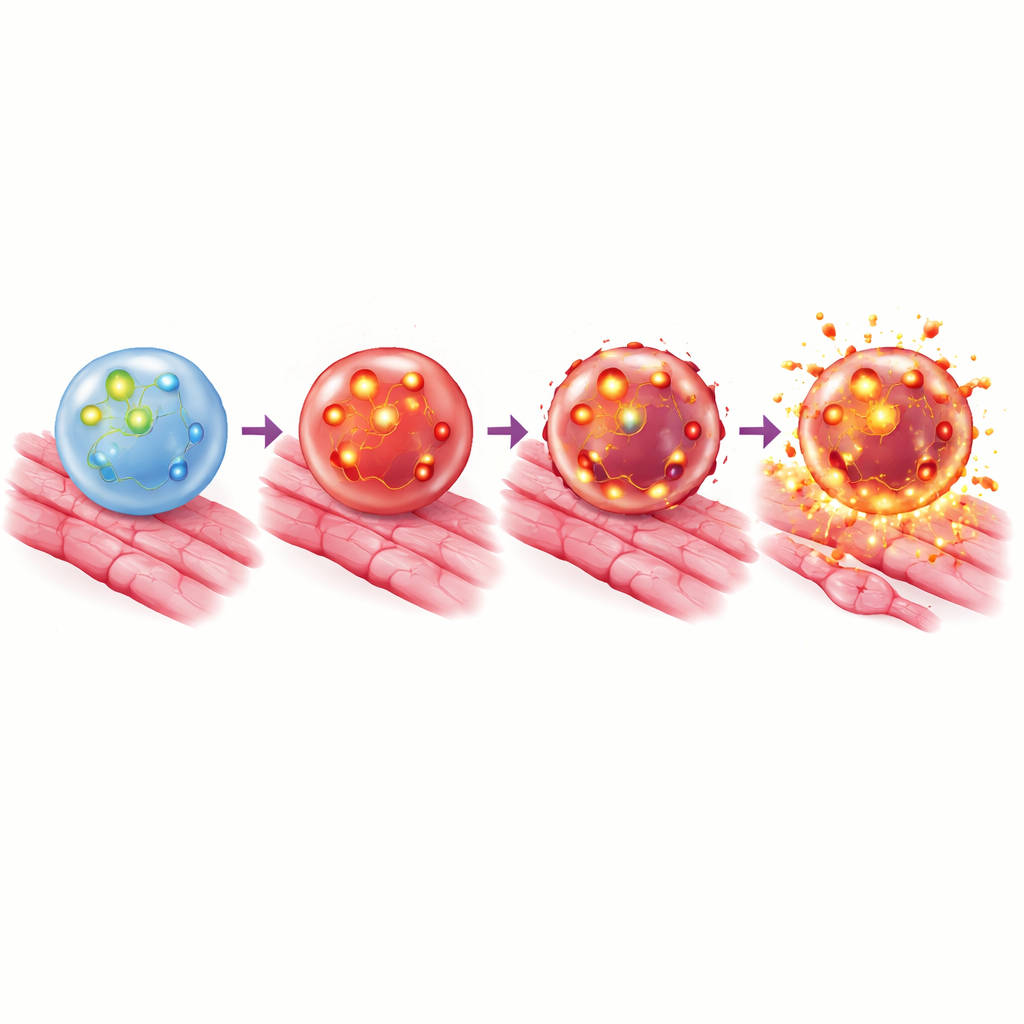
The team focused on a highly inflammatory type of cell death called pyroptosis, in which cells swell, burst, and spew out powerful alarm molecules. They found that, in the first week after injury, pyroptosis surged inside the damaged muscle, peaking around day three. Detailed staining and cell culture experiments showed that this explosive death happened mainly in macrophages, not in muscle cells themselves. When macrophages underwent pyroptosis, they released well‑known inflammatory messengers that are able to harm tissue and interfere with the muscle’s own repair programs.
A cannabis-linked switch that reins in the fire
Next, the researchers asked how the CB2 receptor, a sensor for cannabis‑like molecules made by our own bodies, affects this process. CB2 is abundant on immune cells and is known to temper inflammation in organs such as the liver and brain. After muscle injury, CB2 levels on macrophages rose sharply. Mice engineered to lack CB2 had more macrophage pyroptosis, more inflammatory messengers, and more immune cell crowding at the injury site. Their new muscle fibers were smaller and fewer, and key muscle‑building proteins were reduced. In contrast, activating CB2 with a drug improved fiber size and boosted muscle‑regeneration markers, suggesting that CB2 acts as a brake that helps immune cells support, rather than sabotage, repair.
Tracing the signal pathway and testing the consequences
To understand how CB2 applies this brake, the team examined a chain of molecular switches inside cells known for driving inflammation. In CB2‑deficient mice and macrophages, a signaling route involving PI3K, AKT, and NF‑κB was overactive, and this overactivity went hand‑in‑hand with more pyroptosis. Blocking this pathway with a separate drug dialed down the inflammatory death process even when CB2 was missing, showing that CB2 normally keeps this route in check. Genetically deleting a key pyroptosis trigger, NLRP3, in CB2‑deficient mice also restored muscle‑building proteins and fiber growth, tying CB2’s benefits directly to the control of this death machinery. Finally, when muscle precursor cells were bathed in fluid taken from CB2‑deficient macrophages, they struggled to mature, an effect largely traced to excess inflammatory signals released during pyroptosis.
What this means for future muscle treatments
Put simply, the study shows that a cannabis‑related receptor on immune cells helps muscles heal by preventing those cells from going into a self‑destructive, explosive mode that floods the tissue with harmful signals. By calming a specific inflammatory pathway inside macrophages, CB2 preserves a friendlier environment in which new muscle fibers can grow and mature. These findings suggest that drugs activating CB2—or otherwise blocking the same inflammatory route—could one day be used to speed recovery after severe bruises, surgery, or other muscle injuries by nudging the immune response from destructive fury toward constructive repair.
Citation: Li, X., Yuan, H., Mu, S. et al. Cannabinoid type 2 receptor regulates skeletal muscle regeneration by NLRP3-GSDMD mediated macrophage pyroptosis after injury. Cell Death Discov. 12, 198 (2026). https://doi.org/10.1038/s41420-026-03077-z
Keywords: skeletal muscle regeneration, macrophage inflammation, pyroptosis, cannabinoid CB2 receptor, tissue repair