Clear Sky Science · en
Targeting the ODC1-YBX1 axis reverses gastric cancer chemoresistance via transcriptional control of SLC7A11-mediated ferroptosis
Why this research matters for stomach cancer
Many people with advanced stomach cancer receive chemotherapy, yet the disease often finds ways to fight back and keep growing. This study explores a newly discovered weak spot in resistant stomach tumors: a form of iron-driven cell death called ferroptosis. By learning how cancer cells shut this death pathway off, the researchers suggest new ways to switch it back on and make standard drugs work better again. 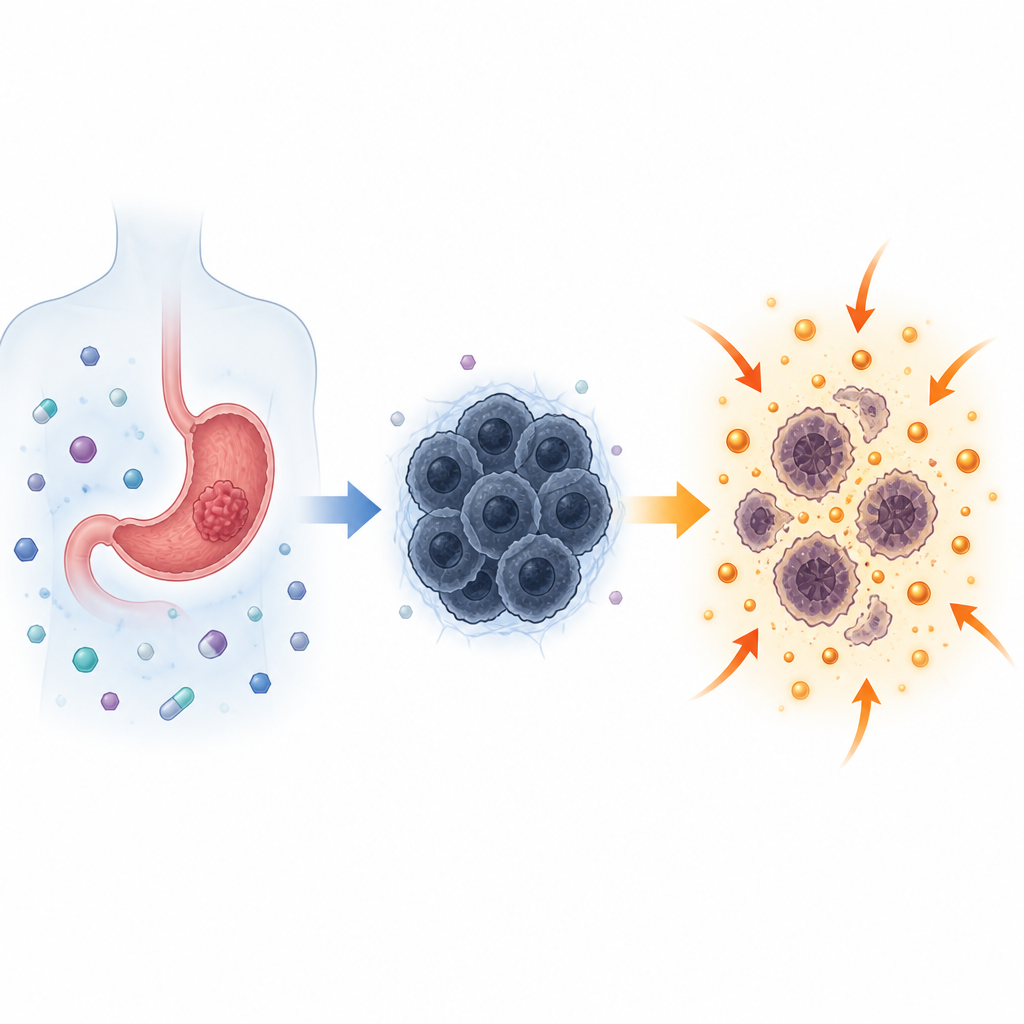
A hidden engine of tumor growth
The team focused on a molecule called ODC1, an enzyme that helps cells make small charged molecules known as polyamines, which support rapid growth. By analyzing large patient datasets and tumor samples, they found that ODC1 levels are consistently higher in gastric adenocarcinoma, the most common type of stomach cancer, than in nearby normal tissue. High ODC1 levels were linked with more advanced disease and worse long term survival, marking it as both a growth promoter and a poor prognosis marker.
ODC1 helps stomach tumors shrug off chemotherapy
Because many patients eventually stop responding to the widely used drug 5 fluorouracil (5 Fu), the researchers created stomach cancer cell lines that had been slowly trained to resist this drug. These resistant cells grew more slowly but survived chemotherapy much better than their parent cells. The scientists discovered that ODC1 was sharply increased in the resistant cells. When they reduced ODC1 levels, the cells became sensitive to 5 Fu again, both in dishes and in mice carrying human tumor grafts, indicating that ODC1 is a key driver of chemoresistance.
Iron driven cell death and the cell’s safety shield
Next, the group asked how ODC1 protects cancer cells. They found signs of ferroptosis, a kind of cell death fueled by iron and harmful lipid damage, when ODC1 was blocked. Cells lacking ODC1 built up reactive oxygen species, lipid peroxides, and iron, while losing protective molecules such as glutathione. A chemical that specifically stops ferroptosis rescued the cells, showing that this pathway was central. Digging deeper, the researchers traced the protection to a transport protein called SLC7A11, which normally brings building blocks into cells so they can make glutathione and neutralize damage. 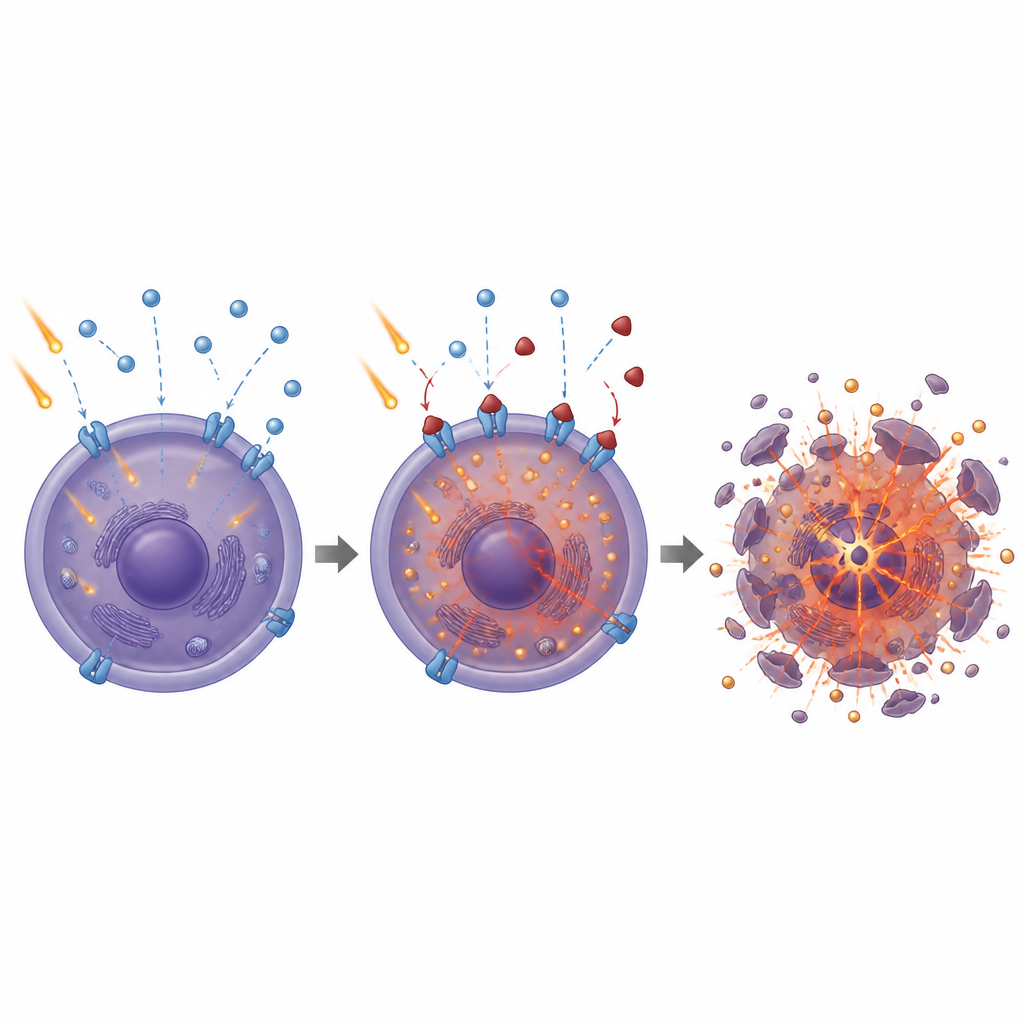
A molecular relay that controls the death switch
The study revealed that ODC1 does not act alone. It physically binds to another protein, YBX1, which can latch onto DNA and control gene activity. Together, ODC1 and YBX1 formed a complex that attached to the starting region of the SLC7A11 gene and boosted its production, strengthening the cell’s antioxidant shield and blocking ferroptosis. When YBX1 was silenced, SLC7A11 levels fell and cells became more prone to iron driven death, an effect that could be reversed by artificially restoring SLC7A11 or by activating another protective enzyme, GPX4. This confirmed that the ODC1 YBX1 pair guards the ferroptosis switch mainly through SLC7A11.
Turning resistance into vulnerability
Finally, the researchers tested whether drugs that interfere with this shield could help overcome resistance. They used erastin, a compound that blocks SLC7A11. In chemoresistant cells with high YBX1 and SLC7A11, erastin greatly increased lipid damage, iron buildup, and cell death when combined with 5 Fu. In mice bearing resistant tumors, the same combination reduced tumor growth and lowered markers of cell division. These findings outline an “ODC1 YBX1 SLC7A11 ferroptosis” pathway that stomach cancers exploit to dodge chemotherapy and suggest that disabling this axis could restore the killing power of standard treatments.
What this means for patients
In plain terms, the study shows that some stomach cancers survive chemotherapy by strengthening an internal safety system that prevents iron driven cell death. ODC1 and YBX1 act like partners that turn up this shield through SLC7A11, helping tumors ride out treatment. Blocking ODC1 or SLC7A11, or directly boosting ferroptosis, could weaken that shield and make existing drugs like 5 Fu more effective. While these strategies still need to be tested in clinical trials, they point toward new combination therapies that may one day help patients whose stomach cancers have stopped responding to current care.
Citation: Li, R., Baral, S., Zhao, F. et al. Targeting the ODC1-YBX1 axis reverses gastric cancer chemoresistance via transcriptional control of SLC7A11-mediated ferroptosis. Cell Death Discov. 12, 246 (2026). https://doi.org/10.1038/s41420-026-03067-1
Keywords: gastric cancer, chemoresistance, ferroptosis, ODC1, SLC7A11