Clear Sky Science · en
A unified therapeutic theory for treating cancer via master regulators of the universal apoptosis network
Why this new view of cancer matters
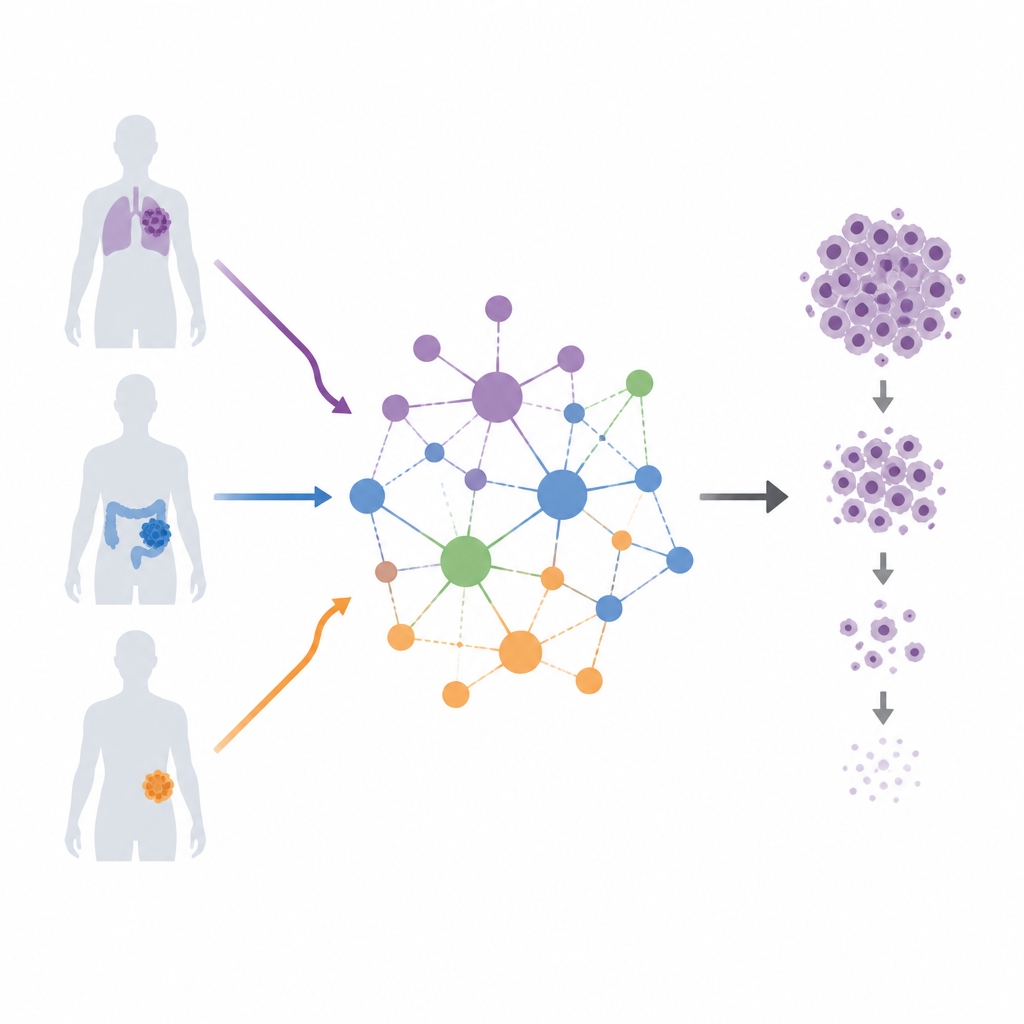
Cancer is usually treated based on where it appears in the body, such as the lung or breast. This article argues that what really matters is not the organ, but whether a cell’s built in self destruct program still works. By mapping how nearly one hundred cell death routes talk to each other, the authors propose a simple trio of cancer types and suggest ways to switch cancer cells back into a death mode while sparing healthy tissue.
How cells are supposed to die on cue
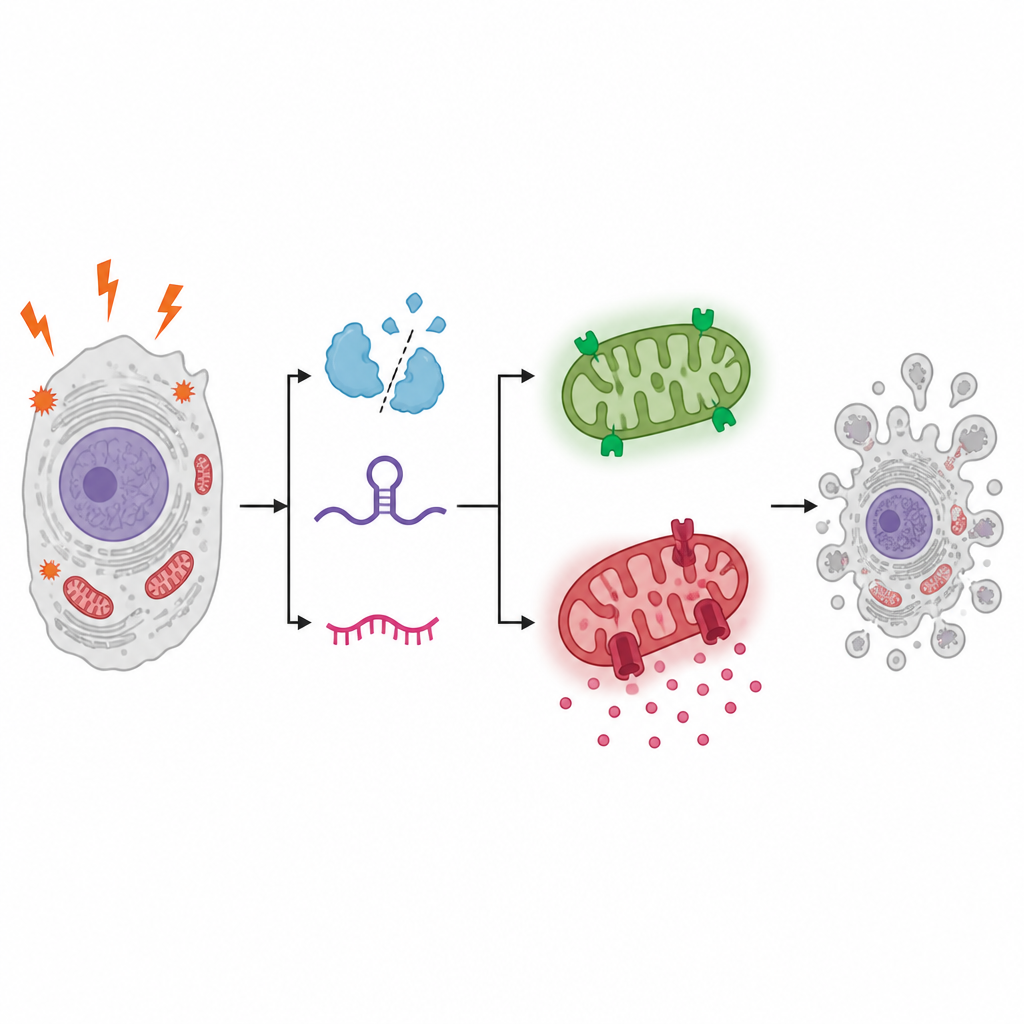
Healthy cells constantly decide whether to repair themselves or quietly die. This planned death, called apoptosis, keeps damaged or risky cells from turning cancerous. It relies on signals from stress sensors like the protein p53, a web of guardian proteins around the cell’s power stations, and a final set of cutting enzymes that dismantle the cell from within. When DNA damage or severe stress is too great, these systems open pores in the power stations, release death signals, and trigger an orderly shutdown instead of uncontrolled decay.
When the safety net fails in three main ways
After combing through 172 studies, the authors conclude that most cancers can be grouped into three families based on how this safety net breaks. In Cancer Type 1, cells have lost either a working p53 gene or a partner gene called P14ARF, so they ignore warning signs from an overactive growth driver called c myc. In Cancer Type 2, the p53 gene is intact but a helper molecule named DINO, which is needed to boost p53’s action, is switched off. In Cancer Type 3, p53 protein is still made but is muzzled by an overabundant brake protein called MDM2. In all three cases, cells that should self destruct instead continue to grow.
A protein that can both protect and kill
At the center of this network sits a protein called HuR, which binds to RNA messages and decides how long they last. Under mild stress, HuR helps cells survive by stabilizing messages for protective proteins, blood vessel growth, and strong antioxidant defenses. Under severe, irreparable damage, HuR moves out of the nucleus and is cut into pieces. These fragments flip HuR’s role: they stabilize messages for a key death enzyme and block some growth signals, pushing the cell toward apoptosis. Because cancer cells tend to stockpile HuR in the wrong place, tipping it into this death promoting mode could selectively hurt tumors more than healthy tissues.
Turning three weak spots into treatment plans
Using their unified map, the authors match each cancer family with a main therapeutic idea plus a common backup plan. For cancers missing p53 or P14ARF (Type 1), they argue that simply blocking HuR is risky, because it removes both its harmful and helpful roles. Instead, they propose drugs that force HuR to be cleaved into its death promoting fragments, which raise levels of a central caspase enzyme and dampen c myc driven growth. For cancers that silence DINO (Type 2), reactivating the DINO control region by reversing its chemical “off” mark could restore p53 driven cell death, again with HuR cleavage as a secondary route. For tumors where MDM2 smothers p53 (Type 3), the better strategy is to inhibit a microRNA called miR 125b that normally dampens both P14ARF and p53; removing this brake would let P14ARF restrain MDM2 and free p53 to do its job.
What this unified cancer theory means
Instead of viewing each tumor as a unique disease tied to a particular organ, this work suggests that many cancers fall into just three molecular stories about how cells escape self destruction. The same three switches HuR, DINO, and miR 125b then become handles for therapy, regardless of where the tumor sits in the body. While these ideas still need extensive testing, they offer a path toward treatments that are guided by the inner life and death decisions of cells rather than by anatomy alone, potentially allowing more precise and less damaging ways to push cancer cells back toward programmed death.
Citation: Joseph, D., Kongoli, F., You, F. et al. A unified therapeutic theory for treating cancer via master regulators of the universal apoptosis network. Cell Death Discov. 12, 213 (2026). https://doi.org/10.1038/s41420-026-03066-2
Keywords: apoptosis, p53, HuR, cancer classification, MDM2