Clear Sky Science · en
Therapeutic potential of cAMP-mediated lysosomal pH modulation in ATP6V1B2-related neuropathology
Why Tiny Cell Recyclers Matter for the Brain
Inside every cell, especially in the brain, tiny recycling centers called lysosomes break down worn-out components so they can be reused. When these structures lose their acidic “bite,” waste builds up and cells begin to malfunction. This study explores how a rare genetic fault that blunts lysosome activity can lead to seizures and learning problems—and shows that a small signaling molecule may be able to retune these miniature recyclers and restore healthier brain function.
A Gene That Upsets the Brain’s Inner Cleaners
The researchers focused on a gene called ATP6V1B2, which encodes part of a molecular pump that keeps lysosomes acidic. Variants in this gene are known to cause syndromes that include deafness, abnormal nails, developmental delay, and in many cases epilepsy and intellectual disability. By combining new cases from Chinese families with all published reports, the team showed that problems in the central nervous system—seizures, delayed development, and impaired thinking—are the main drivers of illness in people with ATP6V1B2 mutations. In more than two thirds of reported patients, epilepsy appears, and more than four out of five show some degree of cognitive impairment, highlighting how strongly this gene is tied to brain function.
How a Broken Pump Changes Cell Chemistry
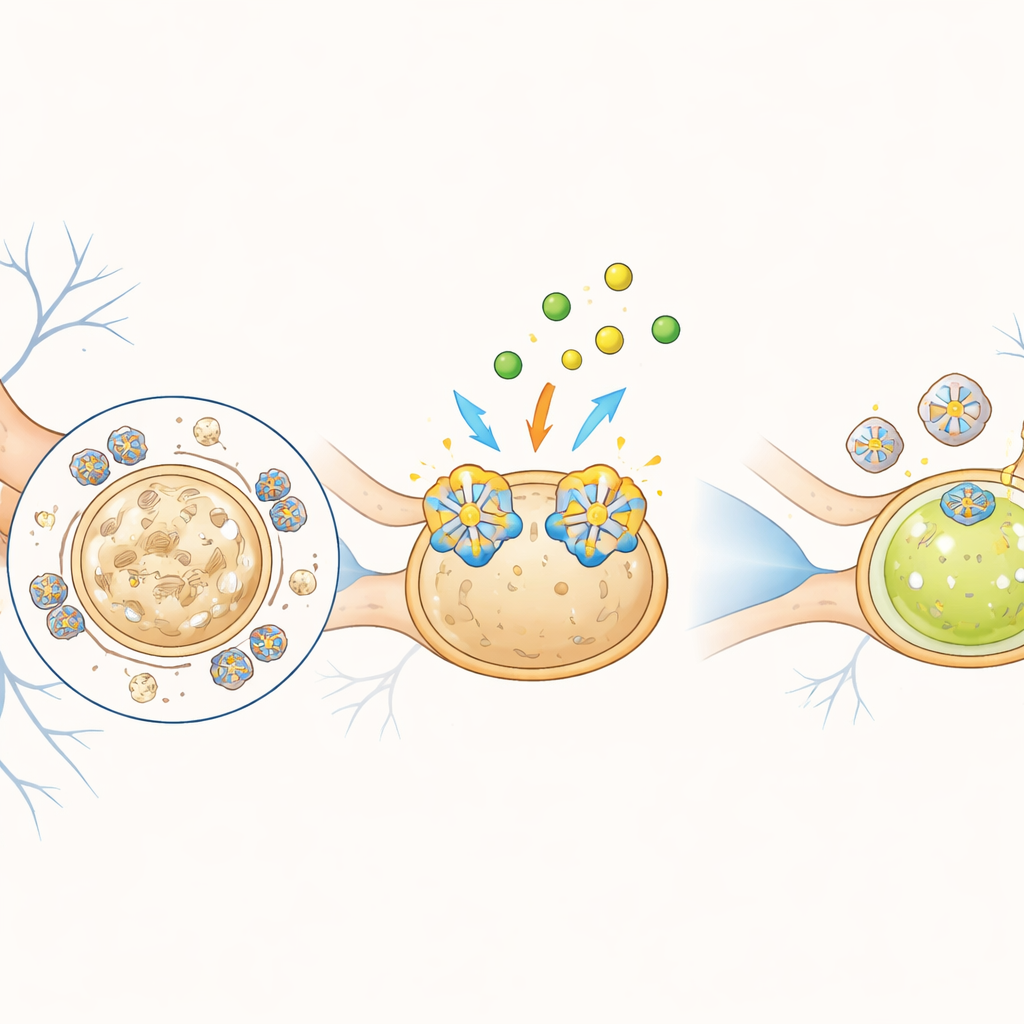
To see what goes wrong inside cells, the scientists used gene-editing tools to create human cell lines carrying the same damaging mutation seen in patients. They then equipped these cells with a fluorescent sensor that changes color depending on acidity inside lysosomes. Compared with normal cells, those with one faulty gene copy had modestly less acidic lysosomes, while cells with two faulty copies showed a marked loss of acidity. This shift disrupted the cells’ internal waste-handling system: waste-carrying bubbles called autophagosomes piled up, key digestive enzymes matured poorly, and stress markers on lysosome membranes rose. In parallel, mice engineered with the same mutation developed spontaneous seizures and learning and memory problems, linking the microscopic defect in acidity to whole-brain symptoms.
A Messaging Molecule as a Chemical Tuning Knob
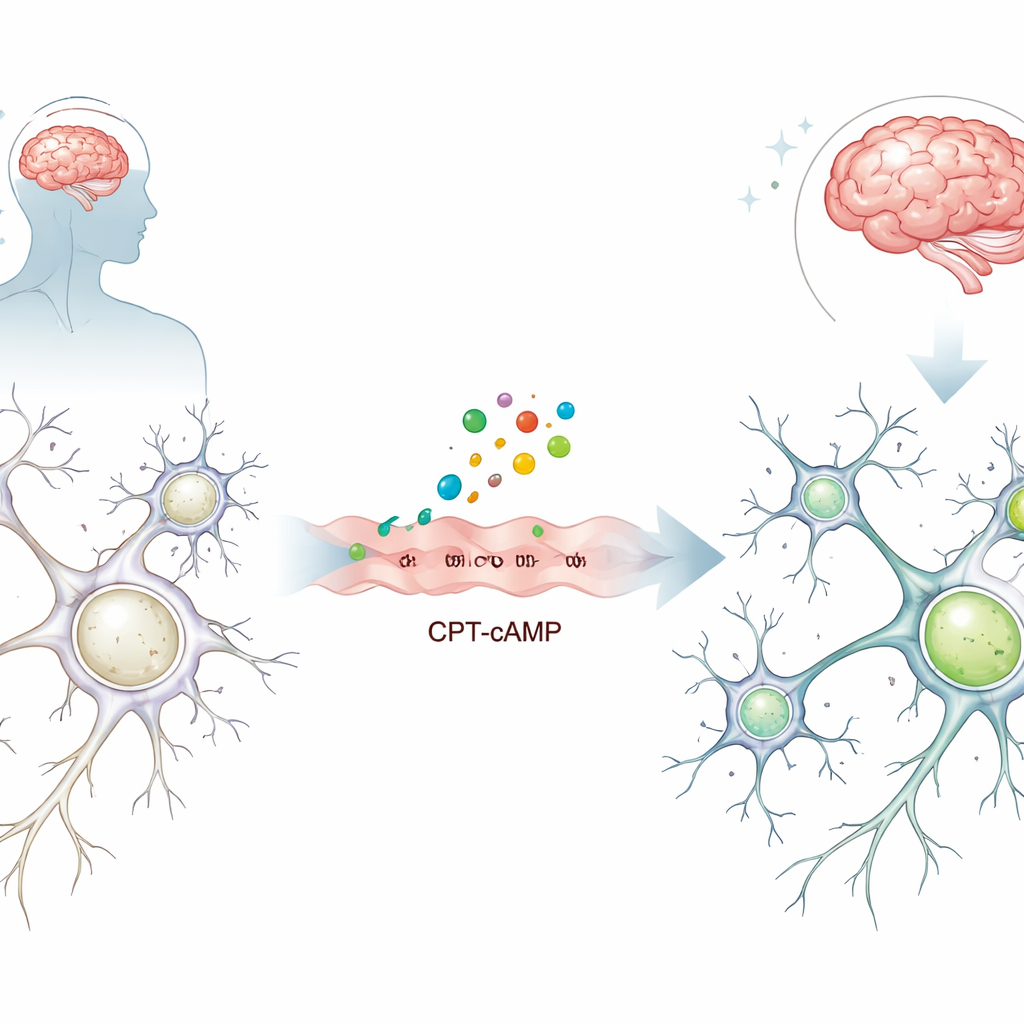
The team next searched for drugs that could restore the lysosomes’ acidic state. They tested three candidates and found that a membrane‑permeable form of the common signaling molecule cAMP—called CPT‑cAMP—stood out. At very low doses, CPT‑cAMP shifted lysosomal pH in mutant cells back toward normal, with a clear dose–response pattern, and did so without killing cells. It also reversed the build‑up of autophagosomes, restored processing of digestive enzymes, and normalized the appearance of lysosomes under an electron microscope. Importantly, when given to mice by injection, CPT‑cAMP entered the bloodstream, crossed into the brain, and reached measurable levels there, suggesting it could realistically reach its cellular targets in living animals.
From Cell Repair to Calmer Brain Circuits
Armed with these encouraging results, the investigators treated mutant mice weekly with CPT‑cAMP from early life into young adulthood. In untreated animals, long‑term monitoring revealed frequent spontaneous seizures and extreme sensitivity to a convulsant chemical, often progressing to life‑threatening fits. CPT‑cAMP treatment nearly eliminated spontaneous seizures during recording sessions and made it harder to trigger convulsions: seizures were milder, took longer to start, and overall seizure scores were much lower. The drug also improved behavior in several memory and learning tests. Treated mice regained the ability to recognize new objects, learned to avoid a chamber where they had received a mild shock, and navigated a maze more efficiently, all without changes in their basic movement. In their hippocampal neurons, the backlog of autophagosomes shrank and lysosomal markers moved toward normal, pointing to a repair of the underlying housekeeping defect.
What This Could Mean for Future Treatments
Together, these findings propose a simple but powerful idea: gently restoring the acidity of lysosomes can ease both seizures and cognitive problems in a genetic brain disease driven by a faulty proton pump. CPT‑cAMP, by boosting the assembly or activity of that pump through existing signaling pathways, offers a proof‑of‑concept drug that acts on the root chemistry rather than just on symptoms. While further work is needed to test safety, long‑term effects, and relevance to human patients—and to explore similar strategies in other conditions where lysosomes falter—this study points toward a future in which fine‑tuning the cell’s recycling centers could become a new way to treat certain forms of epilepsy and intellectual disability.
Citation: Zheng, L., Zhao, W., Yang, G. et al. Therapeutic potential of cAMP-mediated lysosomal pH modulation in ATP6V1B2-related neuropathology. Cell Death Discov. 12, 199 (2026). https://doi.org/10.1038/s41420-026-03056-4
Keywords: lysosomal dysfunction, epilepsy, autophagy, cAMP signaling, neurodevelopmental disorder