Clear Sky Science · en
FKBP5 isoforms shape immune pathways related to tumor tolerance
How the Body’s Defenders Can Be Switched Between Rest and Attack
Our immune system must walk a fine line between attacking threats like cancer and avoiding damage to healthy tissues. This study explores how a single gene “switch” in immune cells can tilt that balance toward a stronger attack on tumors. By teasing apart two versions of a protein called FKBP51, the researchers show how tiny changes in cell machinery may influence whether the body tolerates a tumor or fights it.
A Tale of Two Protein Versions
The FKBP5 gene makes a protein called FKBP51 that helps control how immune cells respond to signals, including those that drive inflammation and cell growth. The gene can also be spliced into a shorter version, FKBP51s, which lacks part of the structure used for docking with other proteins. Earlier work suggested that the full-length protein boosts immune activity, while the shorter form tends to rein it in and also helps cancer cells display PD-L1, a “do not attack” signal to immune cells. These opposing roles led the authors to suspect that the balance between the two versions is central to how forcefully T cells expand and how long they stay active.
Building a Mouse with Only One Setting on the Switch
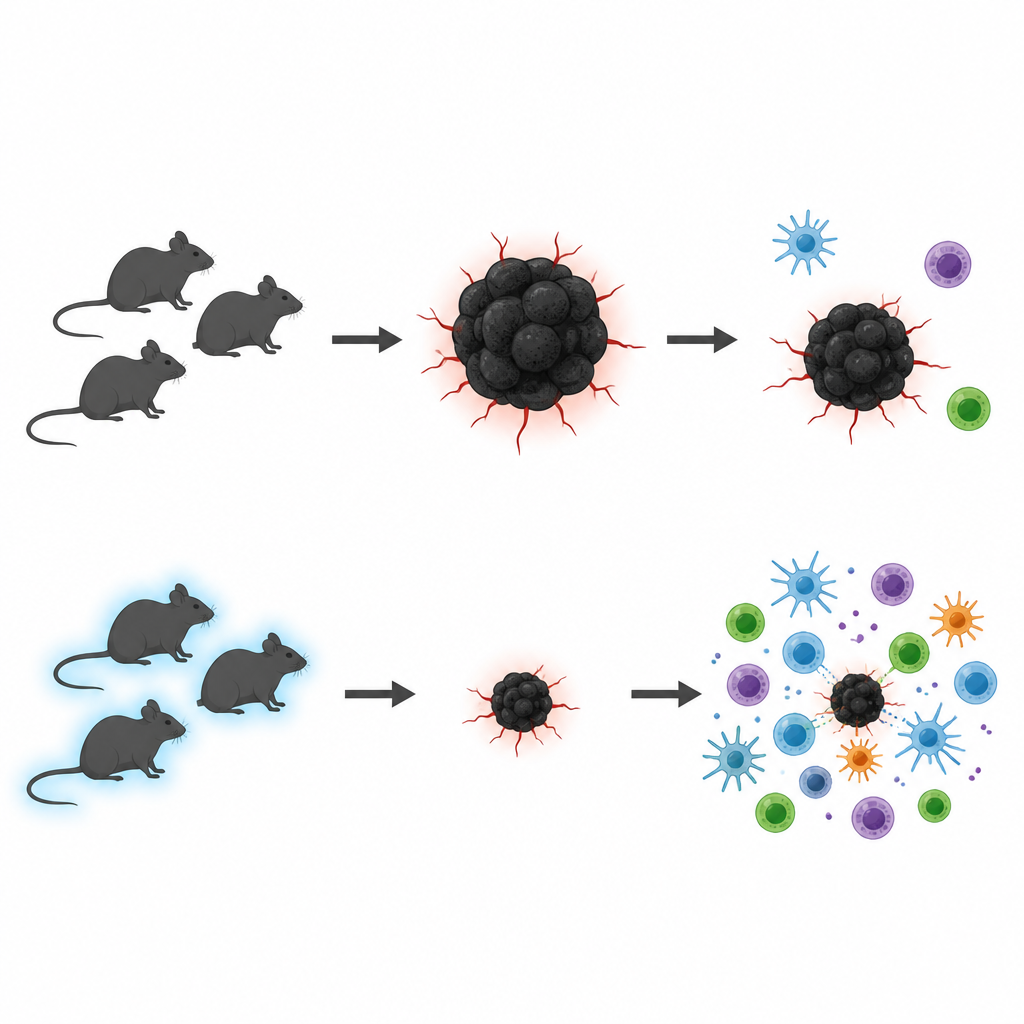
To test this idea, the team engineered a “humanized” mouse in which the mouse FKBP5 gene was replaced so that only the full-length human FKBP51 could be produced, with no room for alternative splicing into shorter forms. Mice carrying one copy of this modified gene were healthy and fertile, but animals with two copies appeared much less often than expected and were infertile. When the researchers examined their organs, they found widespread clusters of immune cells and distorted lymph nodes, a sign that immune balance was disturbed. These findings suggest that the short FKBP51s version normally helps keep immune activity under control in many tissues.
Turning Up the Heat on Melanoma
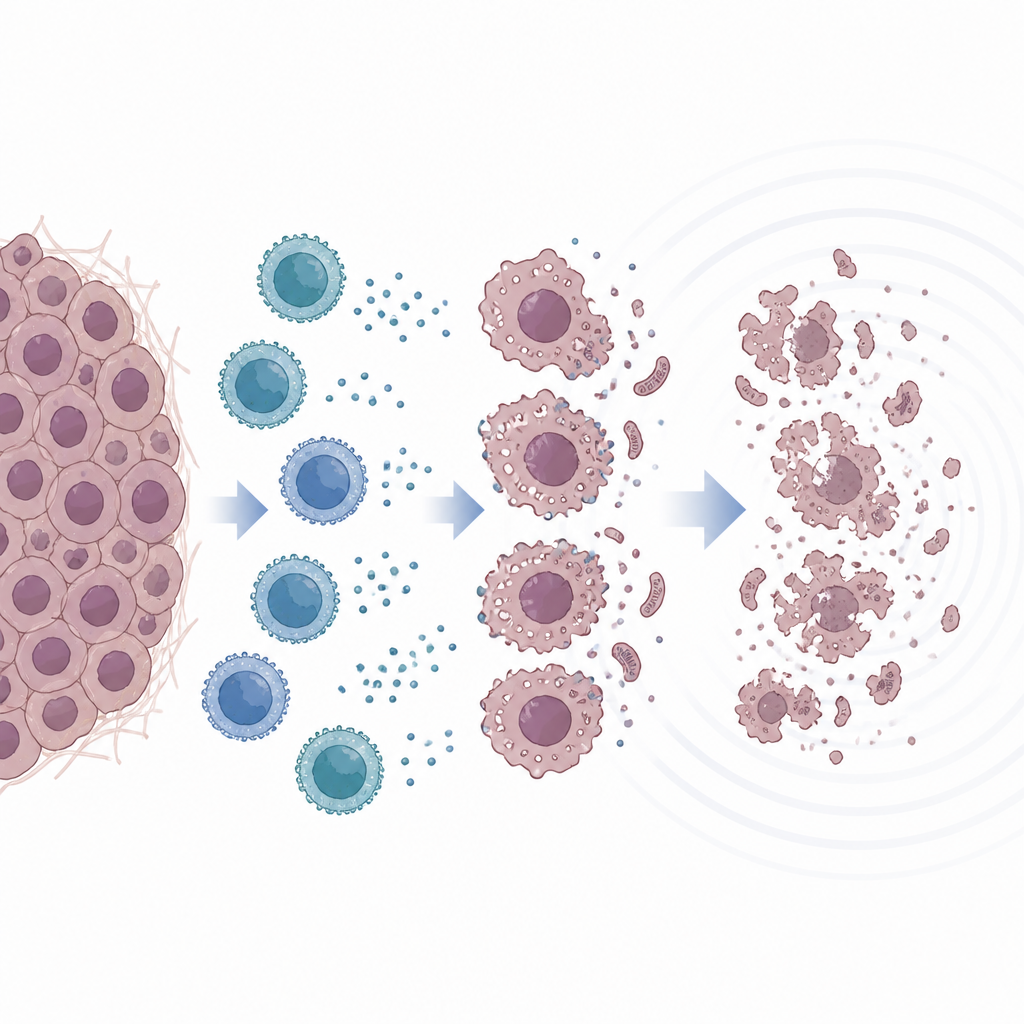
The next question was how this altered balance would affect cancer. In a melanoma model, tumor cells were implanted under the skin of normal mice and mice with one copy of the human FKBP51 gene. The modified mice grew much smaller tumors. Their cancers contained more invading T and B lymphocytes and fewer macrophages that typically dampen immune attack. Tumor samples from these mice showed higher levels of perforin and other molecules linked to cell killing, as well as signals of a fiery, pore-forming type of cell death that shreds tumor cells from within. Immune cells in the tumors also displayed more of certain “homing” receptors that help organize local immune reactions into sustained, well-structured responses.
Proving the Short Version Puts the Brakes On
To directly test how each form of FKBP51 affects immune cells, the researchers delivered synthetic messenger RNAs encoding either full-length FKBP51 or the shorter FKBP51s into mouse lymphocytes. Extra full-length FKBP51 pushed the cells to proliferate more strongly after stimulation, confirming that this version supports robust activation. In contrast, introducing FKBP51s sharply reduced lymphocyte growth and weakened the ability of killer T cells to discharge toxic granules and destroy melanoma cells in culture. These experiments show that FKBP51s behaves as a brake on T cell effector functions, while the full-length variant acts as the accelerator.
What This Means for Cancer Immunity
Taken together, the results point to alternative splicing of FKBP5 as a key layer of control over immune strength. When only the full-length FKBP51 is present, T cells remain more active and tumors are less tolerated. When the short FKBP51s form is available, it can curb activation and, by supporting PD-L1 on tumor cells, help cancers hide from attack. For a lay reader, the message is that cells use different “versions” of the same protein to dial immune responses up or down, and carefully steering this dial could one day help doctors make cancer treatments that rely on the immune system work better.
Citation: Romano, S., Marrone, L., Acanfora, G. et al. FKBP5 isoforms shape immune pathways related to tumor tolerance. Cell Death Discov. 12, 233 (2026). https://doi.org/10.1038/s41420-026-03047-5
Keywords: FKBP5, immune tolerance, tumor microenvironment, T cell activation, melanoma