Clear Sky Science · en
Lipid-anchored melanotransferrin mediates transferrin-independent iron uptake and ferritin storage in mammals
Why this iron story matters
Iron keeps our cells breathing, dividing, and defending themselves, yet too much or too little can damage vital organs and the brain. For decades, scientists thought they knew the main route by which iron slips into our cells, hitching a ride on a blood protein called transferrin. This study uncovers a parallel doorway that lets cells import iron without transferrin, using a little known surface protein called melanotransferrin. The work helps explain how bodies handle iron when the usual pathway falters and hints at new angles on diseases like cancer and Alzheimer’s.
Two roads for iron into cells
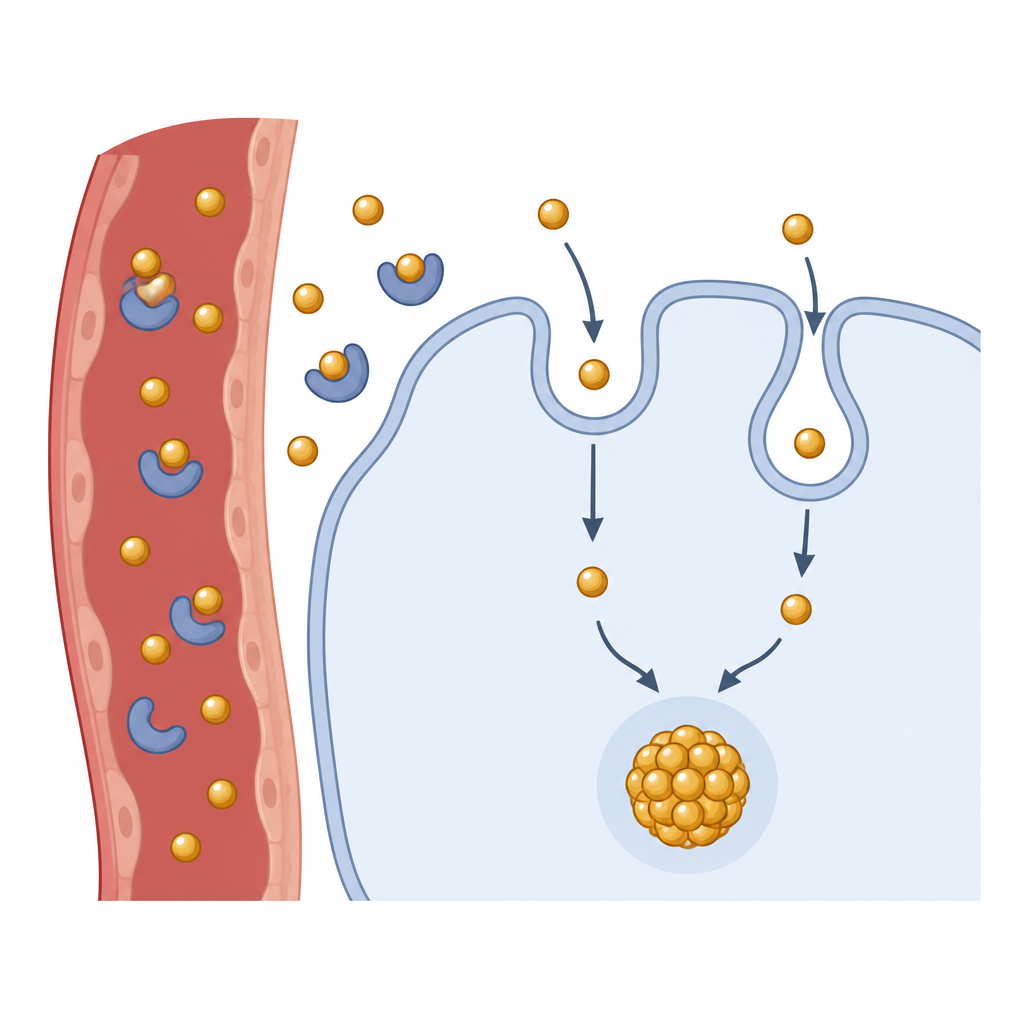
Most textbooks describe iron entering cells when transferrin, loaded with iron, docks on a specific receptor and is pulled inside through a protein coat called clathrin. Yet rare patients with almost no transferrin, and specially bred mice with low transferrin, still manage to move large amounts of iron into many tissues. This suggests that cells have backup routes. Melanotransferrin, a relative of transferrin that can bind a single iron atom, sits on the outer surface of certain cells attached by a lipid anchor. It has long been suspected to matter in iron control, especially in the brain and in tumors, but how it might actually move iron across the membrane was unclear.
A lipid-tethered iron catcher
The authors focused on the membrane-anchored version of melanotransferrin in human melanoma cells, where it is abundant. They found that this anchored protein, together with its bound iron, does not use the classical clathrin pits favored by the transferrin receptor. Instead, it enters through tiny flask-shaped pockets in the cell membrane called caveolae, which are rich in particular fats and the scaffold protein caveolin. Using fluorescence microscopy, biochemistry, and electron microscopy, the team showed that melanotransferrin and caveolin cluster in the same vesicles, while the traditional transferrin receptor tracks with clathrin-coated structures. When they disrupted caveolae by binding membrane cholesterol, iron entry through melanotransferrin dropped sharply, while transferrin-based uptake was only mildly affected.
From surface pit to inner storage
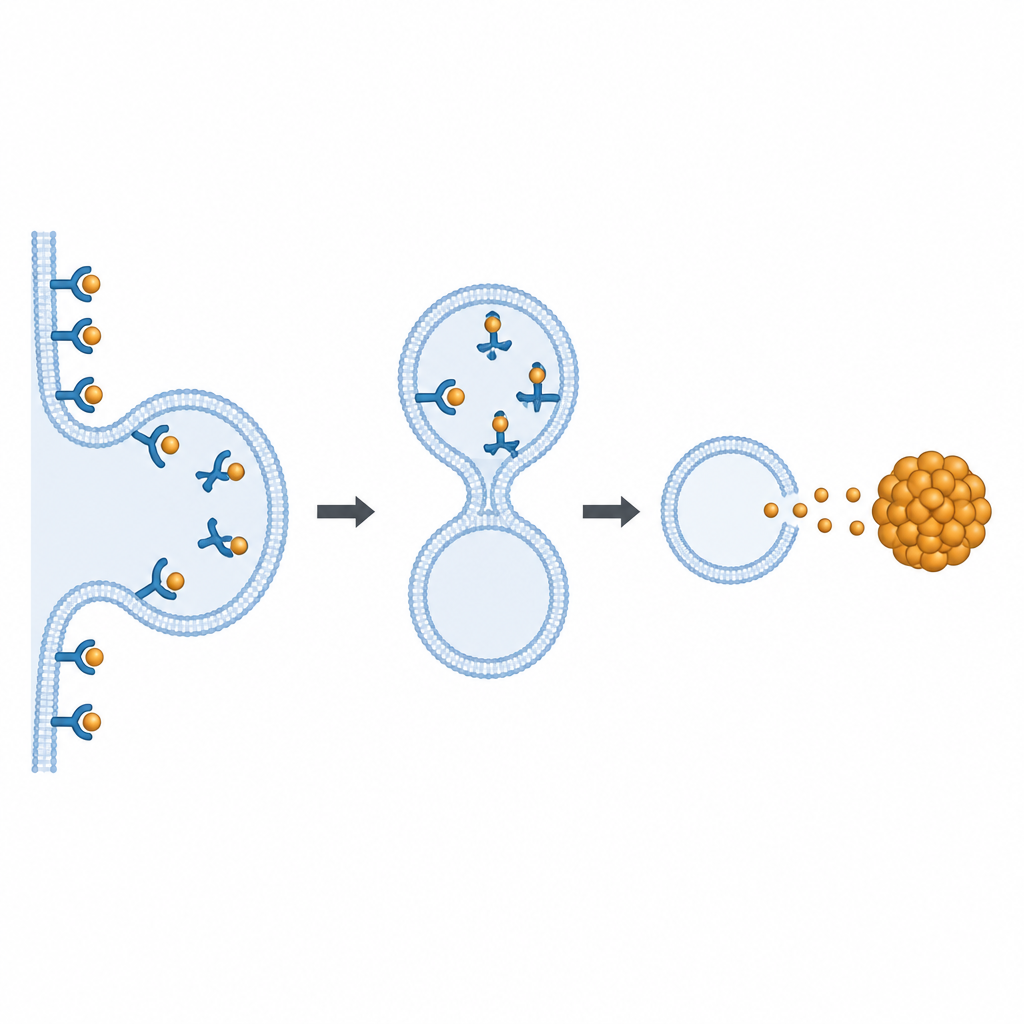
Getting iron past the surface is only half the job; cells must route it safely to storage. The study shows that once melanotransferrin and iron are internalized via caveolae, they merge into the cell’s early endosome system, a set of sorting stations that also handle the transferrin pathway. Melanotransferrin reaches these compartments more slowly than the transferrin receptor, but when it does, its cargo iron is released and loaded into ferritin, the cell’s main iron storage shell. Removing the lipid anchor that tethers melanotransferrin to the membrane blocks this delivery to ferritin. Likewise, genetically sabotaging a key endosomal regulator (Rab5) sharply reduces iron ending up in ferritin, whether it entered via melanotransferrin or transferrin, underscoring that both roads converge on these same intracellular hubs.
Iron handling in disease and evolution
Melanotransferrin is an ancient protein, conserved across animals and present in diverse tissues, yet in standard laboratory mice its absence does not cause obvious iron problems. The new work suggests that its importance may emerge under special conditions, such as iron overload, tissue stress, or disease. Levels of melanotransferrin climb in certain cancers, including melanoma and glioblastoma, and around plaques in Alzheimer’s disease. Cancer cells are especially hungry for iron, and a caveolae-based route could help them tap non-transferrin iron sources in a crowded tumor environment. Intriguingly, recent studies indicate that melanotransferrin may restrain melanoma spread rather than drive it, reinforcing that its role is subtle and context dependent rather than a simple on–off switch for malignancy.
What this means for health
For a non-specialist, the key message is that our cells do not rely on a single iron gatekeeper. This study maps a second, molecularly defined pathway in which a lipid-anchored protein on the cell surface captures free iron, carries it inward through cave-like membrane pockets, and hands it off to the cell’s storage machinery. Knowing the players and steps in this transferrin-independent route gives researchers new ways to think about iron mismanagement in disorders ranging from neurodegeneration to cancer, and may eventually guide therapies that tweak iron flow by targeting melanotransferrin or the caveolae it uses.
Citation: Tian, M.M., Tiong, J.W.C., Gabathuler, R. et al. Lipid-anchored melanotransferrin mediates transferrin-independent iron uptake and ferritin storage in mammals. Cell Death Discov. 12, 253 (2026). https://doi.org/10.1038/s41420-026-03043-9
Keywords: iron uptake, melanotransferrin, caveolae, ferritin, melanoma