Clear Sky Science · en
SNHG10 promotes tumorigenesis through the EGFR/AKT/ERK/mTOR and miR-150-5p/VEGF-A axis, along with gemcitabine resistance in pancreatic ductal adenocarcinoma
Why this cancer study matters
Pancreatic cancer is one of the deadliest cancers, largely because it is found late and often shrugs off standard drugs. This study explores a little-known RNA molecule called SNHG10 that behaves like a hidden "master switch" inside pancreatic tumor cells. By understanding how this switch drives tumor growth and drug resistance, researchers hope to uncover more precise ways to diagnose the disease and to make existing treatments, such as the chemotherapy drug gemcitabine, work better.
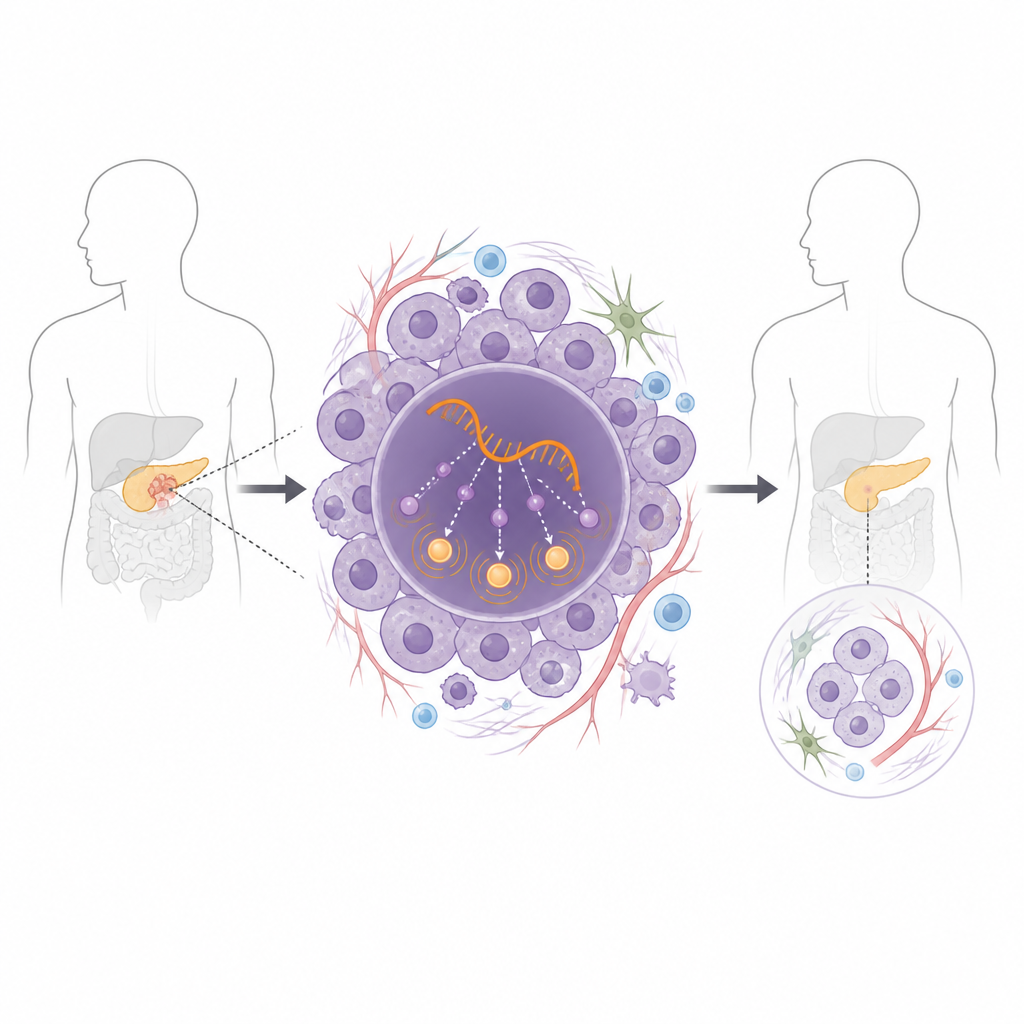
A hidden script inside cancer cells
Our cells contain many RNA molecules that never become proteins but still control how cells behave. SNHG10 belongs to this group and was already linked to other cancers. In this work, the authors examined hundreds of human pancreatic samples and found that SNHG10 levels were much higher in tumors than in healthy pancreatic tissue. Its level also tended to rise in more advanced disease. When they looked at various pancreatic cancer cell lines, most showed elevated SNHG10 compared with normal pancreatic cells, suggesting that this RNA is closely tied to the disease process.
Turning down the growth signal
To see what SNHG10 actually does, the team used two kinds of molecular tools to switch it off in pancreatic cancer cells grown in the lab. When SNHG10 was reduced, cancer cells divided more slowly, formed fewer colonies, and moved less, all signs of a weaker, less aggressive tumor. The treated cells also shifted away from a mobile, invasive shape back toward a more settled, epithelial state, which is less prone to spread. Inside the cells, key proteins that drive cell division and survival dropped, while protective proteins that halt the cell cycle or favor cell death increased. In mice carrying human pancreatic tumors, repeated treatment with SNHG10-targeting molecules led to smaller, lighter tumors without obvious damage to normal tissues.
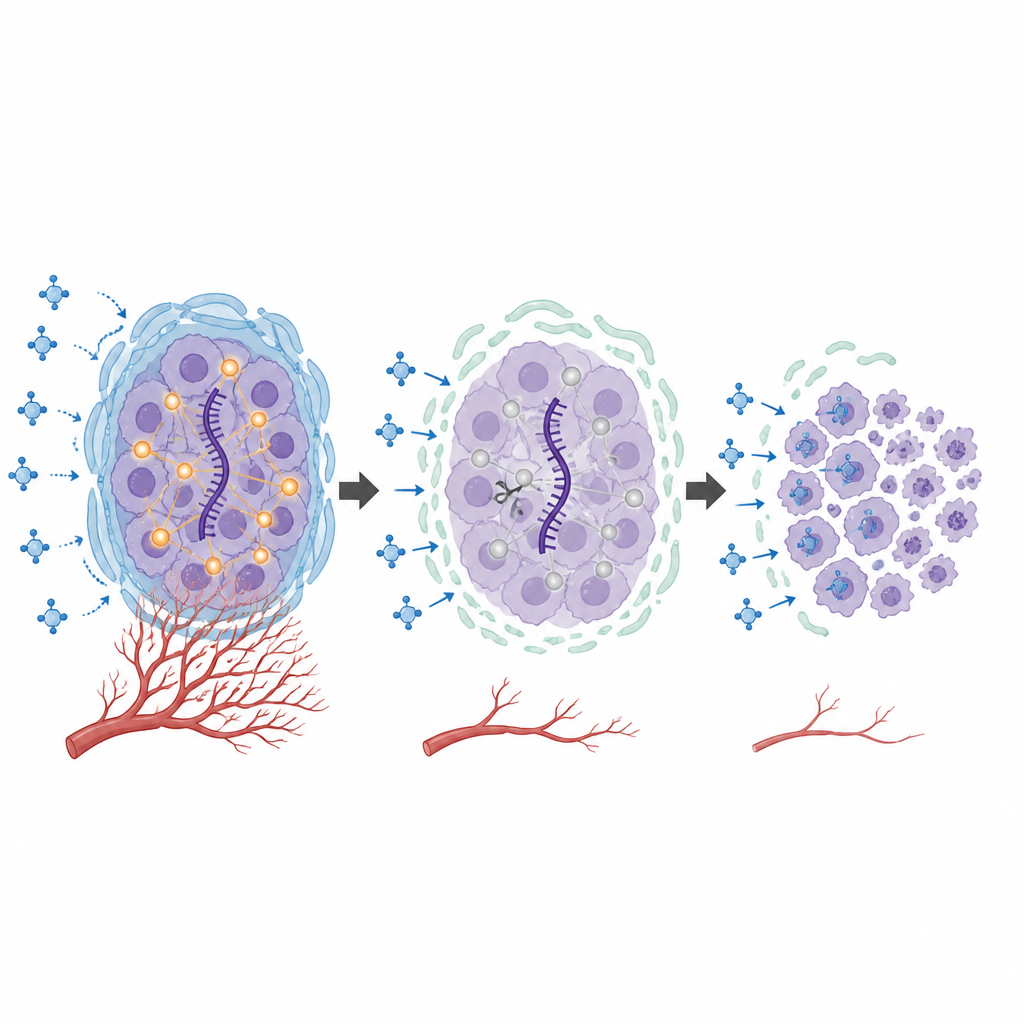
An RNA chain that feeds blood supply and signals
The researchers then asked how SNHG10 exerts such broad influence. They found that it physically associates with a small regulatory RNA called miR-150-5p and with a well-known growth factor, VEGF-A, which spurs blood vessel growth into tumors. In patient data and cancer cells, miR-150-5p was low and VEGF-A was high. When SNHG10 was silenced, miR-150-5p rebounded and VEGF-A levels fell, suggesting that SNHG10 normally soaks up this small RNA and frees VEGF-A to rise. Further tests confirmed that all three partners cluster in the same molecular complex inside cancer cells. At the same time, dialing down SNHG10 reduced the activity of major growth and survival pathways controlled by proteins such as EGFR, AKT, ERK, mTOR, and c-MET, which are central hubs in many cancers.
Making a common drug work again
Gemcitabine is a standard drug for pancreatic cancer, but many tumors either resist it from the start or become resistant over time. The team created drug-resistant pancreatic cell lines by slowly exposing them to rising doses of gemcitabine. These resistant cells looked more invasive and survived much higher drug levels. They also showed boosted SNHG10 and changes in several genes linked to gemcitabine handling. When SNHG10 was knocked down in these resistant cells, their sensitivity to gemcitabine returned: the drug once again reduced their growth and ability to form colonies. This suggests that SNHG10 is not only a driver of tumor growth but also a key helper in drug resistance.
What this means for future care
For a layperson, the main message is that a single noncoding RNA, SNHG10, appears to act as a multiway control knob in pancreatic cancer. It helps tumors grow, spread, secure extra blood supply, and resist a frontline chemotherapy drug by influencing a chain of other molecules and signals. By blocking SNHG10, at least in cells and mice, tumors shrink, become less aggressive, and respond better to treatment. While more work is needed before this can guide clinical care, SNHG10 and its partners offer promising entry points for new tests and combination therapies aimed at this hard-to-treat cancer.
Citation: Pandya, G., Singh, A., Saurav, S. et al. SNHG10 promotes tumorigenesis through the EGFR/AKT/ERK/mTOR and miR-150-5p/VEGF-A axis, along with gemcitabine resistance in pancreatic ductal adenocarcinoma. Cell Death Discov. 12, 210 (2026). https://doi.org/10.1038/s41420-026-03040-y
Keywords: pancreatic cancer, SNHG10, noncoding RNA, gemcitabine resistance, VEGF-A