Clear Sky Science · en
Dual control of liver regeneration by Nr1d1 homeostasis and Klf2 checkpoint
Why protecting the liver’s self-healing matters
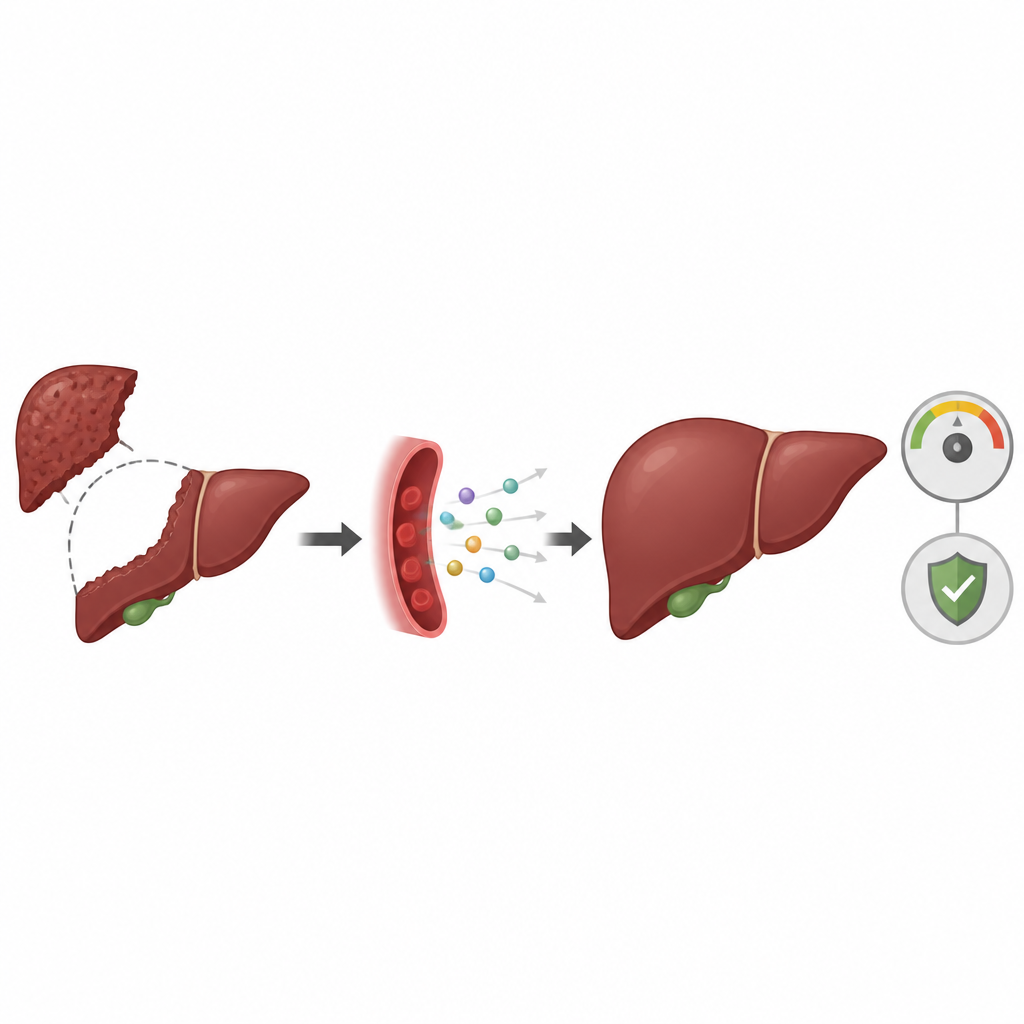
The liver is one of the few organs that can regrow after serious injury or surgery, which is crucial for people with liver disease or those needing major liver operations. Yet in many patients this natural repair process is too weak or poorly timed, leaving them at risk of liver failure and making transplantation the only option. This study explores how the body’s own stress hormones and internal clocks work together to keep early liver regrowth safe, orderly, and efficient.
Early alarm signals after liver injury
When two thirds of a rat or mouse liver are surgically removed, the remaining cells must quickly switch from a resting state back into growth mode. The researchers tracked which genes turned on or off in the first hours after surgery, and found a powerful surge in immune and inflammatory activity. Signals that normally defend the body from infection, such as TNF and IL-6 pathways, flared up and helped push liver cells out of their resting phase. At the same time, genes involved in metabolism, energy use, and cell division were reorganized so that the organ could handle this sudden demand for repair.
Stress hormones and the body clock as a safety net
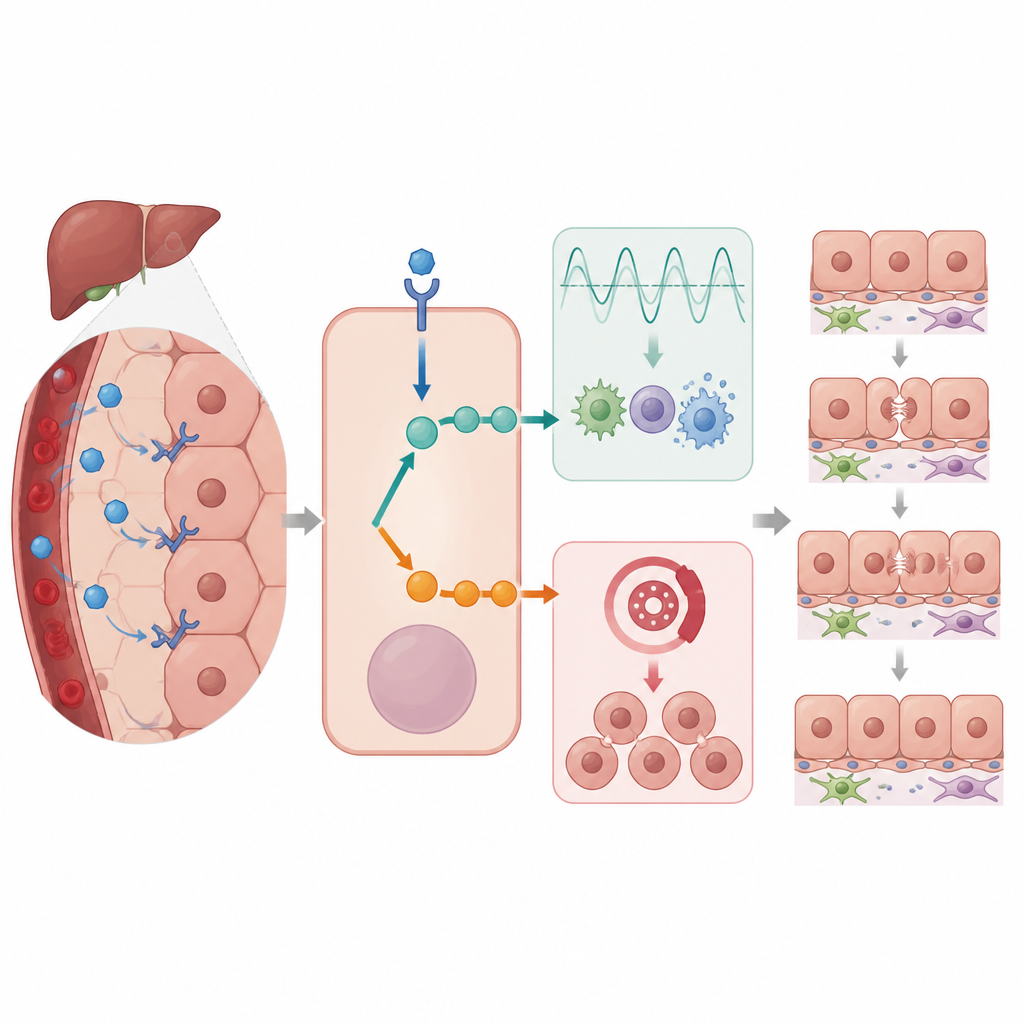
Because too much inflammation can damage tissue instead of healing it, the team asked how the body reins in this early storm. They saw that levels of glucocorticoids, common stress and anti-inflammatory hormones, rose sharply within one to two hours of liver injury, along with their receptor in liver cells. These hormones influenced a clock-linked gene called Nr1d1 and its partners, which usually help tune daily rhythms and dampen inflammation. Soon after surgery, Nr1d1 levels dropped while several of its related genes rose, matching shifts in how the DNA was folded and connected inside the cell nucleus. This pattern suggests that glucocorticoids adjust the liver’s internal clock wiring to calm inflammation and stabilize liver function during the most critical early phase.
A built-in brake on cell growth
The scientists also focused on a second control system centered on a protein called Klf2, which sits downstream of FoxO factors that respond to glucocorticoids. Using genome-wide maps of open DNA and long-range DNA contacts, they found that Klf2’s gene region became more accessible and formed stronger internal loops as its activity changed in the early hours after surgery. In liver cell cultures, dialing down Klf2 caused hundreds of genes that drive the cell cycle and division to turn up, while boosting Klf2 had the opposite effect. Tests of cell growth confirmed that cells with less Klf2 divided faster, whereas those with more Klf2 slowed down, showing that Klf2 works as a brake on liver cell proliferation.
Keeping growth in balance
By combining hormone measurements, gene activity data, and 3D DNA maps, the authors propose that two linked control axes guide early liver repair. One axis, involving glucocorticoids, their receptor, and Nr1d1, helps keep inflammation and daily timing in check so that the recovering liver remains stable. The other axis, involving glucocorticoids, FoxO factors, and Klf2, acts as a checkpoint that prevents liver cells from dividing too soon or too fast. Together these systems ensure that regeneration unfolds in an orderly way instead of veering into scarring or cancerous growth.
What this could mean for future therapies
For people with severe liver disease, understanding how these hormone-driven switches work opens the door to smarter treatments. Rather than simply trying to force the liver to grow, future therapies could fine-tune glucocorticoid signaling, Nr1d1, or Klf2 to calm harmful inflammation while allowing healthy regrowth to proceed on schedule. Although more work is needed to translate these findings from rodents to humans, this dual-control model offers a clearer picture of how the liver walks the tightrope between too little and too much regeneration.
Citation: Ye, B., Xie, D., Shen, W. et al. Dual control of liver regeneration by Nr1d1 homeostasis and Klf2 checkpoint. Cell Death Discov. 12, 224 (2026). https://doi.org/10.1038/s41420-026-03039-5
Keywords: liver regeneration, glucocorticoids, circadian clock, Klf2, hepatocyte proliferation