Clear Sky Science · en
Polyethylene nano- and microplastics trigger metabolic stress responses in human vaginal epithelial cells
Why tiny plastics in intimate places matter
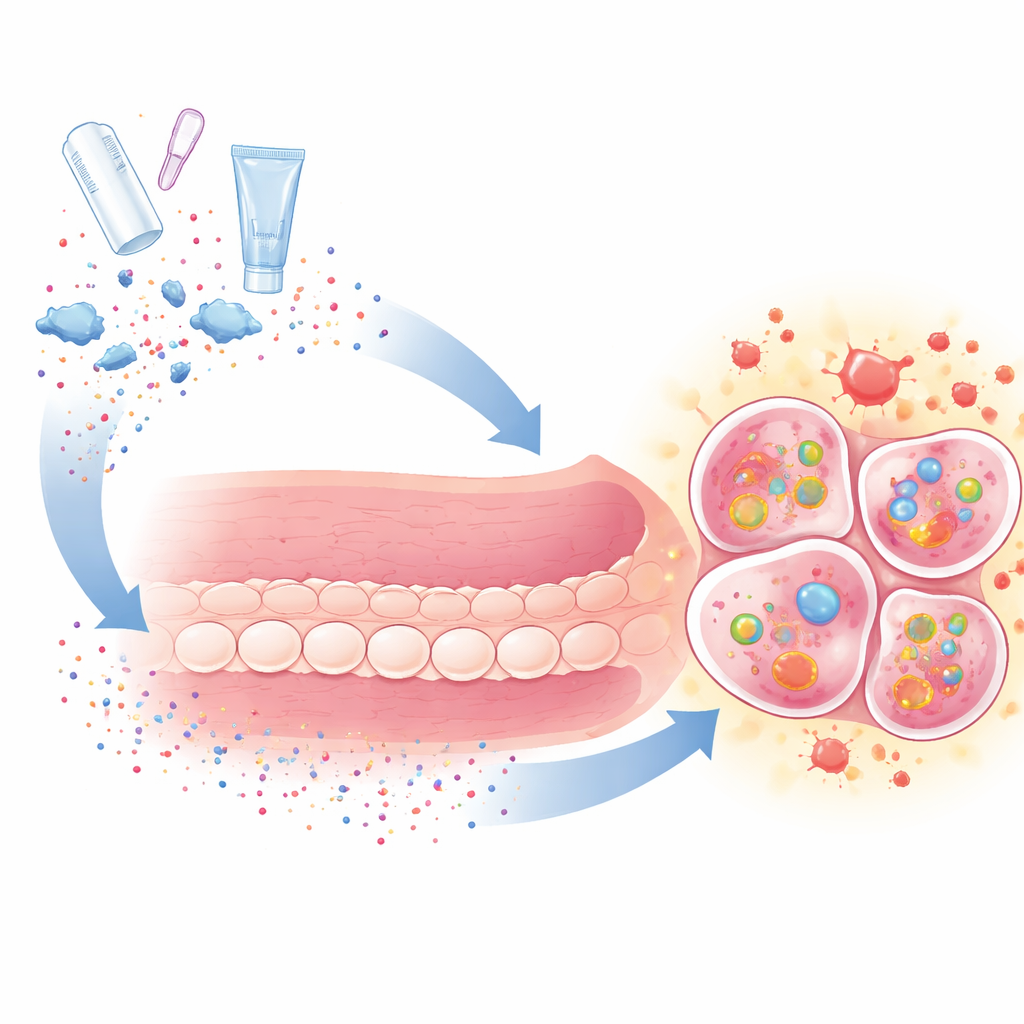
Plastic pollution is no longer just an ocean story. Minuscule plastic fragments, invisible to the naked eye, are now being detected inside the human body, including in blood, brain, and reproductive organs. This study asks a simple but urgent question: what happens when such nano- and microplastics come into direct contact with the cells that line the vagina—a tissue routinely exposed through menstrual products, lubricants, and other devices? By examining how these particles disturb the inner workings of vaginal cells in the lab, the researchers offer an early look at possible risks for women’s health.
Small plastic pieces, big exposure
The team focused on polyethylene, one of the most common plastics used in everyday items. They tested tiny polyethylene spheres ranging from nanometers to a few micrometers in size, roughly from virus-scale up to small bacteria. Human vaginal epithelial cells grown in culture were exposed for 48 hours to amounts meant to reflect realistic contact, as well as a higher dose to probe more severe stress. To trace exactly where the smallest particles traveled inside cells, the researchers also used specially made polyethylene nanoparticles that contained fluorescent quantum dots, allowing them to be seen with advanced microscopes and X-ray–based imaging.
Cell metabolism under pressure
Using a gene-expression platform that monitors hundreds of metabolism-related genes at once, the scientists found that these vaginal cells mounted a broad stress response to plastic exposure. Even at lower doses, many genes involved in handling fats, amino acids, and cellular energy shifted their activity. Signals linked to inflammation and the management of reactive oxygen molecules—chemically aggressive by-products of metabolism—were turned on. At higher doses, these responses intensified and took on a more harmful profile, with stronger activation of chronic inflammatory pathways and enzymes that can generate damaging oxidants, suggesting that the cells were being pushed beyond simple adaptation toward distress.
Hidden changes in fats, droplets, and ions
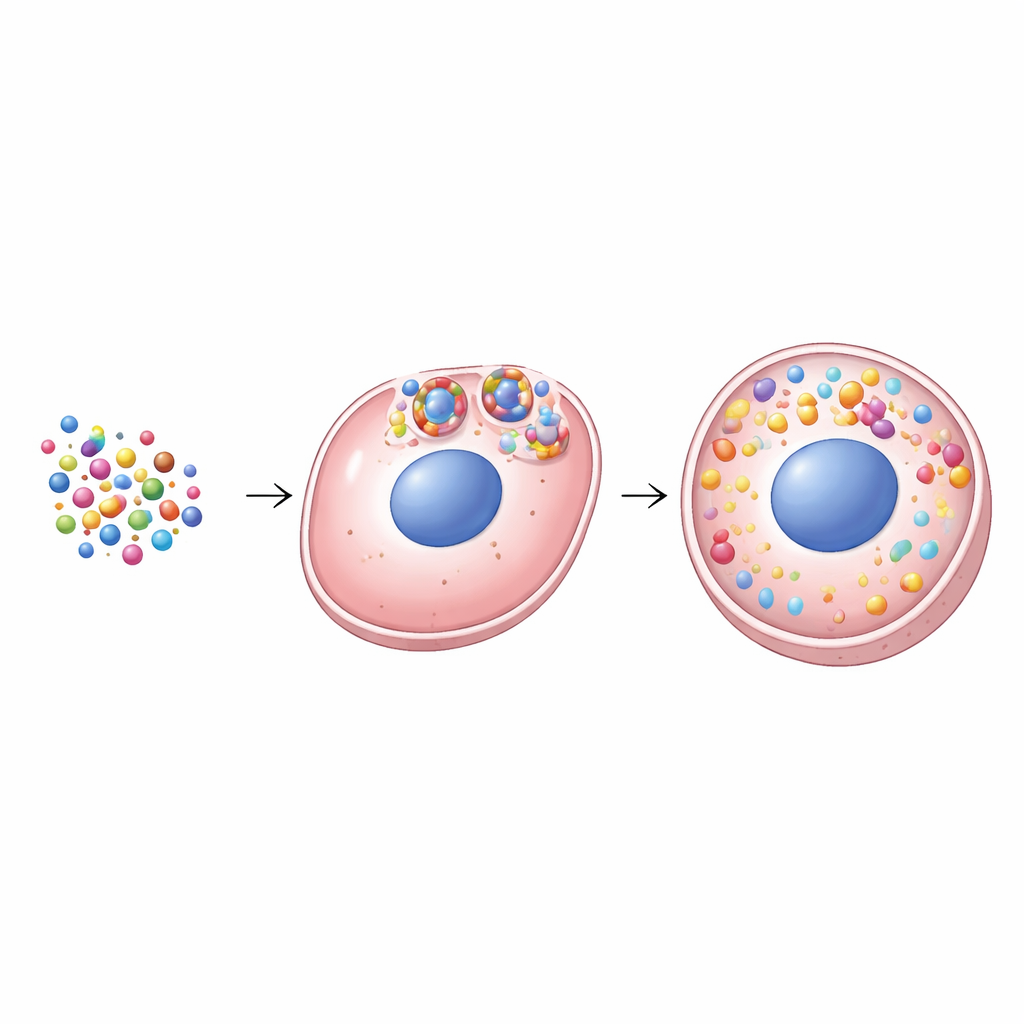
One of the clearest effects involved the way cells manage fats and cholesterol, key ingredients of cell membranes and energy stores. The plastics altered the balance between genes that drive cholesterol production and those that promote fat storage, hinting at weaker membranes and a shift toward packing excess fats into protective droplets. Microscopy confirmed this: after exposure, cells accumulated numerous lipid droplets, especially at the highest plastic dose. With quantum dot–labeled particles, high-resolution X-ray imaging showed that the nanoparticles clustered in vesicles near the cell nucleus and coincided with local buildups of carbon-rich material, changes in oxygen, and disturbed patterns of sodium and magnesium—elements crucial for cell volume, electrical balance, and enzyme activity. Together, these findings point to a cell trying to contain foreign material while struggling to keep its internal chemistry in balance.
Immune signals in a barrier tissue
Although vaginal epithelial cells are not immune cells, they help coordinate local defenses. The study found increased activity of genes tied to both inflammatory responses and immune dampening. In protein tests, cells released more of the pro-inflammatory messenger IL-6 at lower plastic doses, while at higher doses they secreted more of the calming cytokine IL-10. This pattern suggests a shift from initial alarm toward a more tolerogenic, immunomodulatory state. In practical terms, such a state could, in theory, weaken the tissue’s ability to clear infections or survey for abnormal cells, although this study did not directly test infections or disease outcomes.
What this could mean for women’s health
Overall, the work shows that tiny polyethylene plastics can enter vaginal epithelial cells, rearrange their internal chemistry, disturb fat handling and redox balance, and nudge their immune behavior toward an inflammation-linked yet partly suppressive state. These experiments were done in a simplified cell model over short time frames, so they do not prove harm in real-life use of period products or other devices. However, they provide a mechanistic warning sign: chronic or repeated exposure to nano- and microplastics at the vaginal surface could, under some conditions, weaken barrier robustness and alter local immunity. The authors argue that these early insights should spur more complex studies and motivate the development of safer, low-shedding, or biodegradable materials for intimate products to reduce plastic exposure at its source.
Citation: Pontecorvi, P., Cassandri, M., Gianoncelli, A. et al. Polyethylene nano- and microplastics trigger metabolic stress responses in human vaginal epithelial cells. Cell Death Discov. 12, 173 (2026). https://doi.org/10.1038/s41420-026-03038-6
Keywords: microplastics, vaginal epithelium, polyethylene, women's health, nanotoxicology