Clear Sky Science · en
Leveraging drug-specific genes to identify sensitizers for resistant cancer cell lines
Why cancer resistance matters to patients
Cancer drugs often work well at first, only to lose their punch as tumors adapt. This study explores a new way to find partner drugs that can “re-sensitize” stubborn cancer cells, helping existing treatments work again without inventing entirely new medicines from scratch.
Reading cancer’s activity patterns
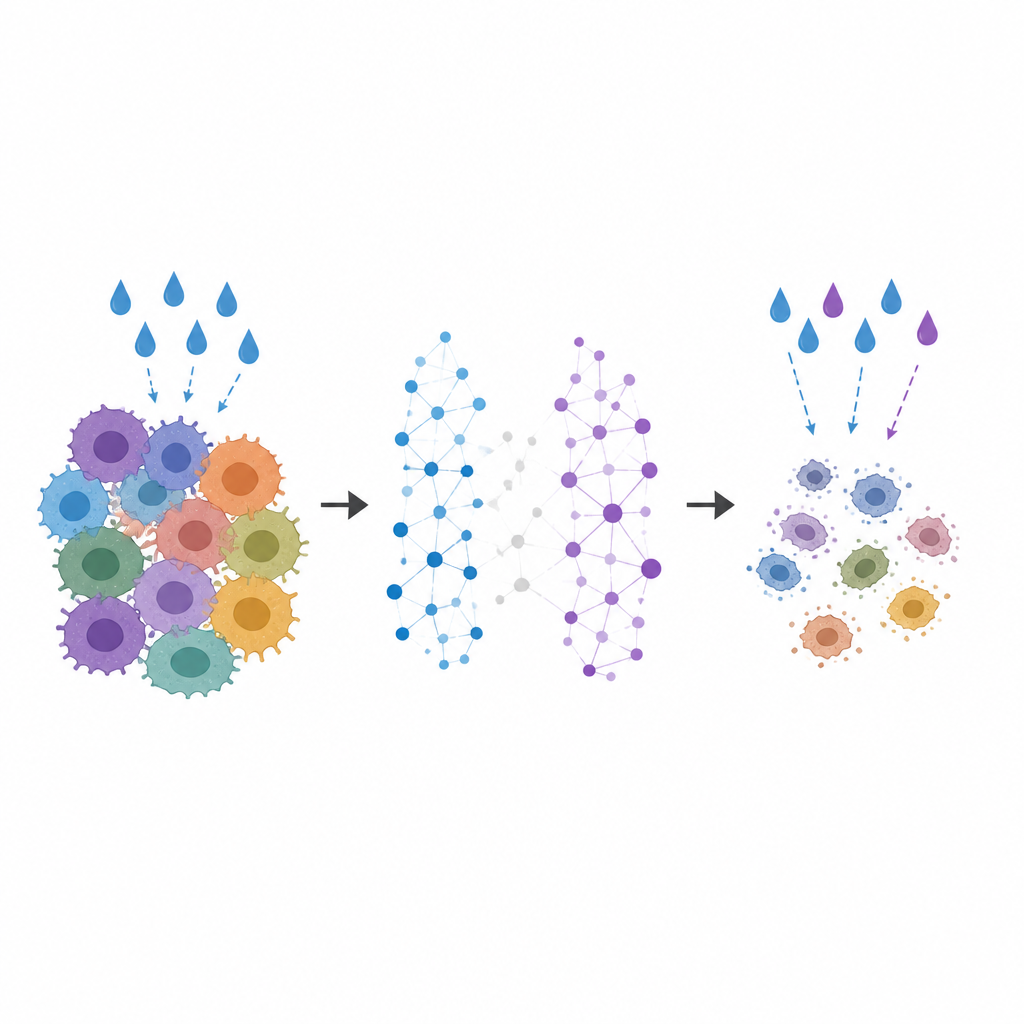
Instead of looking only at DNA mutations, the researchers focused on which genes are turned on or off in cancer cells when they respond to drugs. For 265 anti-cancer compounds tested on more than 1000 cell lines, they defined “drug-specific genes,” sets of genes whose activity levels reliably tracked with whether cells were sensitive or resistant to a given drug. These patterns revealed common themes, such as changes in cell division, inflammation, and the ability of cells to switch identity, all of which can help tumors survive treatment.
Using a giant lookup table of drug effects
The team then turned to the Connectivity Map, a large public resource that records how thousands of chemicals change gene activity in human cells. Their idea was simple but powerful: if resistance to a cancer drug is linked to a particular gene activity pattern, then a second drug that flips that pattern in the opposite direction might restore sensitivity. They built a scoring system to rate how well each candidate helper drug pushed resistance-linked genes down and sensitivity-linked genes up, while avoiding broad, non-specific disruption of the cell.
Finding a standout helper drug
Across many primary cancer drugs, a compound called chaetocin kept rising to the top as a predicted “sensitizer.” The analysis suggested that chaetocin, known to act on the cell’s epigenetic machinery that controls gene activity, could reshape the gene patterns tied to resistance for roughly 120 different treatments. The researchers noticed that other frequent candidates had very different chemical structures and targets, implying that what mattered most was their shared impact on cell behavior rather than any common shape or single protein target.
Putting the predictions to the test
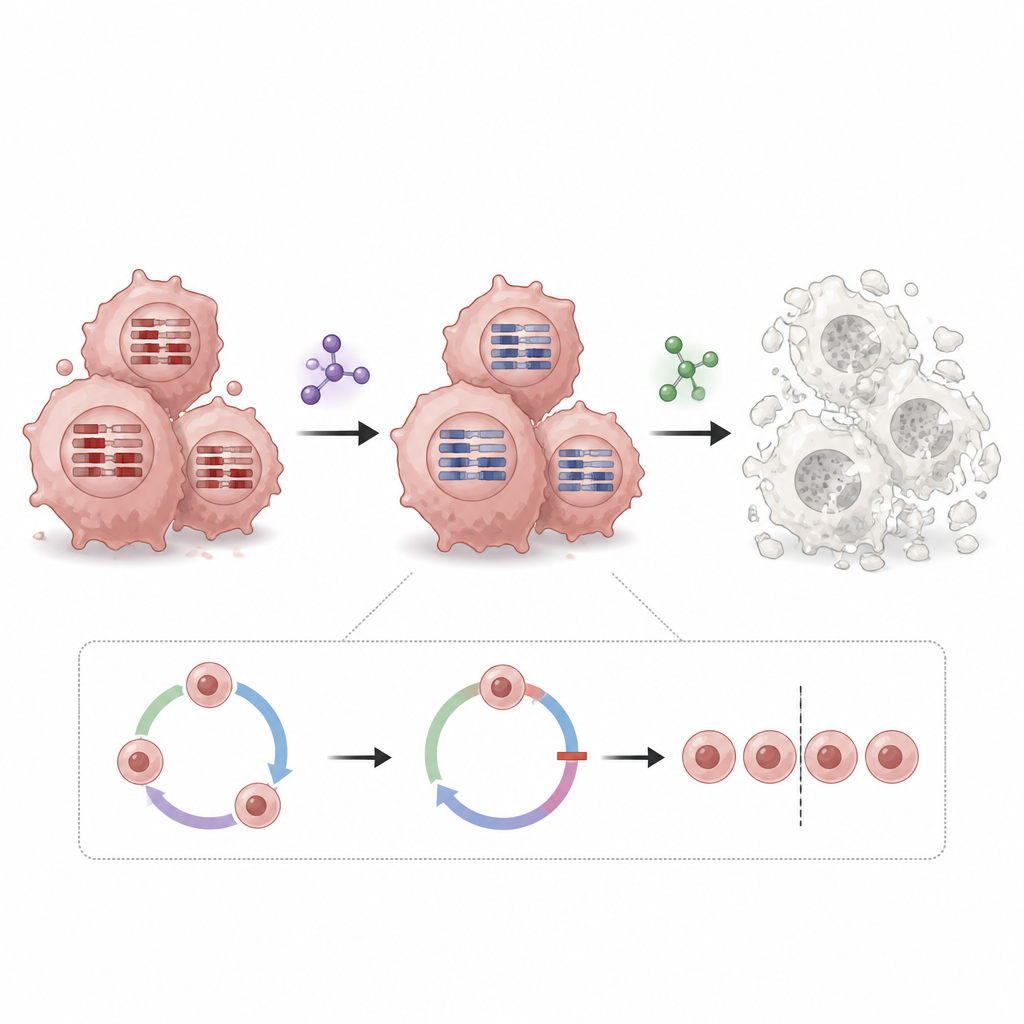
To see whether the computer-guided hits held up in the lab, the team tested chaetocin in two resistant cancer cell lines. One, a cervical cancer line called HeLa, resists the drug BMS-345541. The other, a lung cancer line called NCI-H1299, resists the drug Vorinostat. On their own, the main drugs or chaetocin only modestly reduced cell growth at chosen doses. But when chaetocin was added before or together with the primary drugs, cell survival dropped sharply in both models. The combined treatments pushed cells into programmed cell death and caused them to stall at a key checkpoint in the cell cycle, suggesting that the pair of drugs was blocking division and triggering self-destruction in a coordinated way.
What this could mean for future treatments
This work shows that reading and reversing gene activity patterns can help identify existing drugs that make resistant cancer cells vulnerable again. Chaetocin, in particular, appears able to reset the internal state of cells so that old drugs regain their bite, at least in cell culture. While more testing in patient-derived samples and animal models is needed, the study points to a practical path: use big genetic and drug-response datasets to choose smart combinations that tune the behavior of cancer cells, rather than relying solely on new single agents.
Citation: Pepe, G., Valentini, E., Appierdo, R. et al. Leveraging drug-specific genes to identify sensitizers for resistant cancer cell lines. Cell Death Discov. 12, 238 (2026). https://doi.org/10.1038/s41420-026-03033-x
Keywords: cancer drug resistance, drug combinations, gene expression, epigenetic therapy, chaetocin