Clear Sky Science · en
Berry-derived gold nanoparticles induce integrated ROS-mediated apoptosis, immune modulation, and transcriptomic remodeling in 4T1 triple-negative cancer cells
How berries and tiny particles may help tame tough breast cancers
Triple negative breast cancer is one of the most difficult forms of breast cancer to treat because it lacks common hormone targets for drugs. This study asks a simple but intriguing question: can natural compounds from everyday berries, delivered with the help of ultra-small gold particles, push these stubborn cancer cells toward self-destruction while also reshaping how they behave?
The challenge of an aggressive cancer type
Breast cancers differ widely in how they grow and respond to treatment. Triple negative breast cancers tend to spread quickly and resist standard therapies because their DNA repair systems, growth controls, and cell-to-cell contacts are already badly damaged. The researchers first took a deep look inside a widely used mouse breast cancer cell line called 4T1, which models this aggressive disease. Using whole-genome sequencing and advanced structure prediction tools, they found millions of DNA changes, including key faults in genes that normally prevent tumors, help repair broken DNA, and keep cells glued together. These defects closely mirror changes seen in human breast cancers, making 4T1 a realistic system for testing new strategies.
Turning berry ingredients into smart carriers
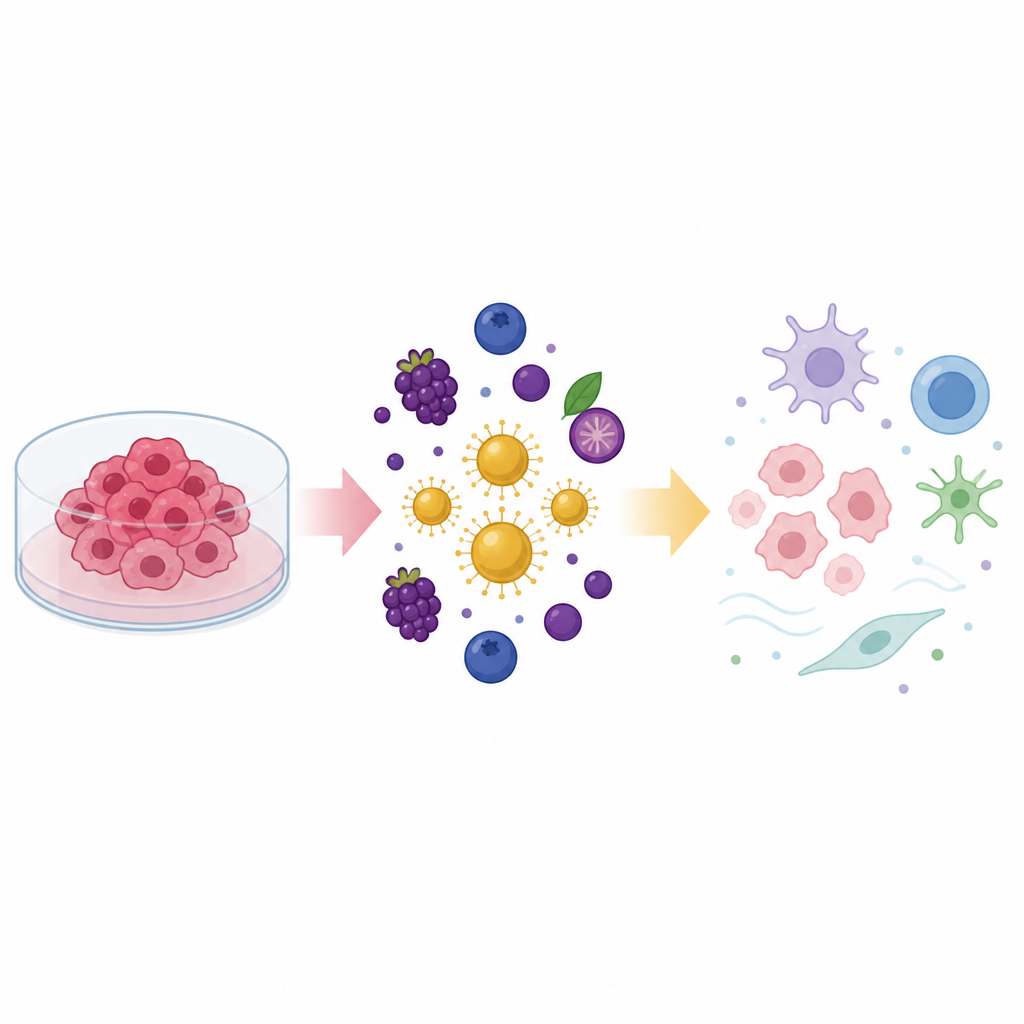
Berries such as blueberries and blackberries are rich in polyphenols, natural molecules known for their antioxidant and anti-cancer activities. On their own, however, these compounds are not very stable in the body and are poorly absorbed. To overcome this, the team used gold nanoparticles as tiny carriers and coated them with berry extracts. They confirmed that the resulting particles were well formed, mostly spherical, and stable in water, with strong signs that berry compounds were firmly attached to the gold surface. Careful chemical measurements showed distinct mixes of polyphenols in the two berry types, hinting that each formulation might nudge cancer cells in slightly different ways.
Forcing cancer cells into orderly self-destruction
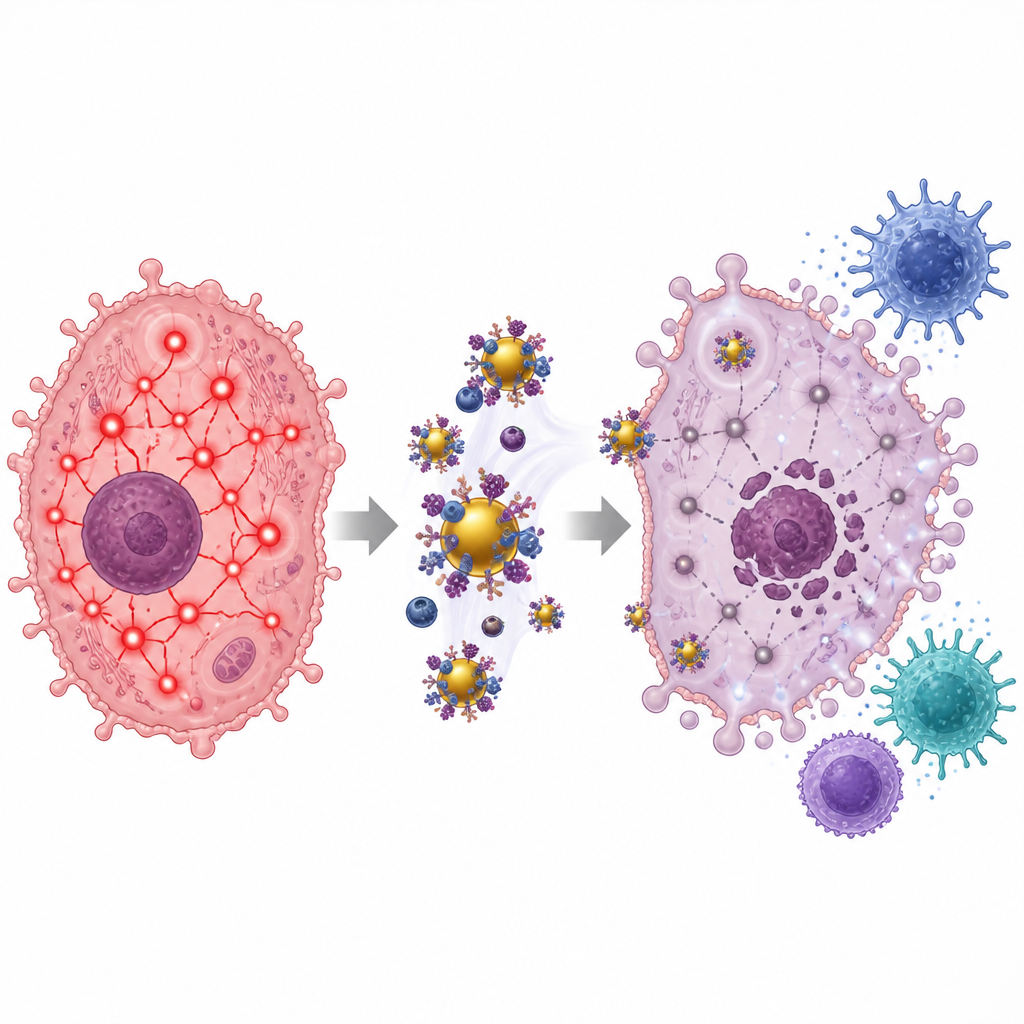
When the researchers exposed 4T1 cells to the berry extracts and their gold nanoparticle versions, cell survival dropped in a dose-dependent manner, with the nano-formulations having the strongest impact. Detailed flow cytometry tests showed that the treated cells entered early apoptosis, a tidy form of programmed cell death, rather than bursting apart through necrosis. Activity of executioner enzymes called caspases rose, while the energy-producing mitochondria largely kept their membrane potential, suggesting a controlled death process instead of catastrophic collapse. Patterns of reactive oxygen species hinted at an early burst of internal stress that helped trigger apoptosis, followed by an adjustment in the cells’ own stress defenses.
Rewiring signals that drive growth and escape
Beyond killing some cells outright, the berry-based nanoparticles strongly reshaped which genes were turned on or off. Thousands of genes involved in DNA repair, growth signals, movement, and immune interaction shifted their activity. Crucial growth pathways that often fuel cancer, including PI3K/AKT/mTOR, JAK/STAT, and MAPK-related routes controlled by the enzyme PAK1, were dampened through changes in protein phosphorylation. At the same time, several genes linked to tumor suppression, better DNA repair, and reduced ability to migrate and invade were boosted. The overall gene expression patterns suggested less support for metastasis and a shift toward immune and repair programs that are less favorable to uncontrolled tumor growth.
What this could mean for future treatments
In plain terms, the study shows that packaging berry-derived molecules on gold nanoparticles can push highly aggressive breast cancer cells to quietly self-destruct, while also dialing down many of the internal switches that let these cells grow, spread, and evade the immune system. Although all of the work was done in cell cultures, not patients, the results point to a potential role for such nano-formulations as helpers alongside existing treatments, aiming to exploit the built-in weaknesses of triple negative tumors rather than just blasting them with more toxic drugs.
Citation: Fagbohun, O.F., Oladipo, A.O., Gao, C. et al. Berry-derived gold nanoparticles induce integrated ROS-mediated apoptosis, immune modulation, and transcriptomic remodeling in 4T1 triple-negative cancer cells. Cell Death Discov. 12, 225 (2026). https://doi.org/10.1038/s41420-026-03023-z
Keywords: triple negative breast cancer, nanoparticles, berry polyphenols, apoptosis, cancer signaling